
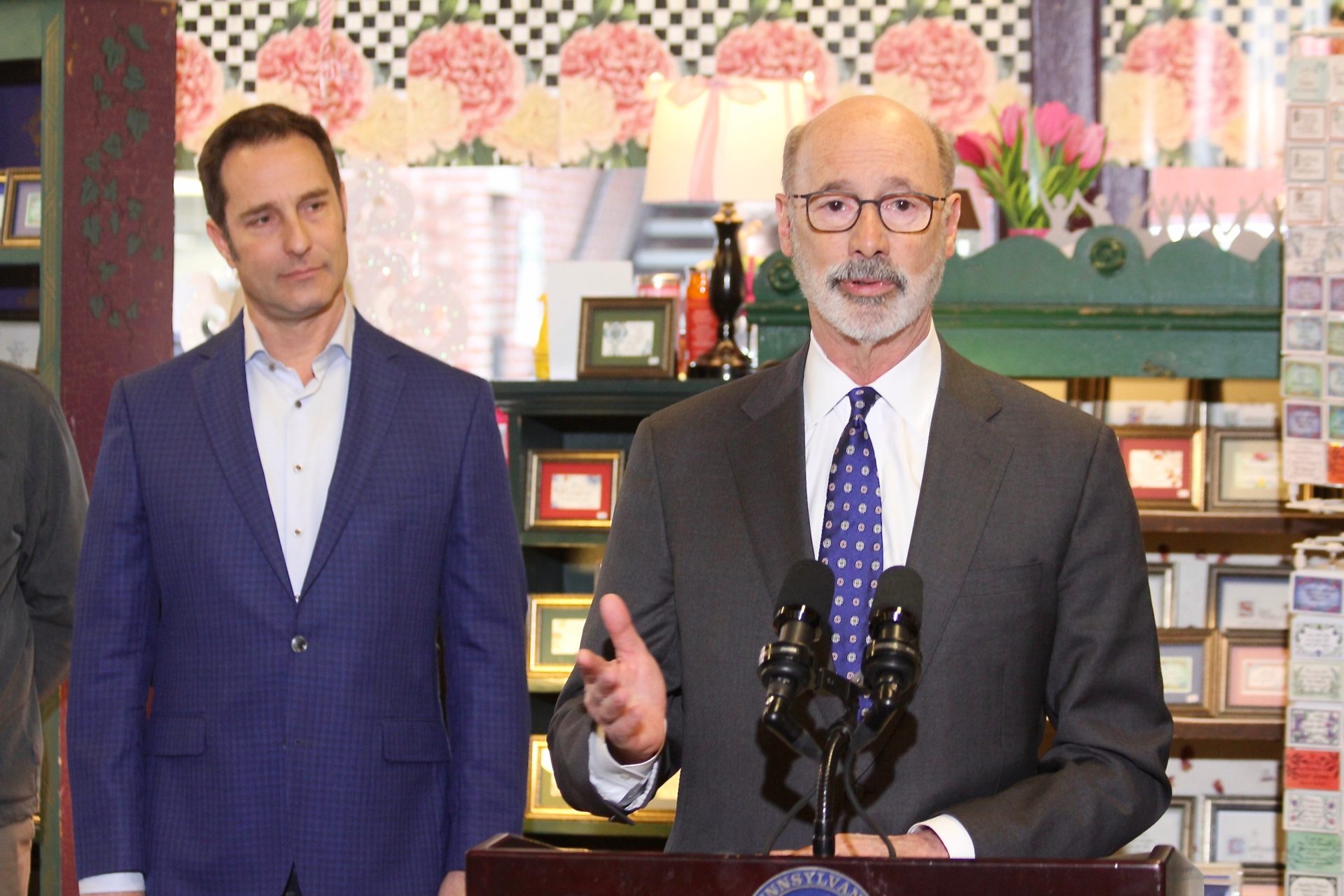
Joy Rodgers-Mernin has owned The Nittany Quill in downtown State College for 38 years, but she says her business might not still be open if it weren’t for the $20,000 grant it received from Pennsylvania’s Small Business Assistance Program at the height of the COVID-19 pandemic.
“It certainly has been a challenging couple of years and that grant was absolutely a lifeline,” Rodgers-Mernin said.
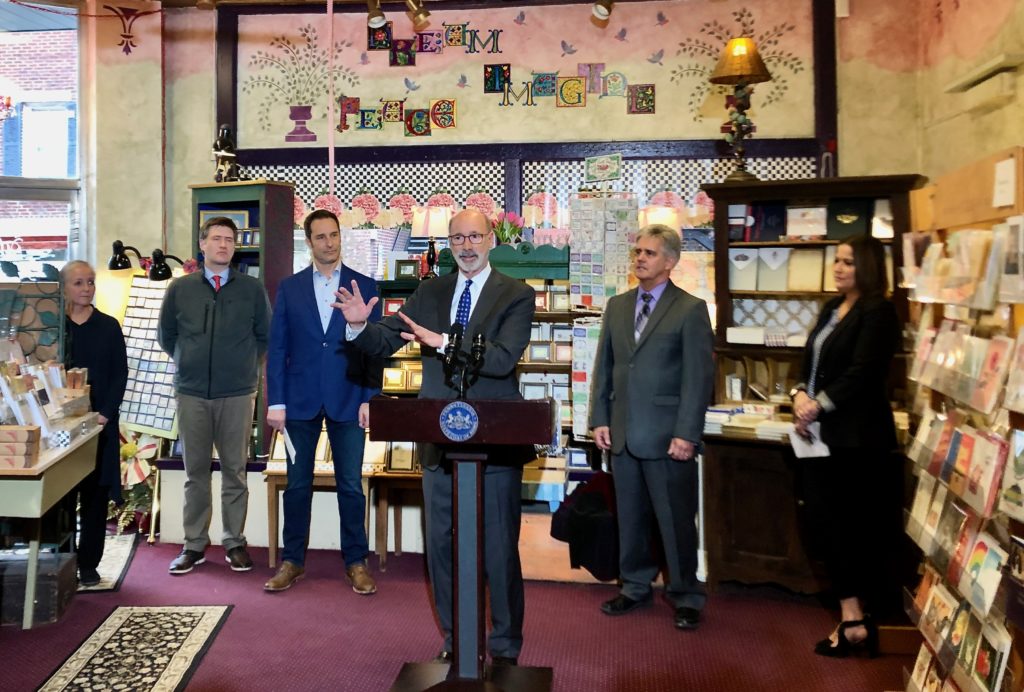
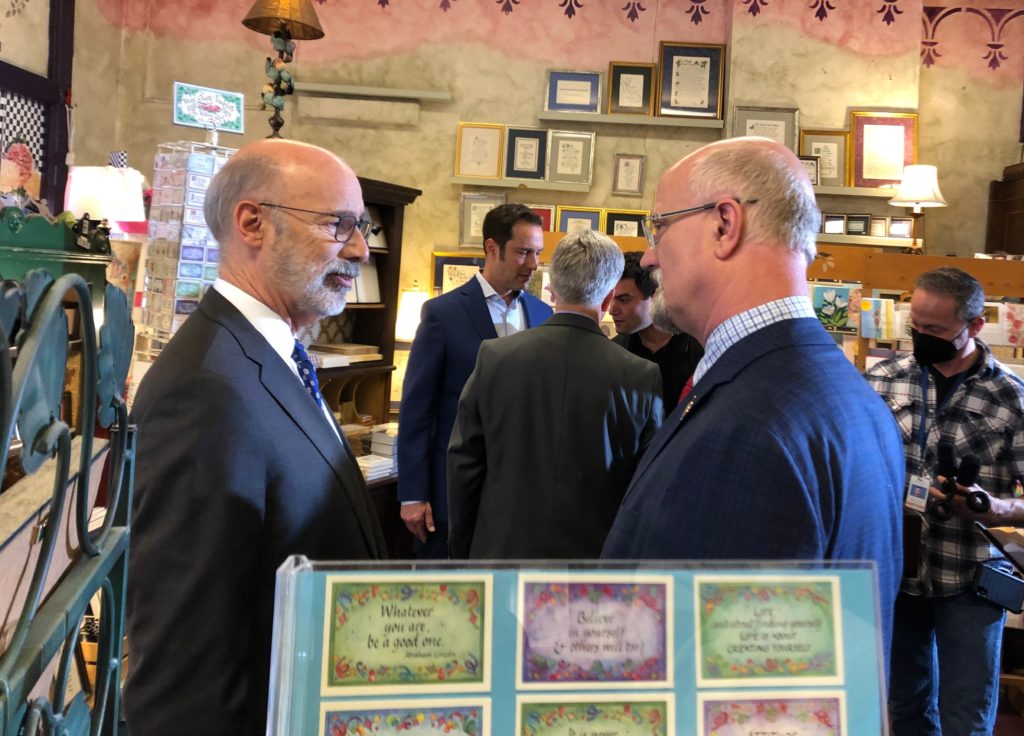
Now, Gov. Tom Wolf said during a visit to the 111 S. Fraser St. shop on Wednesday, it’s time for the commonwealth to invest in the grant program again as small businesses face rising costs while continuing to recover from the pandemic.
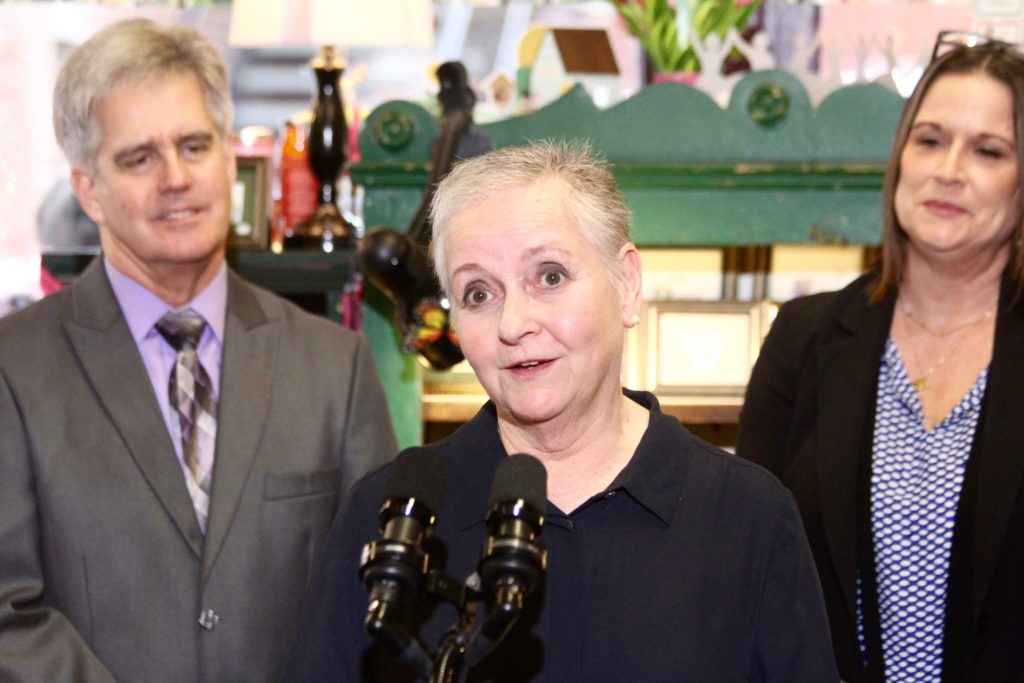
Wolf was joined by several Centre County political and business leaders to urge state legislators to use $225 million of the $2.2 billion remaining from the commonwealth’s $7 billion American Rescue Plan Act allocation for the small business grant program.
Wolf stressed that money isn’t the state’s rainy day fund or budgeted funds. The ARPA dollars must be returned to the federal government if they aren’t spent by the end of 2024.
“All across Pennsylvania businesses and people are still suffering in the wake of the COVID-19 pandemic,” Wolf said. “Right now that’s maybe even harder with rising prices, inflation and the uncertainty that surrounds the Russian invasion of Ukraine. We’re all in uncertain territory… That money should be going out to help our local communities. It shouldn’t just be sitting in a bank account somewhere.”
The $225 million for small business grants ranging from $5,000 to $50,000 is what Wolf called a “cornerstone” of the five-point, $1.7-billion spending plan for ARPA funds developed with Democratic leaders in the General Assembly, including state Rep. Scott Conklin, D-Rush Township.
“[Rodgers-Mernin] is literally the backbone, and individuals like her are the backbone, of this community,” Conklin said. “When you look at businesses today you don’t get this type of environment from a big box store. This is where you walk in and people like Joy are there to help you. She does her own artwork. She does her own books. She does everything and to have her here is one of the most important things that makes this community what it is.
“We can work together. We can make stores like this stay open.”
In its first iteration in 2020, the Small Business Assistance Program used federal CARES Act funding to provide $192 million in grants to more than 10,000 Pennsylvania businesses. That included 29 businesses in downtown State College.
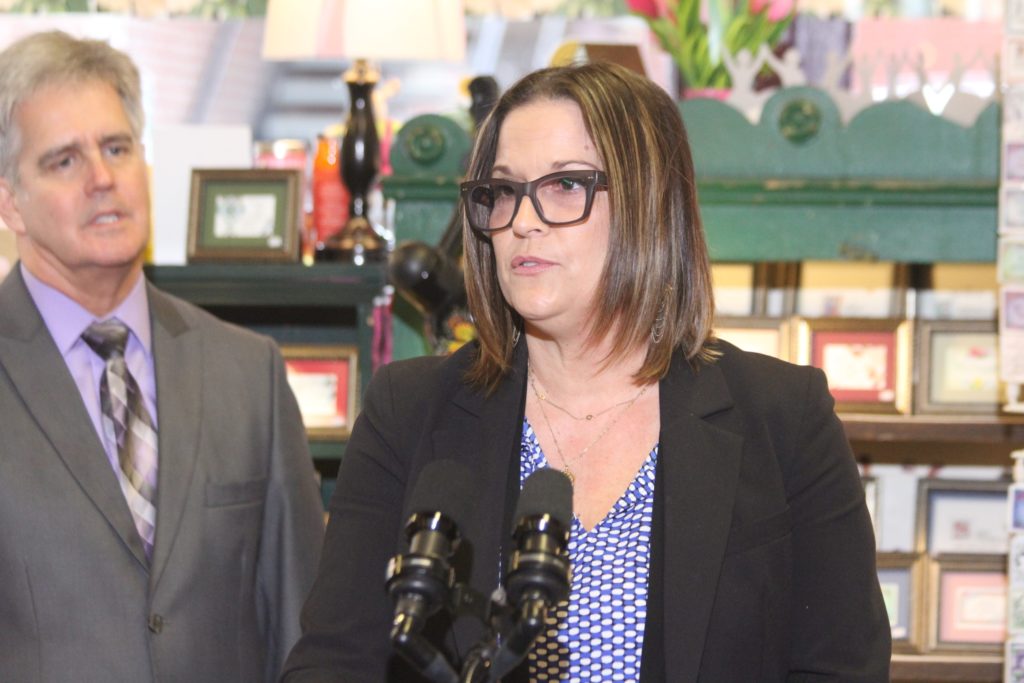
“The funding that the COVID relief statewide Small Business Assistance Program provided to local businesses like Joy’s was literally the lifeline that was needed to pay rent and hold onto valuable staff until the day the lights would turn on again and customers were comfortable returning to their favorite stores,” Lee Anne Jeffries, executive director of the Downtown State College Improvement District, said.
But, Jeffries added, not all businesses applied for assistance and there is still “a long way to go,” on the road to full recovery.
“The Downtown Improvement District is encouraged by the governor’s proposal to recapitalize the Small Business Assistance program with funding that’s vital to the success of our small Pennsylvania businesses,” she said.
Recapitalizing the program with $225 million would help an estimated 11,000 businesses, according to the governor’s office.
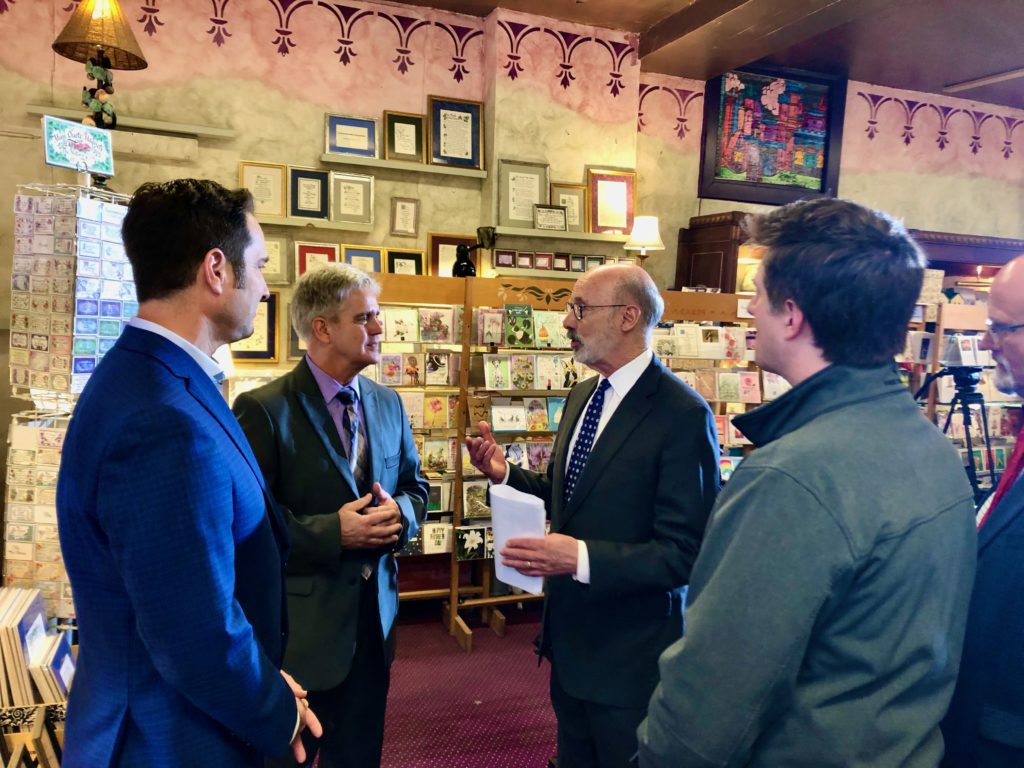
“We wanted to help our small businesses survive some very tough times,” Wolf said. “Well we’re still in tough times and with rising inflations and increasing prices the time is still right for this program to do it now.”
State College Mayor Ezra Nanes said The Nittany Quill is “one of the gems of our beloved downtown” and Wolf’s plan to overcome economic hardships is needed to help it and others like it survive.
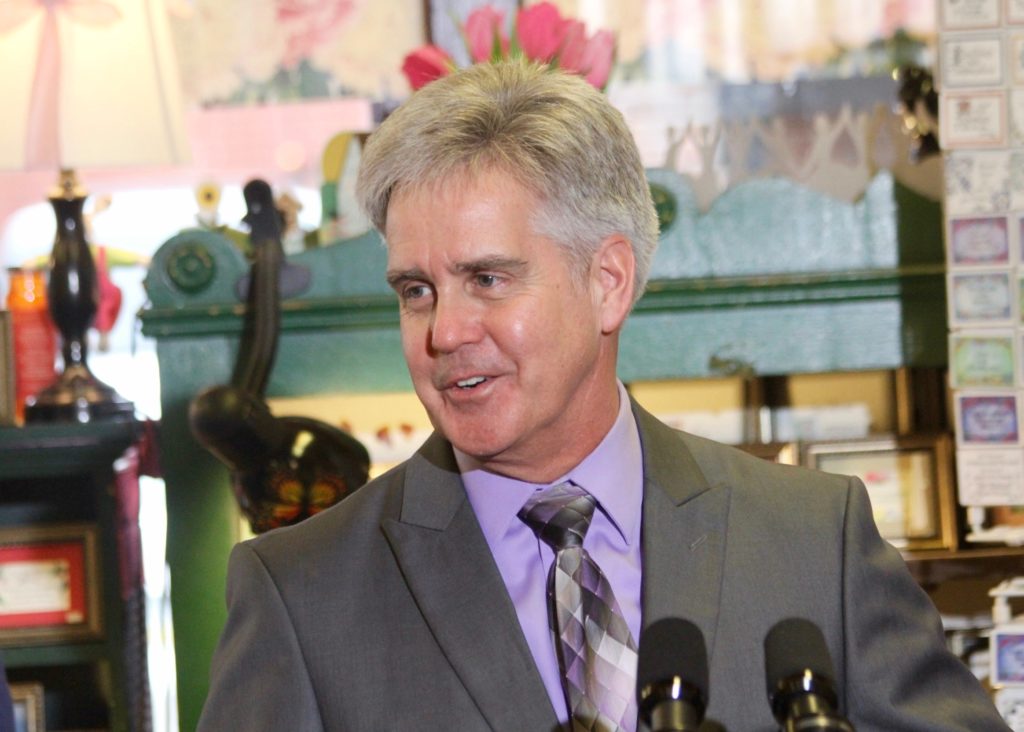
“Without fail, every business here has had to adapt and make significant changes, changes to operations, to staffing, to service offerings to health and safety measures,” Nanes said. “Businesses that survived, and sadly not all did, have to reckon with increased costs, staffing shortages and lost revenue.
“In many cases… full recovery is not yet assured and the continuity of these businesses may depend on the availability of grants to fill holes in their balance sheets and to hire and train, or even retrain, staff until sales and operations can be stabilized.”
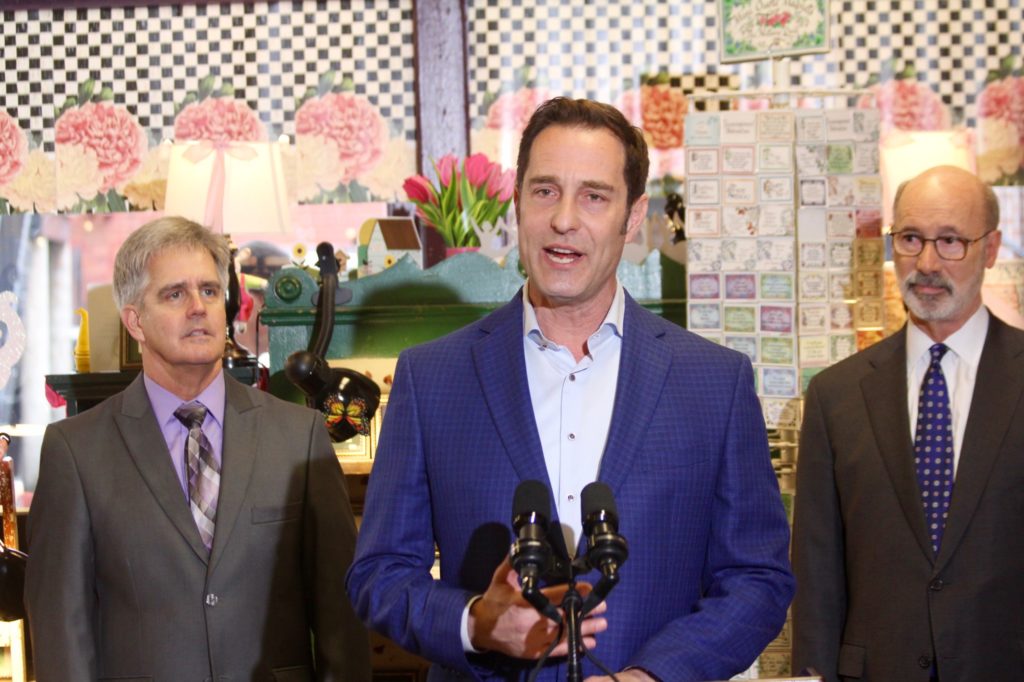
Since 2020, Centre County government has used state and federal funding to provide $10 million in assistance to local small businesses, which Board of Commissioners Chair Michael Pipe said is an investment in the community.
“Small businesses are where dreams are realized, fires are kindled,” Pipe said. “Supporting small businesses equals supporting our community. You have to ask if folks are not willing to bring this to a vote and invest in them, where do they stand on small businesses?”

Wolf’s spending plan also includes $500 million for the PA Opportunity Program, which would help cover a variety of costs for residents, including childcare, education and workforce training, housing assistance and transportation-related costs. It dedicates $204 million to the Property Tax/Rent Rebate program to provide one-time bonus rebates to low-income renters and homeowners; provides $325 million to support health care workforce recruitment and retention; and invests conservation, recreation, preservation and community revitalization projects.
“We’re open to suggestions,” Wolf said. “What we don’t think ought to happen is we should not sit on that money.”
More Local News
View all Local News
Centre County Stays at Low COVID-19 Community Level; WHO Declares End to Global Emergency Status
Centre County and most of Pennsylvania remain at the low community level for COVID-19 as reported new cases and hospitalizations continue to plummet, according to the Centers for Disease Control’s […]

All Pennsylvania Counties Remain at Low COVID-19 Community Level
All 67 Pennsylvania counties remained at the low community level for COVID-19 for the second consecutive week as a months-long decline in new cases and hospitalizations linked to the virus […]

All of Pennsylvania at Low COVID-19 Community Level as Cases, Hospitalizations Continue to Fall
Each of Pennsylvania’s 67 counties is at the low community level for COVID-19 this week as reported new cases and hospitalizations linked to the virus continued a weeks-long decline, according […]


