

As we look at world events, we see economic news that seems distant from our community.
A closer look reveals possible storm clouds headed toward Happy Valley.
As the Chinese economy slows down and oil drops it may seem unlikely these events will reach us; except for the welcome sight of gas dipping below $2 a gallon.
But those factors all could have a direct impact here.
A slowing Chinese economy could mean fewer Chinese students coming to the United States and here to Penn State. Falling oil prices have a major impact on Middle East Oil states’ economies and government revenues. Throw in more stringent background checks on Middle Eastern students too. The combination of low oil revenues and a slowdown on people from that part of the world entering our country could significantly lower the number of students coming here.
Penn State’s admissions department has aggressively recruited students from both China and the Middle East. When China’s economy was roaring and oil prices were over $100 a barrel those students usually arrived flush with cash paying out-of-state tuition. It was and remains easy money. Many wealthy international students also drop cash into the local economy buying everything from expensive cars to meals at restaurants.
If the economic factors mentioned worsen there could be headwinds if Penn State’s future course relies too heavily on a fiscal model boosted by increasing the number of foreign students. The University has already increased the numbers dramatically. In 2010 International students were 9.9 percent of the student population. In the fall of 2015 that number rose to 14.9 percent.
Last year, the Wall Street Journal reported The Department of Homeland Security’s student visa numbers. Atop the list was China with 331,371 students in the United States. Surprisingly, Saudi Arabia was fourth on that list with 80,941 students; a number higher that all of Europe combined. Given China’s population is roughly 42.6 times greater, the Saudis would project a weighted population of 3.45 million students in the United States.
That could all change if the economies in those parts of the world slow too much.
That is not the only news that should get the attention of people here. In college athletics, one of the legs that supported explosive growth in the salaries of coaches, the size of athletic departments, and the rise in the salaries paid to staff has been television rights.
Dramatically increased fee payments have been fueled by the big money that cable users pay ESPN — roughly estimated at $6 per home per month. At its peak ESPN was in roughly 100 million homes, meaning about $600 million a month in fees. That money paid big fees to leagues like the NBA, NFL, and even Big Ten Football.
The past few months has seen a steady stream of news that ESPN could be facing bigger challenges in the future. The media market and cable industry is changing more rapidly than most expected.
The projections of ESPN’s fixed costs of sports rights fees is ascending at the same time their ability to insist on being bundled as a part of basic cable packages may be waning. Consumers are more resistant to be forced to pay for channels they don’t want. Cable companies are tired of being the bad guys. They also face competition from satellite television, on-line platforms like Netflix and Hulu, and pressure from politicians and consumer advocacy groups.
If the bundle model collapses, ESPN could face a major loss of revenues. Recent polling showed half of Americans could opt out if ESPN’s cost rose to $8 a month on cable.
If ESPN went the to an online Netflix-type platform, the same analysis estimates they may have to charge users $30 a month to make it go. But polling showed that only six percent of Americans would be willing to pay even $20 a month for that service.
Those numbers should give college presidents around the country pause. Even here Penn State has seen big growth in the size and cost structure of the Athletic Department; increased staff, salaries and facilities spending in what one Penn State video referred to as an ‘arms race’. The administration has repeatedly referred to assumed expectations of a $20+ million per year increase in television rights from the Big Ten’s next deals.
Given the challenges ESPN is facing, one can make no assumption. Fox Sports could step in but in the world of college sports and college football you need to be partnered first and foremost with ESPN.
The lesson of 2016 is that the world is increasingly connected. Big picture matters and events half a world away can have repercussions right here. Whether we like it or not, as the university is more dependent on the outside world, the contagions of world problems also threaten to impact us.
Where once our local economy was insulated from cyclical ups and downs other communities faced we now see a very different reality. The only question is how much of an impact we will face.
More Business News
View all Business News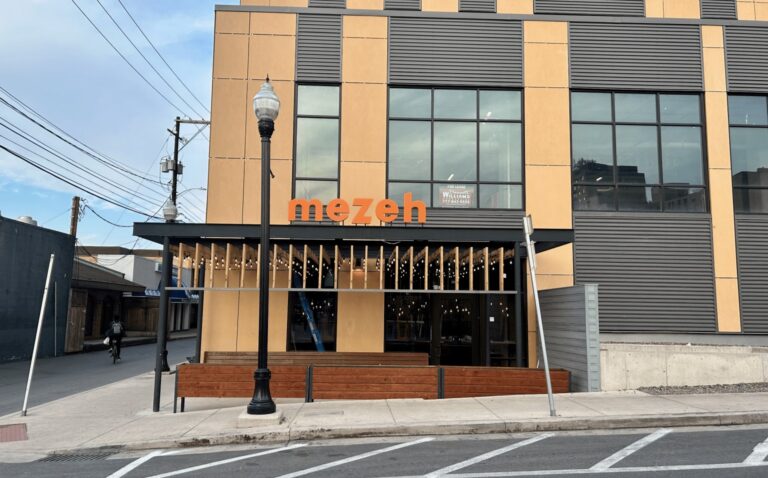
Mezeh Mediterranean Grill Set to Open in Downtown State College
Update: After the publication of this article, a Mezeh spokesperson said the State College restaurant is now scheduled to open on Feb. 22, not Feb. 10 as originally reported. Hummus, […]

Back in Blonde and Brewing
When she opened The Blonde Bistro in downtown Bellefonte 12 years ago, owner Ciara Semack—she puts the blonde in Blonde Bistro—was glad to provide a comfy atmosphere where customers could […]

State College Residents Launch Hand-Crafted Charcuterie Board Business
Not many people can say they got a business idea from a girls’ night with friends. But for Heather Heverly and Sarah Ehrlich, a seemingly normal do-it-yourself charcuterie board activity sparked the idea to create their own business.


