
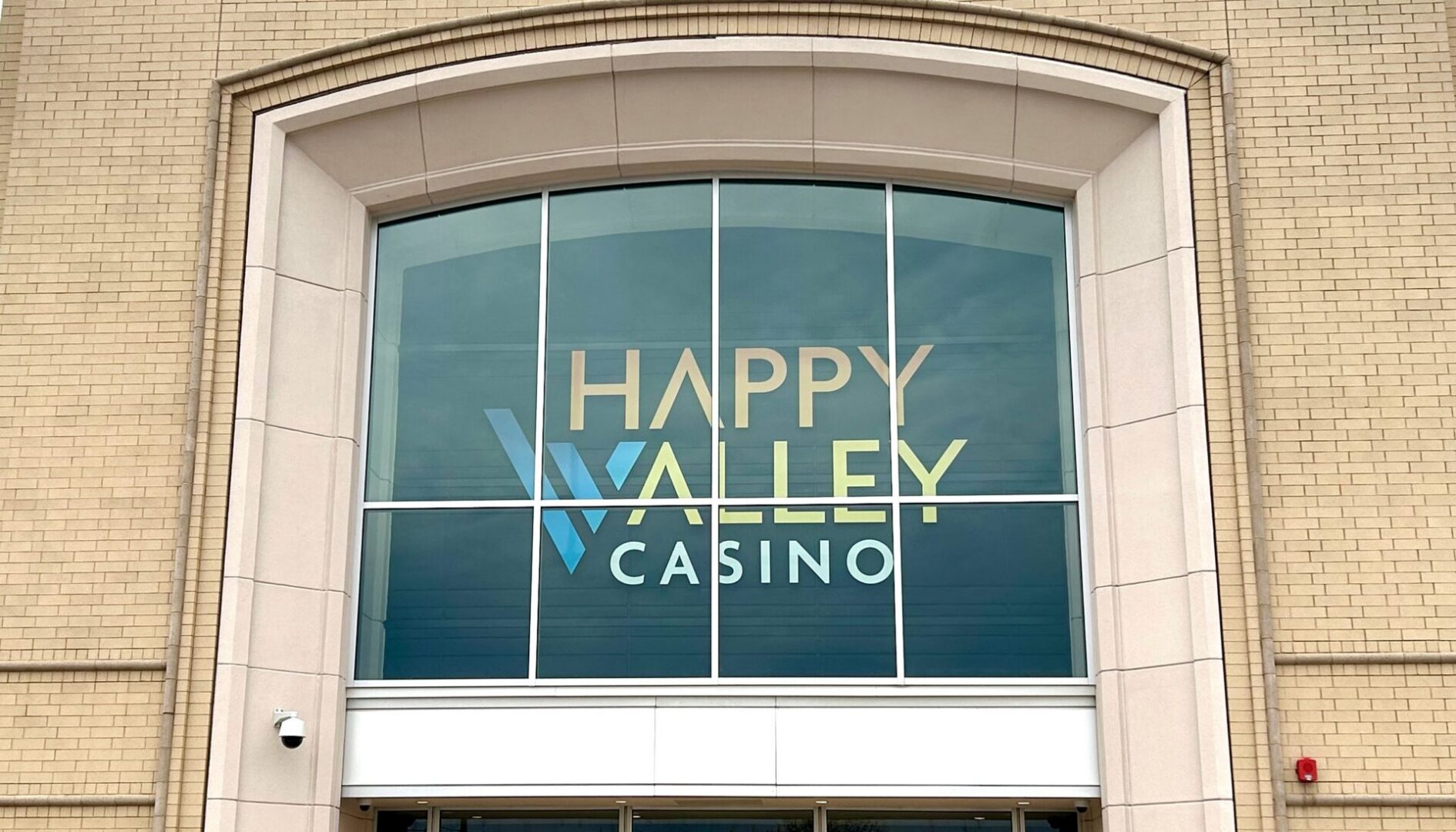
As State College prepares for the opening of the Happy Valley Casino, it’s worth understanding a simple but powerful truth about modern slot machines: they are not designed primarily to create winners. They are designed to keep people playing.
Much of this comes down to how the human brain works. We tend to think gambling is driven by the thrill of winning, but neuroscience tells a different story. The brain chemical dopamine is not just released when we win—it is released during anticipation, uncertainty, and near-misses. Slot machines are engineered around this principle, using what psychologists call variable ratio reinforcement, where rewards appear unpredictably. That unpredictability keeps the brain engaged and coming back for more.
As a result, even losses can feel stimulating in the moment. Fast spin cycles, flashing lights and celebratory sounds for small payouts all blur the line between winning and losing. A player can actually lose money overall but still experience repeated bursts of excitement that reinforce continued play. The goal is not a single big win—it is continuous engagement.
This helps explain why many regular gamblers describe the desire to stay “in action.” Over time, the act of playing itself becomes more compelling than the outcome. Players can enter a focused, almost trance-like state where time and money fade into the background, replaced by the rhythm of the machine. From the casino’s perspective, this is ideal: the longer someone stays engaged, the more predictable the house advantage becomes.
The physical and social environment of a casino is built to support this dynamic. Machines are arranged to maximize visibility and accessibility, allowing players to move seamlessly from one to another without interrupting the flow. The pace of play is deliberately rapid, leaving little time for reflection between spins.
Alcohol also plays a role. In Pennsylvania, drinks are not complimentary, but they are readily available. Even when purchased, alcohol can lower inhibitions and reduce careful decision-making, making it easier for players to stay in that continuous cycle of play. The presence of alcohol is not incidental—it complements the broader environment designed to sustain engagement.
None of this means that every patron will develop a problem, nor does it suggest that adults should not be free to spend their money as they choose. But it does mean that the public should be clear-eyed about what modern casinos actually offer. They are highly sophisticated systems built to encourage prolonged play, not simply venues of chance where luck alone determines outcomes.
As some in our community welcome this new casino, informed awareness is essential. The question is not whether people will win or lose on any given night. The more important question is how long they will stay in the game—and why.
Dan Materrna
Howard
Are Casino’s Test Day Donations as Charitable as They Appear?
It is reported that Happy Valley Casino will be donating all of the proceeds from its “Test Days” on Blue and White weekend to the Food Bank and YMCA. Are these donations as charitable as they appear?
According to an email from Pennsylvania Gaming Control Board (PGCB) communications director Doug Harbach, the PGCB mandates that Happy Valley Casino donate the proceeds of its Test Days to charitable organizations. Many would consider a gift given under compulsion to hardly be a gift.
The PGCB touts that the state’s casinos have donated more than $213 million to charitable causes since 2007. Over the same time period, Pennsylvania’s land-based casinos are estimated to have generated over $52 billion in cumulative gross revenue. This works out to Pennsylvania’s land-based casinos having donated only about four tenths of one percent of their cumulative gross revenue to charities. If Happy Valley Casino operates similarly, the total amount that it will extract from our community over its lifetime will exceed the amount it donates to local charities by multiple orders of magnitude.
Associating the casino with the YMCA might cause some people to associate the casino with clean, healthy and selfless living. Casino gambling is antithetical to the values of caring, honesty, respect and responsibility promoted by the YMCA. Casino gambling is based on the deceitful premise that “everyone who gambles can be a winner.” It teaches that success is obtained primarily through chance. It encourages a selfish focus on winning even at the expense of one’s neighbors.
Although the casino is not officially open, the state still takes its cut. Gambling taxes will still be collected on the gambling in the casino on the Test Days. Gamblers will still owe income taxes on their winnings, and many will also owe substantial income taxes on gambling-derived “phantom income” even if their losses exceed their winnings. None of the gamblers who “donate” to the Food Bank or the YMCA by losing money gambling in the casino on the Test Days will get to deduct their charitable contribution on their taxes in the way they might if they had just made their donations to these charities directly.
Some people who gamble in the casino on the Test Days may actually win more than they lose. Because the casino is donating only its net proceeds from the Test Days to charity, every dollar that these people win will reduce the amount the charities receive. Gamblers who attend the Test Days will not only be betting against the house, but against the Food Bank and the YMCA.
Everything that a person wins in a casino can only come at someone else’s expense.
The Food Bank and the YMCA are both worthy charities that make significant positive contributions to our community. Please support these organizations by donating your time and/or money to them directly so they will receive all of your support.
Andrew Shaffer
State College
Thompson vs. Planned Parenthood
Congressman Glenn Thompson sent another misleading e-mail to his constituents on April 10, attacking Planned Parenthood Federation of America (PPFA). His newsletter states that PPFA “received more taxpayer dollars than ever before, and continues to prioritize abortion over true health care services.”
First, abortion care is part of full health care.
Furthermore, the 2024-2025 PPFA Annual Report states: “Though Planned Parenthood Federation of America did everything we could to prevent it, in July 2025, the Trump administration and Congress forced through a law blocking patients from using Medicaid at Planned Parenthood health centers for care. What they call “defunding” Planned Parenthood is making it even harder for people to get sexual and reproductive health care.” Congressman Thompson voted for this “defunding.”
Dated April 2026, the report states that 91% of PPFA’s revenue came from Planned Parenthood donors. Not taxpayer dollars.
It states that 56% of medical services provided were for sexually transmitted infections testing and treatment. Contraception care was 23%. Cancer screening and prevention, education and other reproductive health care services were provided. Abortion care made up only 4% of the health care services provided by PPFA. Nothing supports Thompson’s claim of “showing a record number of abortions.”
Thompson voted for the Working Families Tax Cuts Act because he wants you to believe he cares about “hard working families.” If so, why did he vote for the so-called Big Beautiful Bill? It cuts Medicaid, which will close rural hospitals, including maternity wards. All to pay for permanent tax breaks for the wealthiest.
The Center for Rural Pennsylvania found that as of May 2025, 23 of Pennsylvania’s 67 counties have no hospitals with labor/delivery units. Thompson’s vote supports hospital closings so I find his statement: “I will never stop working for the unborn” deeply hypocritical.
Thompson voted for women all over the country—not just in Pennsylvania—to have less access to pre-natal, maternal and neo-natal care. More new babies are dying. More mothers are dying. Is this what Congressman Thompson means when he says “our nation should invest in women’s health”?
It’s time to vote Glenn Thompson out of office.
Maggie Waggoner
Lewisburg
‘What Does Right Look Like?’
When I received notification, I was being appointed by the Trump Administration as the U.S. Small Business Administration Mid-Atlantic Regional Administrator under the leadership of SBA Administrator Kelly Loeffler, to say I was honored and excited is an understatement.
Like anyone new to a position, there was a learning curve (and a lot of acronyms to become familiar with), but I was eager to ramp up quickly. I took the approach of getting out in the field and learning from the seasoned staff and entrepreneurs in the region and asking them one question: “What does right look like?” Once you understand that answer, you can move quicker, make better decisions and deliver real results.
I’ve always believed in being direct. Around our offices, and throughout my travels in the region, you’ll often hear me say, “don’t tickle my ears,” and what I mean by that is: don’t tell me what you think I want to hear, give me the truth, and let’s solve problems together. That approach has helped me, and our team, stay focused on the outcomes that matter – helping small businesses.
Because at the end of the day, that’s what the SBA is all about.
Over the past year, I’ve traveled across the Mid-Atlantic region, meeting entrepreneurs in big cities, small towns and rural communities. I’ve walked factory floors, toured storefronts, sat down with entrepreneurs and listened to their stories — stories of risk, resilience, innovation and grit. These conversations are the most rewarding part of my role.
It is truly the privilege of a lifetime to serve in a role where I get to support the people who power our economy. Small businesses aren’t just economic drivers; they are the backbone of our communities. They create jobs, inspire innovation and bring character and identity to the places we call home.
One concept I’ve come back to time and time again is economic gardening. It’s the idea that we don’t just recruit growth, we cultivate it. We invest in the businesses and entrepreneurs that are already rooted in our communities and give them the tools, capital and support they need to scale. When we do that well, the impact multiplies.
Last week I spent time in D.C. with SBA Administrator Loeffler and her leadership team. Every time I am around her and the team, my battery is charged and I am eager to do more. I am proud to be part of the SBA team and the work that is so critical for growth in our country. Yes, policy does matter and there is still much to do, and I’m eager to continue building on the relationships, insights and momentum we’ve gained.
To every small business owner I’ve met, thank you. Your hard work, vision and perseverance is what makes this role so meaningful. To those I haven’t, I hope we can connect soon. Visit www.sba.gov to find an SBA office near you to receive the help you need to start and grow your small business.
Jim Spencer
SBA Mid-Atlantic Regional Administrator
Robert Mueller Served With Honor
I once helped carry a United States Marine to his grave.
The Marine served during the Vietnam War, the same war in former FBI Director and United States Marine Robert Mueller earned the Bronze Star Medal with “V” device, the Purple Heart, two Navy and Marine Corps Commendation Medals with Combat “V,” the Combat Action Ribbon, the National Defense Service Medal, the Vietnam Service Medal with four service stars, the Republic of Vietnam Gallantry Cross, the Republic of Vietnam Campaign Medal and the Parachutist Badge.
When the news broke that Robert Mueller died, President Trump publicly shared the following words, “Good, I’m glad he’s dead. He can no longer hurt innocent people!”
The Commander-in-Chief of the United States is glad that a Marine who shed his blood for our country is dead.
Our language fails to provide a word sufficient to describe this declaration, other than the obvious one – evil.
Robert Mueller did what no one in the entire Trump family ever did – he served our country in uniform in wartime. Beyond his military service, Mueller continued to serve our country in law enforcement. How ironic that those who demand we “back the blue” now salivate in delight at the death of a man who led the blue in the FBI.
Alexander Hamilton wrote on February 21, 1797, “The honor of a nation is its life. Deliberately to abandon it is to commit an act of political suicide.” Robert Mueller knew the meaning of honor. Donald Trump cannot comprehend it.
John Deppen
Northumberland
Selective War on Fraud
President Trump recently launched a war on fraud, directing federal agencies to crack down on improper payments. He named VP Vance—dubbed the “Fraud Czar”—to lead a task force, claiming the recovered funds would be “country-changing,” lowering the deficit and taxes.
We aren’t fooled. Trump only cares about fraud when it’s committed by people he doesn’t like or don’t benefit him.
As the New York Times reported, he has granted clemency to more than 70 allies, donors and associates convicted in fraud cases, wiping away more than $700 million in restitution and fines. The pace has accelerated in his second term, with more than 30 such pardons in the past year alone.
The pattern is clear. This isn’t about protecting taxpayers. It’s about deciding who gets a pass—and who doesn’t.
Trump commuted a 20-year sentence for a health care executive who fraudulently billed $1.3 billion to Medicare and Medicaid—programs his crackdown now claims to protect.
And when it comes to protecting taxpayers, the record raises more questions. The administration’s Department of Government Efficiency (DOGE) claims major savings, yet a nonpartisan analysis found its actions may cost taxpayers roughly $135 billion this year.
And then there’s this: the president himself was convicted of fraud—34 felony counts for falsifying business records.
Week after week, Trump asks Americans to take him at his word, while his actions tell a different story. A war on fraud that rewards fraud isn’t reform. It’s selective justice.
Haven’t we had enough?
Karen Stoehr
State College
More Letters to the Editor
View all Letters to the Editor
Letters: Standing With Mount Nittany Workers This Labor Day; AI Needs a Constitution
I’m a proud union member who works just down the street from the Mount Nittany hospital workers still fighting for a fair contract. With Labor Day coming up, I wanted […]

Letters: ‘Convenience Gambling’ at Pa. Mini-Casinos Becoming Obsolete; GT’s Empty Agricultural Promises, Failure to Support Healthcare
Despite significant increases in July tourist traffic to the State College area due to Arts Festival and the People’s Choice Festival, as well as further additional tourist traffic to the area due to hosting the State Games […]

Letters: Mount Nittany Medical Staff Committed to Community Care; Casino’s Underwhelming Revenue
The Medical Executive Committee is saddened to hear that SEIU Healthcare Pennsylvania has reportedly voted to issue a strike notice in response to Mount Nittany Medical Center’s latest proposal. As […]


