
Consumers of food have most likely noticed the proliferation of farmers markets in Centre County and the U.S. They also may be keyed in on the various food movements, from organic to “eat local” to the un-tarnishing of the reputation of the egg.
While food trends continue to change for consumers, many of the same struggles remain for farmers in Centre County, and all those who support and depend upon them.
Recently, the county released an economic snapshot for the county based on secondary data. Prominent among that was agricultural data, which took into consideration everything from the restaurant to the farm.
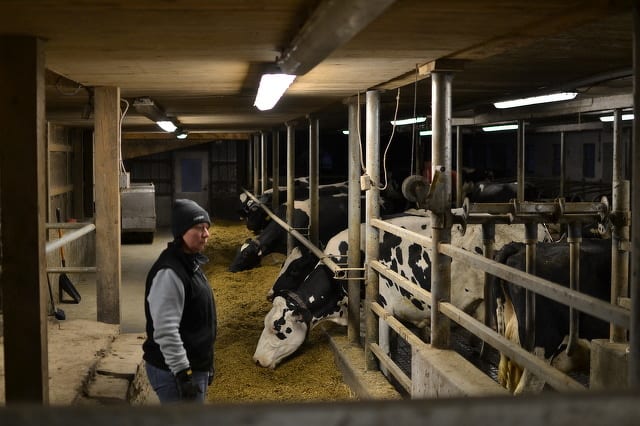
It showed that the vast majority of farms in Centre County are indeed still in dairy, and many more in the commodities-based grain market. Some 47.3 percent of farms in the county primarily ship milk, and many of those are small farms, between 10 and 500 acres.
Adam and Bethany Coursen, of Valleywide Farms in Spring Mills, said that figure has been surprising to some in the county, but not them. They’ve been making a go in the dairy business on the family farm for 15 years, and recently made a long-term investment into robotic milkers.
But that investment has been made in a volatile dairy market, they said, where costs increase dramatically for capital and milk prices generally stay the same. They’re also competing in not just a national market, but an international market, as Canada, New Zealand, Australia and European countries are all producing vast quantities of milk and driving prices down.
Overall, the costs have increased greatly and the cost of milk hasn’t.
“Our margins are the same, if not less,” Adam Coursen said. “We’ve been in this 16 years.
“Things weren’t quite this volatile when we first started. You’ve got to be business-first and not so much just because your dad or grandfather did it and that’s what you were raised doing.”
So, while the Coursens said that consumers knowing where their food is coming from is a good thing, that still doesn’t make life on the farm a highly profitable venture.
“One way to go forward is brand differentiation,” Adam Coursen said.
The conversations surrounding agriculture in Centre County aren’t clear cut, according to Laura and Jay Young.
The two own and operate Young American Growers in Spring Mills, and their operation includes a nursery, slaughterhouse and goats for meat. Laura Young also is vice president of the Centre County Farm Bureau.
They said there are a lot of considerations in the discussions on how to improve the lives of farmers and those in agriculture-related businesses. There’s a huge variety of farms in terms of what they produce and their size. Not only that, but those discussions are happening all over the place and can be disconnected from one another.
Laura Young was a driving force behind the creation of the North Atherton Farmers Market. Still, she said there are a lot of farmers who are still going to have to sell outside the area, and farmer’s markets and other local movements aren’t going to solve all their problems.
“When you talk about the state of agriculture in this valley in terms of where things are going, I think that from a consumer level people want to know where the food is coming from,” Laura Young said. “I think at the agricultural level everybody is just literally hardly surviving. That’s my impression, anyway.”
Her husband described the typical trip he takes to deliver beef from the slaughterhouse to New York City. He said as he approaches the coast, and the city begins to loom up from the horizon, he thinks about all of those acres of housing and offices and all the people who need to be fed in the vast city. He said he hopes they think about where their food is coming from, and all the acres of farmland required for it.
Someone will need to feed the urban people, and Centre County farmers will need a place to sell the products made off of their land.
“We live in an incredibly abundant area in terms of availability of good, quality, generally affordable food,” Laura Young said. “All the help and hype around it, it seems to me very few people are working together in a way that they should.”
Analysts divide up the agricultural economy into two components. The first is production from farms, companies that provide input to farms and ag product processors. The second refers to the consumption of such products, such as sales at grocery stores and restaurants.
Milk from cows is the largest percentage of economic activity, with $42,779,000 in value produced. Oilseed and grain farming is in second place, with 23.9 percent of total product sales and $21,851,000 in value.
Value-added commodities increased from 57 to 79 between 2007 and 2012, as did community supported agriculture, commonly referred to as CSA. The ag tourism count increased slightly from 20 to 22.
According to the assessment, the majority of market value of agricultural sales comes from 243 farms with $100,000 or more in annual sales. Fifty-two percent of all farms had less than $10,000. Farms accounted for 1.2 percent of total employment in 2012 with sales of $91,581,000 and payroll of $9.253 million. Sales numbers are up 19 percent from 2007.
The majority of county farms are either 10 to 49 acres or 50 to 179 acres.
The full report is available on the county’s website.
County Commissioner Mark Higgins said his research on the issues has shown him farmers are taking a smaller percentage of the profits of what they produce than in the past.
“How can you expect the farmers to keep up with all of the regulations, protect the environment, treat the animals humanely, comply with all applicable laws when the agribusiness companies take more and more and more in revenue?” he asked.
Higgins is behind the idea of increasing the number of small and medium-sized ag processing facilities in the county in order to diversify the economy.
That kind of initiative would not only help the local tax base, he said, but a philosophy of eating locally translates into better nutrition and stronger local farms and agriculture-related industries.
As it stands now, most dairy farmers are locked into contracts with already-existing dairy processing facilities, and breaking those contracts can be risky.
There are other battles to fight for dairy farmers, such as promoting milk over soda and other beverages.
More Business News
View all Business News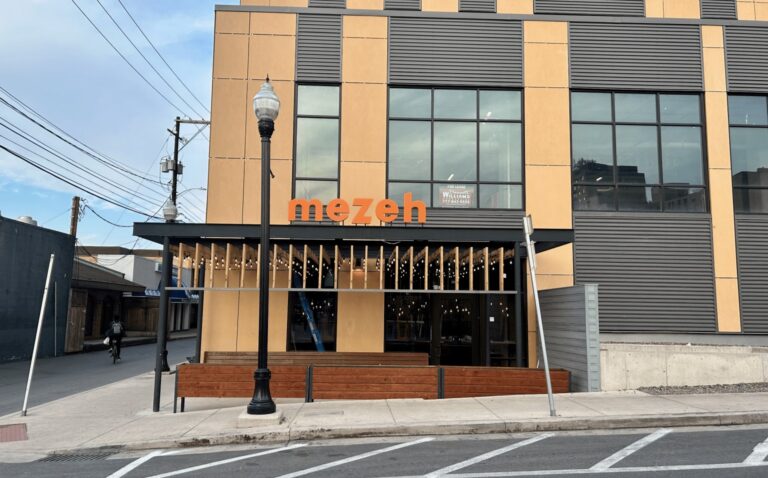
Mezeh Mediterranean Grill Set to Open in Downtown State College
Update: After the publication of this article, a Mezeh spokesperson said the State College restaurant is now scheduled to open on Feb. 22, not Feb. 10 as originally reported. Hummus, […]

Back in Blonde and Brewing
When she opened The Blonde Bistro in downtown Bellefonte 12 years ago, owner Ciara Semack—she puts the blonde in Blonde Bistro—was glad to provide a comfy atmosphere where customers could […]

State College Residents Launch Hand-Crafted Charcuterie Board Business
Not many people can say they got a business idea from a girls’ night with friends. But for Heather Heverly and Sarah Ehrlich, a seemingly normal do-it-yourself charcuterie board activity sparked the idea to create their own business.


