

Please let Evan Royster alone.
Those who say he’s not Curt Warner are wrong. In fact, after three seasons playing running back at Penn State, Royster has numbers that are, in almost all respects, equal to Warner’s after his junior year. Eerily so.
In fact, as we’ll soon learn, the difference between the two is only the length of an official NCAA football — 16 inches.
So, while it is 51 days until Penn State’s season opener, the comparisons between No. 22 (Royster) and No. 24 (Warner) are already in midseason form.
Royster was the talk of the town at Penn State’s Lift for Life last Friday. The Penn State senior was on campus after working out at home for six weeks in Fairfax, Va. He’s added about a dozen pounds and now weighs in at 225 lbs.
For his part, Warner is in South Bend, Ind., tomorrow, when he will be enshrined into the College Football Hall of Fame. His old coach – er, former coach – is also scheduled to be on hand.
The two will most certainly share the headlines again as Royster’s run at Warner’s all-time Penn State rushing record heats up in the coming months.
Folks may tell you, as the season closes in, that Warner was so much the better, that he did more in less time, that there’s no comparison. I don’t agree. And neither do the numbers.
In many ways, Evan is almost Curt Almighty, at least at this stage of his Penn State career.
To prove my theory, let’s set the stage and look at which numbers we are really comparing. And that begins with some missing Warner stats that should bowl you over.
SETTING THE WARNER RECORDS STRAIGHT
Sure, Warner is the all-time leading rusher in Penn State history, with 3,398 yards on 649 carries. That’s a 5.23-yard rushing average and 24 rushing touchdowns over the course of four seasons. The numbers are for 44 regular season games played from 1979-1982, although Warner appeared in only 39 of those games.
But that’s not the whole story.
In the official Penn State stats, as required by the NCAA at the time, Warner’s performances in four postseason bowls are not included in his career totals. True. (It is a system that is no longer in effect.) So, some of his best rushing performances at Penn State are not in his career statistics. Screwed up, huh?
Missing are his 14 rushes for 57 yards against Tulane in the 1979 Liberty Bowl, his 18 for 155 and a TD vs. Ohio State in the 1980 Fiesta Bowl, his 26 for 145 and two TDs vs. Southern Cal in the 1981 Fiesta Bowl, and his 18 for 117 and two TDs against Georgia in the 1983 Sugar Bowl.
All told, that’s 76 carries for 474, with five TDs — gone, as if they never existed. Curt and dried.
WARNER’S TRUE NUMBERS
Now, let’s add those numbers to Warner’s career totals. That would give him 725 carries for 3,872 yards, a 5.3-yard average, with 29 touchdowns over 43 games played from 1979-1982.
That’s the number Royster is really, honestly, shooting for as he pushes for the top spot in Penn State rushing history this fall.
(We could redo the whole all-time running chart at Penn State, throwing more yards to Cappy, Lydell, Suhey, et al – but let’s save that for another day. For now, we are just focusing on Warner and Royster.)
Heading into the 2010 season, after three years (2007-2009), Royster’s numbers look like this: 478 carries for 2,918 yards, a 6.1-yard average, with 23 rushing touchdowns over 37 games in which he appeared.
Counting Warner’s four bowl appearances, that would put Royster 954 yards and 247 carries behind Warner. A full season, to be sure. Not the 480 that is the official (bowl-less for Warner) difference between the two in Penn State record book.
A much bigger gap, no doubt.
Still, upon closer examination, Royster is almost a mirror image of Warner after their first three seasons. Allow me to explain.
A RUSH OF NUMBERS
I spent a lot of time reviewing the stats of Royster and Warner, literally charting every game of their college careers at Penn State. What I tried to do was to get a base level of comparison between the two.
That meant I could not use Warner’s fourth, and final, season numbers since Royster hasn’t played Year No. 4 yet. Can’t compare what hasn’t happened.
It also meant that I could only use those games in which each back played. So, for Warner, I tossed out the three games when he was injured in 1979 and the two more when he was hurt in 1981. Royster did not play in two games his freshman year in 2007, so I did not include them. I also tossed out four other Royster games from 2007 – contests in which Royster ran the ball 0, 1, 1 and 2 times for a total of 14 yards. I did keep his four-carry, 16-yard game against Ohio State that season.
Warner had no such cameo appearances. His lowest carry performances as a frosh were seven (for 35 yards) against Maryland and eight (for 19 yards) against Pitt. I kept those.
That left us with 31 games from 1979-1981 for Warner. And 33 games from 2007-2009 for Royster. Pretty darn equal. Close enough to do the following apples to apples, at least in my book.
As a senior, Warner played 12 games on his way to the national championship in 1982. Assuming PSU plays in a bowl game post-2010 and Royster stays healthy, he will have played in 13 games as a senior.
As it is, during their four-year careers – assuming a bowl game post-2010 – Warner’s team played 48 games and Royster’s played 52. And Warner will have played 43 games and Royster played, technically (counting those scant seconds in four games in 2007), in 46.
WHAT JOE SAYS
Kind of belies Joe Paterno’s poo-poohing the comparing of the two. This is what the coach had to say about the two players before the Blue-White Game in April:
“You’ve got to remember we’re playing more games. Somebody asked me at a meeting I had with some of our fundraisers this morning over at the Bryce Jordan Center, how would I compare Curt Warner, who just [was selected to] the College Hall of Fame, with Royster, because Royster was going to probably pass his record.
“And I didn’t think of it at the time,” Paterno continued, “but after thinking about it and after you asked the question, you know, these kids are playing a lot more football games. We’re playing 12, 13 games now. So I don’t think the stats really are significant in comparing one against the other. I think Royster is a good tailback, and I think he, if he stays healthy, he’ll have a big year.”
MAKING IT FAIR TO COMPARE
So, let’s compare Warner and Royster on the basis of their first three seasons at Penn State, using Warner’s 31 games and Royster’s 33 games of consequence.
And let’s make the statistics “significant,” as Paterno says, in several key categories. To totally level the playing field, all stats below include Warner’s bowl numbers from 1979-81, and do not include Royster’s four carries for 14 yards spread out over four games in 2007.
CORE NUMBERS – Warner had more carries (507 to 474), while Royster had more yards (2,904 to 2,714) and a better per-carry average (6.1 to 5.3 yards). Royster had an edge in rushing TDs (23 to 19).
Here’s the amazing part: This is the one statistic that shows you how similar the two are after their first three seasons at Penn State: Warner averaged 87.55 rushing yards per game, Royster averaged 88.0. That’s a difference of 16 inches a game.
100-YARD GAMES – Both had 12 in their first three seasons. Penn State won every one of them. Shows you the power of a 100-yard rusher, then and now, huh?
VS. RANKED TEAMS – Looking back to the 1980s glory days, the (mistaken) impression is that the Nittany Lions faced a mega-power every week. Not true, Intersectional Breath. In games in which they appeared their first three seasons, both Warner and Royster played against nine ranked teams.
Warner faced higher-ranked foes. The nine had an average ranking of 7.3 (featuring a No. 1, 3, 4 and 6), while Royster’s ranked opponents averaged out to a 12.5 (headed by a No. 1 and a 5).
Warner played better against the ranked teams. In three years, he ran 166 times for 899 yards, for a 5.4 average, with four 100-yard games. But his team won only five of the nine games. Royster ran 112 times for 574 yards, a 5.1-yard average, with only one 100-yard effort. PSU was 6-3 in those games.
Here’s where part of the rap on Royster comes in. A lack of exemplary play in big games is what seems to truly set part the two backs in their freshman, sophomore and junior years. A good part of Royster’s legacy will depend on how he performs this season against such opponents as Alabama, Iowa, Michigan, Ohio State and in a bowl game. Speaking of which…
BOWL GAMES – We already know that Warner was a madman in the postseason, with 58 carries for 357 yards (6.2 yards) and three TDs in his first three bowl games. That he rushed 18 times for 117 yards and two touchdowns, despite bad cramping, as a senior in the national title game against Georgia only solidified his legacy.
Royster, on the other hand, has not framed his career by his bowling performances. He did fairly well against Texas A&M in the 2007 Alamo Bowl, carrying nine times for 65 yards. But his six-carry, 34-yard performance against Southern Cal in the 2009 Rose Bowl was truncated due to an ankle injury. And his 17-carry, 65-yard game on a very sloppy Capital One Bowl track against LSU on Jan. 1 was strong but not spectacular. Total, that’s 32 carries for 164 yards, less than half of what Warner did.
TEAM RECORD – Royster’s teams fared better with him in the lineup (28-5, .848) than did Warner’s (24-7, .774), but that may be a small function of scheduling. As we saw earlier, Warner performed better in the big games, having a larger impact than Royster did on his team’s success.
DURABILITY – Royster added that weight in the offseason to gird himself for the 2010 campaign, since he will no doubt be asked to literally carry more of the load now that Daryll Clark has graduated and (insert name here) will be the Nittany Lions’ inexperienced starter at quarterback.
Royster has been strong so far. He’s played in every game over the past two seasons, but was hampered a bit by a sprained ankle as a freshman. Warner played every game as a sophomore, but as a freshman he missed three games with injuries and two more as a junior. Royster seems hardier, even though Warner averaged two more carries a game (16.4 to 14.4).
Remarkably (or not so much, if you have been paying attention), the two are very similar over the final five games of the season (counting bowl games), when the weather gets cold and the body never quite recovers from one game to the next. As a sophomore and junior, Royster didn’t miss a contest in the final stretch, and averaged 15 carries and 77.1 yards per game. Warmer missed one game, and for the nine stretch-run games in which he played Warner averaged 15.3 carries and 76.5 yards.
DURABILITY, PART II – At the Penn State Lift For Life event, Royster said he’s been told he needs to carry the ball 20 to 25 times a game. It has not been his forte, and is one reason that he was not projected to be a high draft choice had he chosen to declare for the 2010 NFL Draft.
They were right. Royster has had only four games in which he’s carried the ball more than 20 times – just twice in 2009, 23 against Minnesota and 20 against Michigan. His career high is 26 (for 90 yards) in a loss to Iowa in 2008.
Warner, on the other hand, had a total of 10 20-carry games as a sophomore and junior. (He added four more as a senior.) In 1981, Warner carried 28 times for 238 yards against Nebraska. He followed that with a pair of 22-carry games against Temple and Boston College, only to be capped off with a 26-carry, 256-yard performance against Syracuse. That was 98 carries for 716 yards in four weeks, for those of you scoring at home.
Royster is on the threshold of those numbers. He has had 11 games in which he rushed 16 to 19 times, while Warner had only five in that range in his first three seasons.
TOUCHDOWNS – Royster scored 23 touchdowns rushing his first three seasons, while Warner had 19 scores. But Warner returned kickoffs as a freshman and junior, scoring three more TDs in the process.
DEBUT – It should be noted that one of Warner’s biggest games as a Nittany Lion was his first, in the 1979 season opener at home against Rutgers. He carried the ball 12 times for 100 yards, an 8.3-yard average, for two touchdowns (his only two running scores of the season), caught two passes for 71 yards and a touchdown, and returned kicks for 109 more. That gave him 280 total yards, ranked third for all-purpose yards in Penn State history at the time.
Royster’s debut was a bit less auspicious, rushing eight times for 70 yards — for an 8.8-yard average that matched Warner’s — against Florida International in Beaver Stadium in 2007.
PROTECTION – Warner had a better offensive line blocking for him. Three times in Warner’s first three seasons a Penn State offensive lineman was named first-team All-Americans: Bill Dugan (1980) and Sean Farrell (1980-1981). Royster has had only one: A.Q. Shipley (2008).
And counting tight ends, eight Warner offensive line teammates from 1979-1981 were drafted in the first eight rounds of the NFL Draft. Only four were picked from 2007-2009, two of them tight ends in 2009 (Mickey Shuler and the blocking-challenged Andrew Quarless).
RECEIVING – Basically the same. Again. Royster had 36 catches for 360 yards, a 10.0-yard average, and two TDs. Warner caught 32 passes for 327 yards, a 10.2 average, and a touchdown.
PASSING – Warner did not have a prodigious passer protecting him, at least in his first three seasons at Penn State. Todd Blackledge took over as quarterback in the fourth game of the 1980 season, and did not really flourish until he was a senior.
In fact, Blackledge’s combined stats from 1980-1981 are nearly identical to Clark’s passing numbers for 2008. Blackledge was 180 for 366 for 2,594 yards, with 19 TD and 27 interceptions, when Warner was a sophomore and junior.
As a junior starting his first season in 2008, Clark completed 192 of 321 passes, with 2,592 yards, 19 touchdowns and 27 interceptions. His numbers were even better last year.
Still, Royster and Warner were almost equal in their importance to their offenses. Witness…
OFFENSIVE ROLE – Both Royster and Warner were critical to their team’s running game and overall offense, in different ways.
As a sophomore and junior, Warner’s rushing yardage comprised 24 percent of the team’s total offense. Roster’s contribution was only slightly less, between 22 and 23 percent.
But Royster had less of a supporting cast among the running backs. His first three seasons, Warner’s backfield mates included Matt Suhey, Mike Guman, Booker Moore and Mike Meade. Royster hasn’t been nearly so fortunate.
As a result, last season Royster had 44 percent of his team’s carries and 53 percent of its rushing yards. (As a junior, Warner had 31 percent of the carries and 36 percent of the yards.) More was expected of Royster. That shouldn’t change in 2010, that’s for sure.
THE BOTTOM LINE
Warner was better in big games and bowl games, but was injured more often. He had two more carries per game. Royster meant more to the running game and averaged almost a yard more per carry. Warner had better blockers, but his competition was a bit better. Both had excellent quarterbacks, with differing roles and formations.
And, remarkably, although they were separated by three decades, through the first three years of their Penn State careers Warner and Royster averaged almost exactly the same number of yards rushing per game.
The common tread? Guy by the name of Paterno.
More Latest Penn State News
View all Latest Penn State News
Harvest Fest Returns to Penn State Student Farm for 11th Year
One of Penn State’s annual celebrations of local agriculture and sustainability will return this week as the Student Farm Club hosts its 11th annual Harvest Fest. The free community event […]
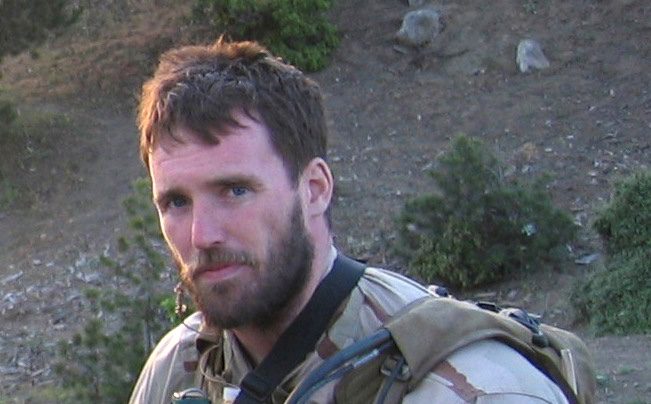
Murph Challenge Set to Return in Honor of Fallen Navy SEAL and Penn State Alumnus
Penn State students, athletes and community members will have another chance to take on the demanding workout honoring Penn State alumnus and Navy SEAL Lt. Michael P. Murphy when the […]

LION Bash Brings Together Campus, Local Community
Students, families and longtime State College residents filled South Allen Street Thursday evening, stopping for games, conversations and community resources at the annual LION Bash. The event, originally scheduled for […]


