

Student leaders, administrators, trustees, faculty and a State College Borough representative are members of a team that will advise Penn State’s Greek-life Response Team in implementing reforms for the university’s fraternities and sororities.
Penn State President Eric Barron announced on Monday the members of the Greek-life Response Team Advisory Group. He explained earlier this month that the five-man response team would be responsible for overseeing implementation of changes in the Greek-life system, but that an advisory group would review and provide input of the plans for each action item.
The advisory team announced on Monday will be co-chaired by Madlyn Hanes, vice president for Commonwealth Campuses, and Marcus Whitehurst, vice provost for Educational Equity. Other members include:
- Dean Vetere, president, Interfraternity Council (44 Chapters)
- Jonathan Zabala, vice president, Multicultural Greek Council (14 chapters)
- Malachi Burden, president, National Pan-Hellenic Council (2 chapters)
- Amanda Saper, president, Panhellenic Association (PHA) Council (22 chapters)
- Katie Jordan, president, University Park Undergraduate Association
- Hunter DeBellis, vice president, Council of Commonwealth Student Governments
- Valerie Detwiler, Board of Trustees
- Bill Oldsey, Board of Trustees
- Walt Rakowich, Board of Trustees
- Matthew Woessner, chair, University Faculty Senate
- Tom King, assistant borough manager/Public Safety, State College Borough
- Rachel Pell, associate vice president, Strategic Communications
- Charima Young, director, Local Government and Community Relations
- JeanMarie Jacob, incoming chair, University Staff Advisory Council
A member of the University Staff Advisory Council also will be named to the group.
On June 2, the university’s Board of Trustees approved a 15-point action plan for new safety initiatives focused on reforming Greek life. The measures come following the death of student and fraternity pledge Timothy Piazza, who died on Feb. 4 after suffering two major falls and other trauma during an alcohol-fueled bid acceptance party on Feb. 2 at Beta Theta Pi fraternity. His death resulted in charges against 18 fraternity members and the fraternity chapter, which Penn State has since permanently banned.
‘The self-governance model of Greek life within universities nationwide has failed to bring an end to excessive drinking, hazing, sexual assault and overly large disruptive gatherings within their organizations,’ a university statement on Monday said. ‘Collectively, the university and the board are dedicated to employing solutions that produce a fundamental shift for Greek life at Penn State.’
That 15-point plan included five action items Barron described as ‘critical.’
- University control of the misconduct process for serious violations by removing it from the IFC and Panhellenic councils
- Deferred rush so that students become established at Penn State academically and socially before joining a Greek organization
- Zero tolerance for hazing involving alcohol and physical or mental abuse, where violations will result in swift permanent revocation of recognition
- Significant reductions in the magnitude and frequency of social events, which can only be held if there are trained bartenders and only beer and wine is served
- Creation of an independent group to monitor and assess Greek-letter organizations with the capability to do much more frequent spot checks.
The Greek-life Response Team overseeing the implementation of the plan is chaired by Tom Poole, vice president for administration, and includes Damon Sims (vice president for Student Affairs), Zack Moore (vice president for Government and Community Relations), Keith Morris (University Police chief), and Frank Guadagnino (associate general counsel).
Barron said the members of that team were chosen because their positions directly oversee employees who will be responsible for carrying out the action items.
More Latest Penn State News
View all Latest Penn State News
Big Ten Blood Drive Puts Penn State in Race for $1M Grant, Seeks to Boost Supply Amid Critical Shortage
Penn State is asking students, alumni and fans to donate blood as the university joins all 18 Big Ten schools in a competition that could bring a $1 million grant […]

New International Students Adjust to Happy Valley With Hearts Still Connected to Home
Each August for the last 10 years, I’ve written a column about Penn State’s newly-arrived international students. Why that emphasis, you ask? Well, to put it bluntly, our campus and […]
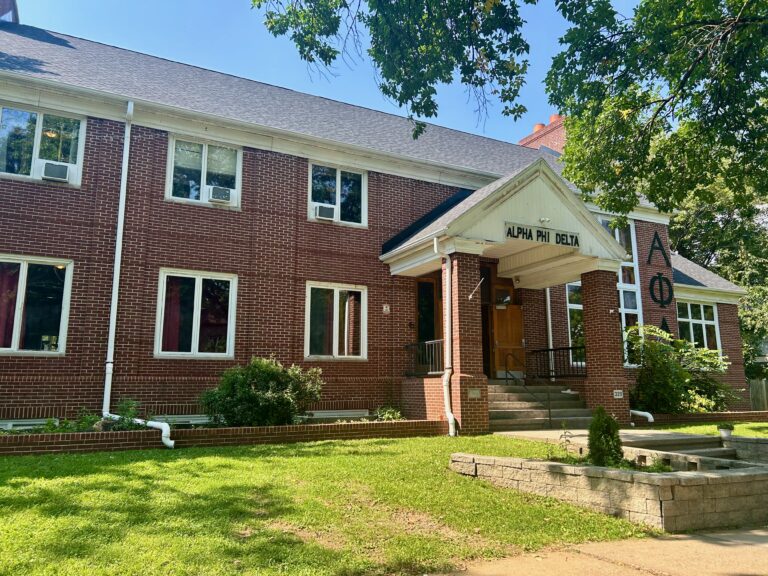
Judge Grants Penn State Fraternity Access to House After Members Were Locked Out on Move-In Day
A Centre County judge on Tuesday issued an order allowing Penn State fraternity members to return to their off-campus house after they said they were locked out by their landlord […]


