
After holding tuition flat for in-state undergraduate students a year ago, Penn State’s Board of Trustees voted Friday to increase tuition at some of the university’s campuses, including University Park.
Tuition for University Park students will increase by 2.29 percent — or $190 per semester — for Pennsylvania resident undergraduate students at University Park. Out-of-state students at University Park will see a 3.39 percent –or $515 per semester — increase.
Across all campuses there will be an aggregate base increase of 1.76 percent. At eight of the university’s Commonwealth Campuses — Beaver, DuBois, Fayette, Greater Allegheny, Mont Alto, New Kensington, Shenango and Wilkes-Barre — there will be no in-state increase. Brandywine, Hazleton, Lehigh Valley, Schuylkill, Worthington Scranton, York, and the online World Campus, will see a 1.25 percent increase for in-state students.
Pennsylvania undergrads at Abington, Altoona, Berks, Erie and Harrisburg will see an increase of 1.54 percent.
Non-resident undergraduates at Commonwealth Campuses will see tuition increases from 1 to 2.25 percent.
‘It remains our goal to ensure that all qualified Pennsylvanians from all walks of life have the opportunity to receive a world-class education at Penn State,” said Penn State President Eric Barron. “We are committed to access and affordability. This proposed operating budget balances the need to fund critical priorities and mandated cost increases while keeping the base tuition increase low or at zero for our Pennsylvania undergraduate students.’
The information technology fee will remain frozen at $252 per semester, as the university plans to eventually phase out the fee and incorporate it into base tuition. The student activities fee will increase by $1 or $2 depending on campus — at University Park it will increase by $1 per semester to $96. The student facilities fee will rise by $2 at most campuses, including University Park, bringing the fee there to $126 per semester.
Trustees Ted Brown and Rob Tribeck spoke against the tuition increase during Friday’s meeting, after trustee Bill Oldsey voiced his opposition during the finance committee meeting on Thursday.
‘I just am not comfortable with supporting an in-state tuition increase of any amount,’ Brown said. ‘This board came together exactly a year ago and, with Dr. Barron’s leadership and his team, implemented an in-state tuition freeze. So we know it can be done, and I would just — had hoped that we could do it again this year. And I would share Rob’s comments that the number one reason we aren’t able to do it is because we are not getting our fair share from the Commonwealth.’
Brown, Tribeck and Oldsey were joined by Alice Pope, Anthony Lubrano and Russell Redding voted in opposition to the increase.
The tuition and fees are part of an overall $5.1 billion operating budget for 2016-17, marking the first time the university’s budget has cracked $5 billion. Last year’s budget was $4.9 billion.
On Thursday, University Budget Officer Rachel Smith said in initial planning last fall, the Penn State had hoped for a budget with no tuition increase for Pennsylvania students after Gov. Tom Wolf had said he hoped to restore the university’s state funding to pre-2011 levels. When it became clear Wolf didn’t have the support in the state legislature to provide sufficient funds, the goal became as low an increase in tuition as possible.
Penn State received a 2.5 percent increase in the Commonwealth’s 2016-17 budget bringing its general support appropriation to $230 million. Including money for the Penn State Hershey Medical Center, total state support this year is $315 million.
Tuition and fees make up 32.8 percent of the proposed $5.147 billion operating budget. Penn State Hershey Medical Center revenues will comprise 35.1 percent of the budget, the first time that they have exceeded tuition revenue in the budget, Smith said.
Commonwealth appropriations make up 5.9 percent of the budget.
For the general funds budget — which includes education and general funds, agriculture and extension, the College of Medicine and Pennsylvania College of Technology — tuition and fees are 79.1 percent, appropriations are 13.6 percent and the rest comes from other sources.
The university says additional expenses this year largely come from increasing costs for basic energy and facilities maintenance, employee health care and retirement benefits, and modest pay increases.
Employee benefits are expected to increase by $11.8 million this year, including an additional $6.5 million for health care benefits.
The budget also includes $25 million to adequately fund contractual amounts for labor agreements with technical-service employees and health professionals.
Barron said to keep tuition increases as low as possible, the university identified recurring cost reductions, as it has every year since 1992.
“To achieve this goal while providing the necessary resources to address the cost increases associated with institutional priorities and mandates, we identified nearly $20 million in expense reductions and reallocations,’ Barron said.
More Community & Entertainment
View all Community & Entertainment
January Is a Call to Action to Respond to Stalking
This column by Centre Safe Executive Director Jennifer Pencek originally appeared in The Centre County Gazette. When we talk about acts of interpersonal violence, oftentimes people will focus on sexual […]

Busy Weekend of Fall Festivals and More on Tap Around Centre County
The weekend of Sept. 29-Oct. 1 is packed with activities around Centre County, including fall festivals, Oktoberfests, fairs, concerts and more. Check out some of the weekend highlights below. For […]
Downtown State College Cheesesteak Shop Sets Opening Date
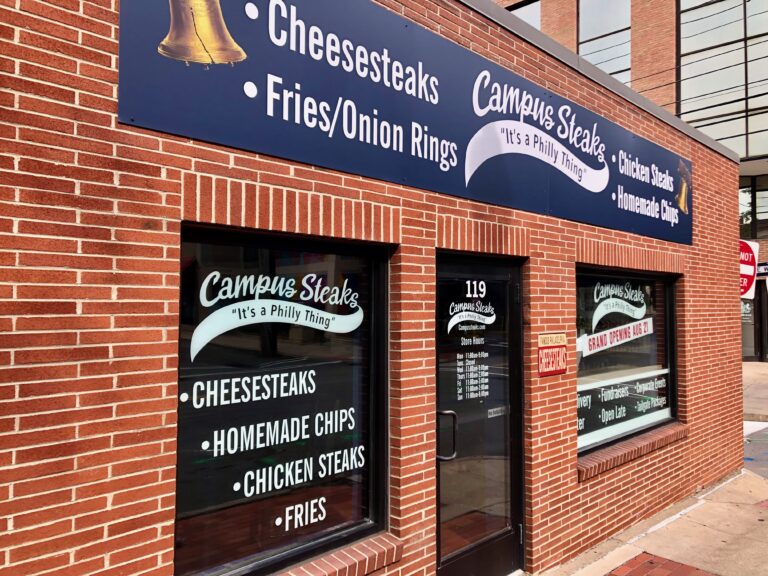
A new cheesesteak shop that promises a taste of Philly in downtown State College has set an opening date. Campus Steaks plans to hold a grand opening on Aug. 28 […]


