
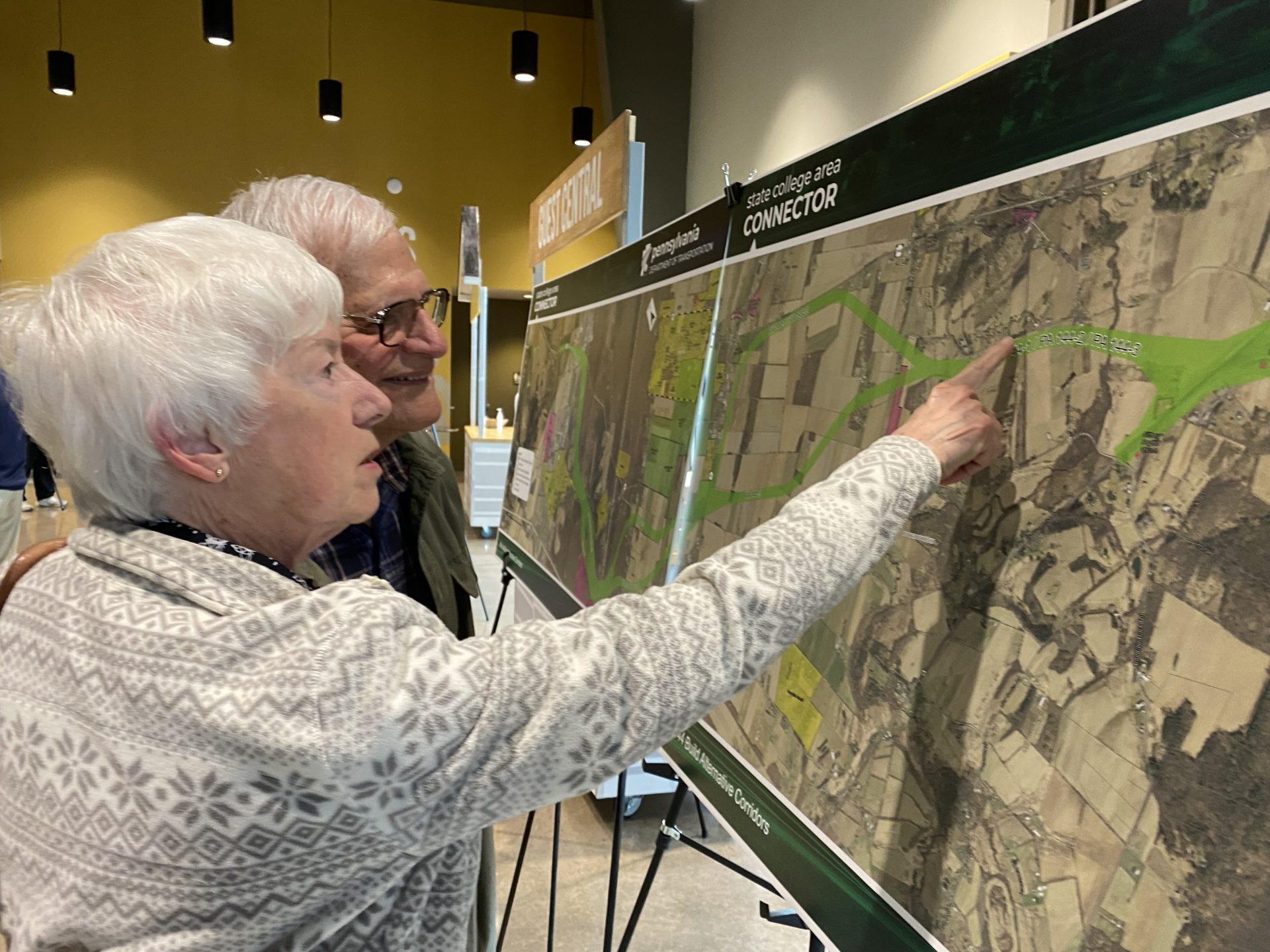
A large crowd of community members attended The Pennsylvania Department of Transportation’s public meeting at Calvary Church in Boalsburg on Tuesday to hear updates on the State College Area Connector Planning and Environmental Linkage Study.
During the gathering, PennDOT representatives shared an update on the data collection efforts, traffic analyses and build alternative corridor refinements since the last public meetings were held in September.
A similar meeting was held at the Centre Hall Fire Station on Wednesday.
The purpose of the study is to identify existing and projected transportation needs within a 70-square-mile area in the U.S. Route 322, state Route 45 and state Route 144 corridor, where the existing road network and configuration cause safety concerns and lack continuity.
“We are just trying to give people updated information on traffic studies, traffic number, in regards to alternative tweaks, they can sit down with consultant people to take a look at the mapping to see where they live, how a particular alternative might affect them,” said Marline Fanin, community relations coordinator and press officer for PennDOT. Those who were unable to attend the meeting can view the information and submit comments at penndot.pa.gov.
Efforts to connect Route 322 at Seven Mountains and southern Centre County with a four-lane highway date back nearly two decades, but the project was scrubbed in 2004 when funding was pulled. In 2019, Gov. Tom Wolf announced the state’s commitment to finally move the project forward, with an estimated cost of about $670 million.
With the completion of the four-lane realignment of U.S. 322 at Potters Mills Gap last year, the connector would complete a four-lane highway from the State College area to Harrisburg.
Many area residents are concerned about how the project might impact the community and environment. Along U.S. Route 322, signs can be seen that show concern about how the project may impact farms and families.
“Certainly, people are going to be impacted,” Matt Keeffer, a resident of Oak Hall, said. “I would be concerned about the southern routes and their proximity to the mountains, impacting the watershed.”
Joan and Bill Zimmer of Tusseyville said they are worried the project will impact their community, but said PennDOT did take some of the comments from the September meeting into consideration.
“They narrowed the road for one, which is a big deal, and they are studying whether they can go over Centre Hall Mountain. This looks like a pretty good route, in the sense that it affects less people, less homes and less businesses,” Bill Zimmer said.
“It is going to impact people in many ways, no matter what route they take,” Joan Zimmer said.
The study is the first of five phases in advancing the transportation project. After the study is finalized, it will be followed by preliminary engineering and environmental studies, final engineering design, right-of-way acquisition and construction.
Construction is not expected to begin until at least 2027 and will take several years to complete.
Fanin said by this coming summer, PennDOT should have a summary of the study and have two to three options identified for the project. At that point another round of public meetings will be held.
This story appears in the April 7-13 edition of The Centre County Gazette. Geoff Rushton, editor of StateCollege.com, contributed to this report.
More Local News
View all Local News
What to Expect This Week and Beyond for Atherton Street Work
As work continues on PennDOT’s multi-year Atherton Street project in State College, here’s what motorists can expect for the week of May 8 — and a look ahead to some […]
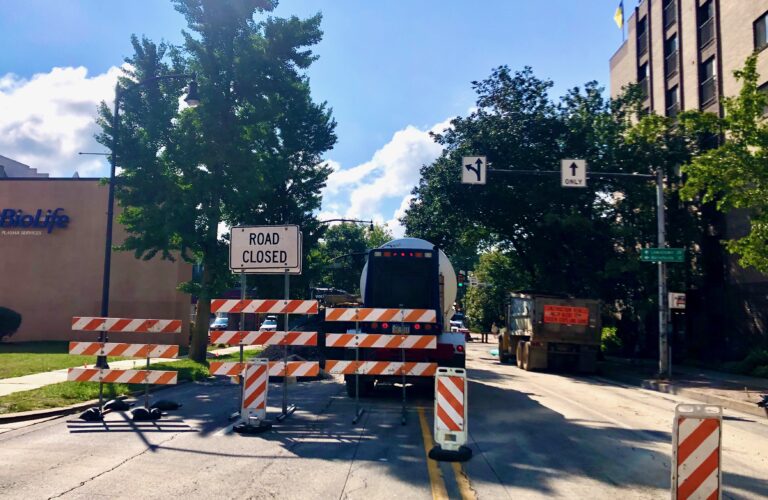
Road Closure, Detours Planned for Atherton Street Work
Road work next week for the Atherton Street project in State College is expected to include a 60-hour closure for a three-block area. South Atherton Street between West College Avenue […]
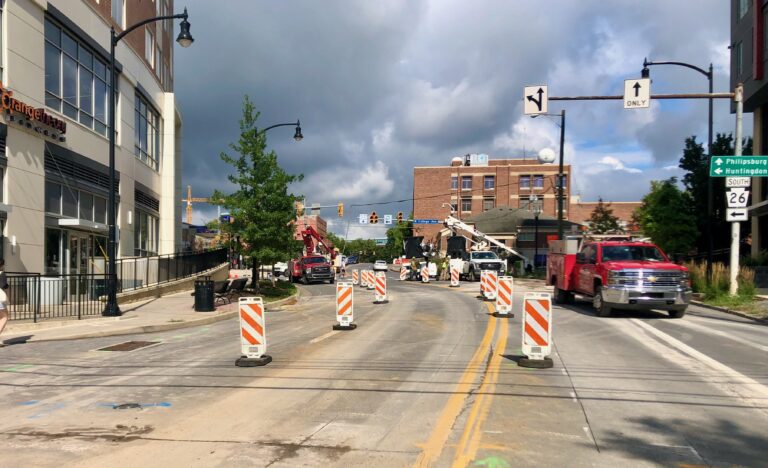
Atherton Street Work Set to Resume
After shutting down in December, work on the multi-year Atherton Street project is expected to resume next week, according to PennDOT. Crews will be saw-cutting from Monday, Feb. 27, through […]


