
Between Newt Gingrich going after a CNN reporter and several news organizations jumping the gun on Joe Paterno’s death, this was another rocky week for American journalism.
The common denominator here is news providers becoming part of the news they’re providing, which is rarely a good thing.
1. When does the private life of a public figure become the public’s business?
Moderator John King opened the Republican candidates’ debate last Thursday by asking Gingrich about his ex-wife’s claim that he had essentially sought her permission to continue his affair with a congressional aide (now his wife Callista). Asked if he would like to respond, Gingrich said, “No,” – the audience cheered – “but I will.”
Thus encouraged, the ever-glib Gingrich got on a roll:
“I think the destructive, vicious, negative nature of much of the news media makes it harder to govern this country, harder to attract decent people to run for public office,” he said. “And I am appalled that you would begin a presidential debate on a topic like that.”
That brought the crowd to its feet. So the ex-Speaker pressed ahead:
“Every person in here knows personal pain. Every person in here has had someone close to them go through painful things.” To be asked about such things, he said, “is as close to despicable as anything I can imagine.”
More cheers. So Gingrich said it a third time:
“I am frankly astounded that CNN would take trash like that and use it to open a presidential debate.”
And he ended with a flourish. “I’m tired of the elite media protecting Obama by attacking Republicans.”
Which brought the crowd to its feet again.
Gingrich was a little bit right, but mostly wrong. He was right to question news media probes into the private lives of public figures. And he’s right that such scrutiny can discourage “decent” people from seeking elective office.
History offers plenty of examples of competent, even brilliant leaders who were sleazeballs in their private lives. The only time the private behavior becomes newsworthy is when it’s at odds with the leader’s public pronouncements and actions – which is exactly where Gingrich comes a-cropper.
This is the guy who shamelessly courted “family values” voters while jumping in and out of the beds of his mistresses.
But that’s old news about old Newt. What was breathtaking about his performance in Charleston last week was the way he made his ex-wife’s pain his own. We might imagine he was having a grand old time cheating on his wife, but no, he and Marianne were fellow sufferers from the adultery that had somehow been visited on their marriage. This, friends, is not a “decent” person.
And then the kicker: To call him out on his hypocrisy was to side with President Obama against Republicans. Never mind exhaustive news coverage of sex scandals involving such Democrats as Eliot Spitzer, Anthony Weiner, Bill Clinton …
Diverting attention from one’s own failings by calling attention to the supposed failings of the news media is a stupid politician trick, but as long as the public eats it up the way this debate audience did, it’s going to stay in the act.
2. Get It First, But First, Get It Right
How many times does this have to happen? In 1981, President Reagan and his press secretary, James Brady, were shot. The Newseum, the journalism museum in Washington, D.C., has a remarkable clip of ABC newsmen Frank Reynolds and Sam Donaldson tracking the story as it unfolded.
At one point, we see a hand offering a sheet of yellow paper to them. Reynolds shares its contents: James Brady has died.
A few moments later we see the hand again, and another sheet of paper: Brady is alive!
Reynolds, as laconic as they come, loses it. He bangs his fist on the desk and shouts, “Let’s get it nailed down!”
The same thing happened a year ago: U.S. Rep. Gabrielle Giffords was shot in Tucson. Some media outlets reported that she had expired. She hadn’t.
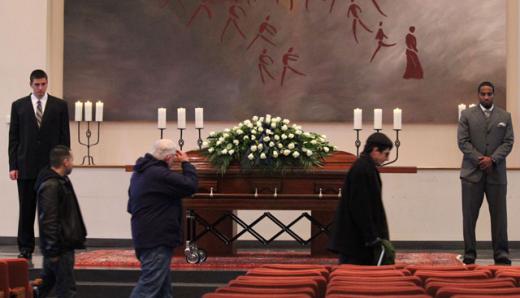
And then came last Saturday night: Paterno was dead. No, he wasn’t.
To its credit, Onward State, the student-run website where the erroneous report originated, apologized to readers and the managing editor stepped down – a nice example of claiming responsibility quickly and decisively.
But putting people through that kind of whipsaw experience is one of the worst things journalists can do. In ethics class we talk about the conflict between ethical and non-ethical values. Scooping the competition is an example of a non-ethical value. It’s not wrong to want to get the story first, but that desire should never take precedence over the ethical imperative to report the news accurately.
There’s enough grief and anger in the world as it is. The last thing we want to do as journalists is add to the grief or become targets of the anger.
More Altoona
View all Altoona
Suspect in Killing of Health Care CEO Arrested in Altoona
A man arrested in central Pennsylvania on Monday is accused of murdering UnitedHealthcare CEO Brian Thompson last week in New York City. Luigi Mangione, 26, was taken into custody by […]

Penn State Athletics Reports Four Positive COVID-19 Results Following Latest Round of Testing
Penn State Athletics reported four COVID-19 positive cases following its latest round of testing the department announced on Wednesday as part of its weekly update.

Penn State Basketball: Ohio State Game Postponed Due To COVID-19 Positives
Penn State men’s basketball’s Wednesday road meeting against Ohio State has been postponed due to an unspecified number of positive COVID-19 cases.


