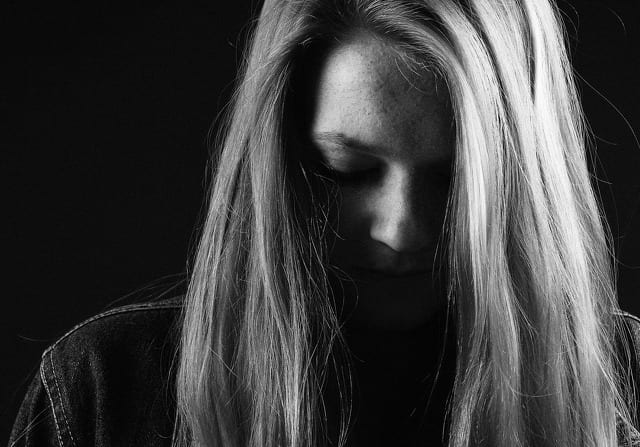
I am concerned for our kids. There’s a national trend of high-anxiety and depression in teens. And, locally, the challenges can be even greater. Sometimes called spoiled or helicoptered, our kids are suffering.
The facts show that the percentage of college students seeking mental health counseling grew 29.6 percent between 2009 and 2014. Meanwhile, institutional enrollment only increased 5.6 percent. According to Time magazine’s Teen Depression and Anxiety: Why the kids are not alright, “more than 2 million teens report experiencing depression that impairs their daily function. About 30 percent of girls and 20 percent of boys – totaling 6.3 million teens – have had an anxiety disorder, according to data from the National Institute of Mental Health.”
So, what’s going on?
The reality is, the young adults and older teens of today have experienced far more pressure than most of us. And, they started at a young age. Today’s college freshmen were not even in kindergarten when two airplanes struck the World Trade Center and another hit the Pentagon. Since then, our country has been in an ongoing fight against terrorism. War, enlisting in the military, domestic terrorism — these are commonplace events for our children.
Of course, these things existed for previous generations. But not with the added pressure of social media, while maintaining a schedule that rivals any full-time job. Kids today do not just play baseball. They play on the local team as well as a travel team. Sometimes, more than one. They sometimes have private batting lessons, and personal pitching coaches. It’s no different for soccer players, gymnasts, dancers and thespians. They’re all determined to be the best, and make it big. Of course, very few actually made that choice for themselves. Many were pushed into it by their parents.
These kids are also expected to maintain good grades. Ironically, although still intense, it sometimes seems the pressure here is actually less than it is with sports and other activities. But kids are expected to do well enough to get into college, especially if their sport won’t do it for them.
All the while, through the ups and downs of these activities, and any relationships they make along the way, everything will be splashed across some form of social media. They will know when their friend was invited to a party and they were not. They will see what a great time everyone is having at the local college, when they chose to go away from home. They will know every success, reward, award and compliment earned by any of their friends. Meanwhile, all of their insecurities and failures will also be out there for everyone to see.
Far too many young people are struggling with the pressures they are experiencing. Sit with any group of women with teenagers, and you will hear about the battles. Their kids are often angry, depressed, using drugs/alcohol, displaying unusual behaviors, withdrawn… the list goes on and on.
While girls tend to be at more risk for mental health diseases, boys seem to have more extreme outcomes. Specifically, they use more illicit drugs and are more likely to commit suicide. This may be because they are less likely to seek help. Or it may be because they mature at a slower rate, putting them right in the years of major transition while they are not developmentally ready to be there. Whatever the rationale, the late high school and early college years can be overwhelming and scary for both the young men and their parents.
The Local Perspective
Locally, the issues, in some ways, may be even more extreme than they are in other parts of the state or country. We’re a small town, with big city pressures.
Youth sports in our area are unique from many other areas. It’s not out of the ordinary for volunteer parent-coaches to be former college, or even professional, athletes. The participants are sometimes kids of former college athletes. And the role models are current college athletes at one of the top universities for athletics in the country.
The same can be said of children in the arts and sciences as well. Prolific scientists, world-renowned musicians and top scholars are their parents, or they are the parents of their friends. It makes it tough for the ordinary kid, with ordinary parents who just wants to play something for the fun of it.
State College students are also reminded from the time they are aware of their surroundings that college is the next step after high school. The expectation may be motivating, but it can also be overwhelming to the non-traditional student who’s not sure they’re on the college-track. According to the Pennsylvania Department of Education, 82 percent of State College graduating seniors are college bound, while the nearby districts of Bellefonte, Bald Eagle and Penns Valley have rates of 59 percent, 68 percent and 77 percent, respectively. Nationally, that number was 66 percent in 2014. I imagine it’s not easy being one of the 19 percent not going on to college from State High.
And, yet, we’re a small town where there’s typically about two degrees of separation or less between residents. Put that on social media, and everyone knows everyone’s business. We adults might be able to handle that. It’s a far different pressure for pubescent teenagers who lack the self-confidence to ignore what’s being said about them or their friends.
The Good News
The good news is that teens and young adults are aware of their issues. In fact, they’re so aware that the class gift for the Penn State Class of 2016 was an endowment to the center for Counseling and Psychological Services (CAPS). The fund was set up to support their peers in need of counseling services.
Unlike their predecessor generations, youth today value the importance of seeking treatment for mental health issues. They still have a long way to go with estimates that only 20 percent of youth in need of treatment are seeking help, but they’re getting there. More and more students are getting the help they need.
These kids may have been coddled and overprotected, but they’ve experienced plenty of ups and downs in their lives. While many like to sit around and pass judgement on the younger generation, I’ll sit in awe as they build their mental stability and grow up to be resilient adults.