
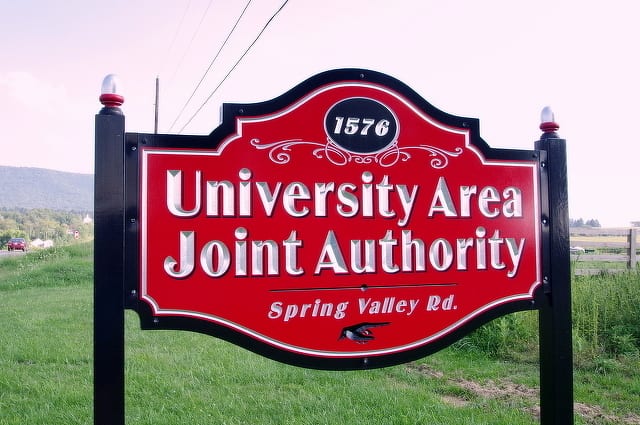
Residents and visitors in certain parts of College Township are well acquainted with the smell coming from University Area Joint Authority’s wastewater treatment plant on some days.
But good news is on the horizon.
UAJA’s new odor control facility on Spring Valley Road is expected to be completed in October, Ben Burns, of engineering firm Herbert, Rowland & Grubic, Inc., told College Township Council last week.
‘Moving forward we really don’t see any hindrances that we could perceive as justifiable to the contractor’s continued delays at this point,’ Burns said.
UAJA announced plans to move forward with the $10 million project in January 2018, but bids received in April 2018 were more than $3 million over budget. After being put out to bid with value engineering options, the project was awarded last July to general contractor Global Heavy.
The new biofiltration system will be housed in a concrete structure, and to pull the project within budget the contractor opted for a pour-in-place alternative as opposed to the initial plan for a precast structure.
‘There was an initial onset delay associated with developing that [alternative] design,’ Burns said.
Initially UAJA also intended for the new facility to be constructed adjacent to the existing biofilter, which, even though not operating at full efficiency, would have been kept online through construction. The new plans, however, required for the new facility to be built on the site of the existing one, which was taken offline after construction began in December.
Since then, the plant has been operating without a biofilter, though Burns said UAJA has done its best to mitigate odors otherwise.
‘UAJA has always done a tremendous job of trying to mitigate the odors generated by the process,’ Burns said. ‘They’ve done some work over the winter to help improve the operational efficiencies of the composting facility that ultimately result in less odor being produced the better operational efficiency you have. They have made some improvements, but generally they’ve always made a strong attempt to minimize odors through best operational practices.’
Weather and atmospheric conditions play a major role in whether the odor will be detectable and how widespread it will be. But Cory Miller, UAJA executive director, said odor reports from residents submitted by phone or online have been helpful in mitigation efforts.
‘When those odor complaints come in, we immediately go into a why-is-it-happening mode,’ Miller said. ‘What we do is we survey the compost facility and the dewatering facility and see if anything is out of order and we also look at the atmospheric conditions. Even though we know we can’t make the odors go away we can make sure we are producing as little as possible. Because of odor complaints, we have found things that have broken that we didn’t know were broken. Yesterday they worked fine, today they‘re not. The odor complaint helped us find there was something wrong. We encourage people to continue to do that, call in or do the online [form].’
Miller also said that early on during construction, the odor noticed by residents was partly attributed to the organic media from the old filter being removed.
‘When they removed that material it was absolutely horrible,’ Miller said. ‘No matter what we did that was going to happen because we had to remove that media.’
Completion of the new facility was slowed early on by the amount of rock that needed to be broken up on the site, and then again several times throughout the winter because of snow and extreme cold that prevented concrete pouring. Those delays moved the projected completion from July to October.
When completed, the new system will be the culmination of a process that dates back to 2014 when UAJA commissioned an odor control study to address resident complaints. Though a number of operational changes were successful, the smell still persisted.
The study showed the biggest contributors were a result of the current biofilter working to reduce odors from the composting facility and the dewatering facility.
The new, fully enclosed system consists of three biofilter cells that use inorganic media, a natural, non-carbon material that is light and porous and allows microorganisms to grow on it, break down molecules and remove the odor from the air. Air from the compost and dewatering facilities is pulled into the system, distributed across the filters then discharged through a stack.
Inorganic media doesn’t deteriorate like organic media, Burns said, and so will have a longer life and is more efficient.
Miller added that the venting stack has already been fabricated and is awaiting a pad to be poured before it is installed.
Once completed, Burns said, there will be a commissioning period that takes about 30 to 60 days before the system is fully effective. During that period, the biofilter mass that removes the odor will be established on the media and wastewater will be used to seed the process.
The new system is expected to reduce odor from the plant by 90 to 95 percent and significantly reduce the area affected by any remaining nuisance odor.
‘We anticipate odor removal efficiency to be substantially higher,’ Burns said.
More Community & Entertainment
View all Community & Entertainment
January Is a Call to Action to Respond to Stalking
This column by Centre Safe Executive Director Jennifer Pencek originally appeared in The Centre County Gazette. When we talk about acts of interpersonal violence, oftentimes people will focus on sexual […]

Busy Weekend of Fall Festivals and More on Tap Around Centre County
The weekend of Sept. 29-Oct. 1 is packed with activities around Centre County, including fall festivals, Oktoberfests, fairs, concerts and more. Check out some of the weekend highlights below. For […]
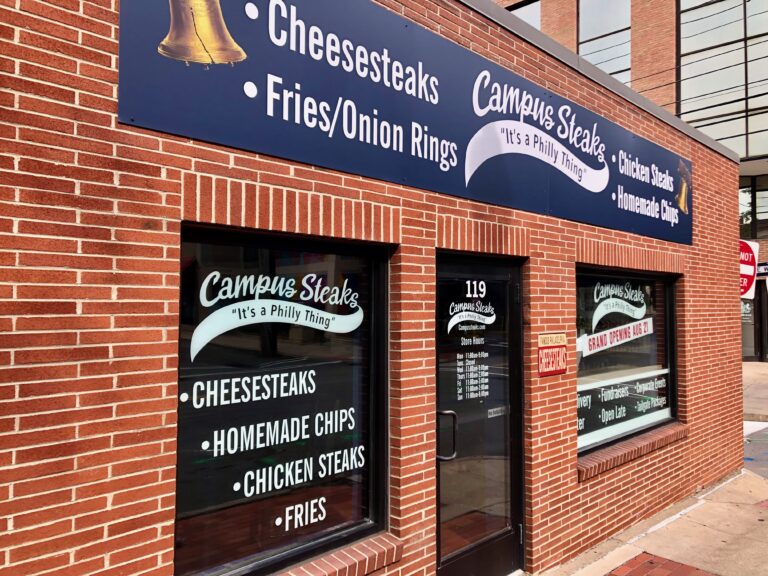
Downtown State College Cheesesteak Shop Sets Opening Date
A new cheesesteak shop that promises a taste of Philly in downtown State College has set an opening date. Campus Steaks plans to hold a grand opening on Aug. 28 […]


