James Franklin was gleeful as he walked off the turf and into the locker room after a 33-30 win at USC last weekend. And he should be. Penn State is 6-0 with a No. 3 ranking in the AP Top 25 poll. If the Nittany Lions win the rest of the games they’re supposed to, all signs point to a debut in the College Football Playoff, even if they fall to Ohio State at home on Nov. 2.
After a bye week, Penn State will play six more regular season games before a committee decides the program’s playoff fate. Everything will be discussed surrounding the Nittany Lions’ qualification as not only a playoff team, but their seeding within the 12-team format. The good, the bad, the ugly — everything.
What have we learned about this year’s Penn State team at the midseason point?
The good:
Allar, Kotelnicki meant for each other
There was no greater question mark in the offseason. The performance of quarterback Drew Allar in his second season as a starter and his improvement under offensive coordinator Andy Kotelnicki was always going to be the difference maker in 2024. Through six games, Kotelnicki’s system appears to be working perfectly, not only for Allar, but the entire offense.
A lack of explosiveness was ultimately the Nittany Lions’ greatest weakness in an oh-so-close 10-3 season in 2023. With Kotelnicki now on board, that area has become arguably the team’s greatest selling point.
Penn State is tied for No. 7 nationally with 7.1 yards per play, a statistic that emphasizes the growth Allar, his receivers and running backs have made at generating big plays under Kotelnicki. Even when faced with adversity, Allar hasn’t wavered, and neither has Kotelnicki, who has dipped deep into his bag of tricks no matter what the score or situation.

Warren nation’s best TE
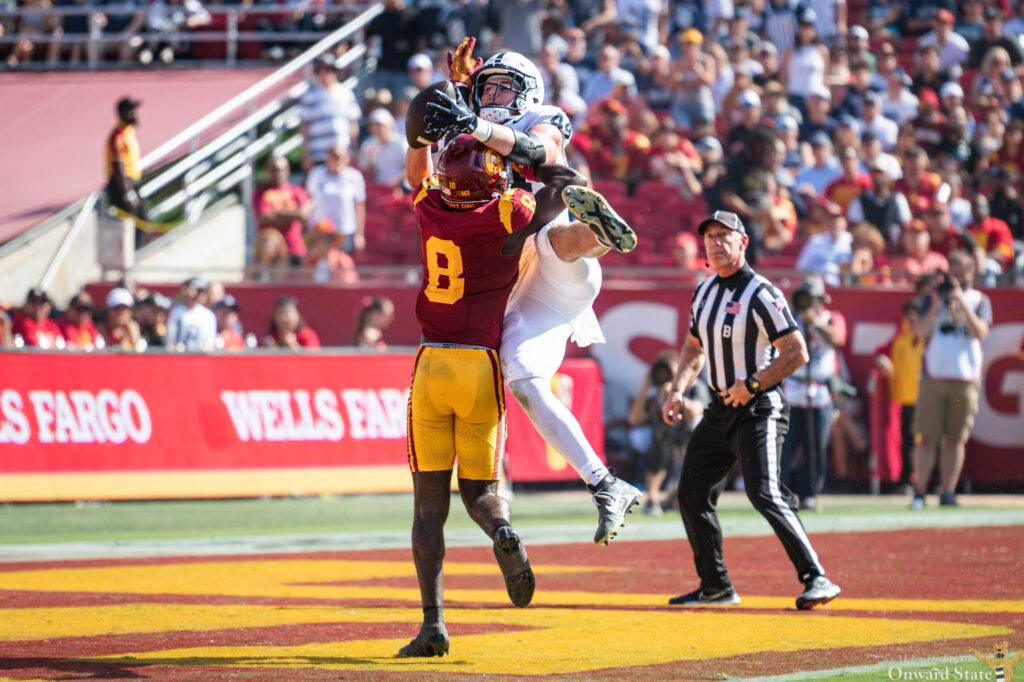
It’s no longer an argument. Tyler Warren is the best tight end in the country. And so far, he’s been Kotelnicki’s greatest offensive weapon. Warren has snapped, run, thrown and caught the ball this season. He’s the ultimate cheat code that seems to out-do himself each game. Like, he literally broke his own record for receiving yards by a Penn State tight end with 224 against the Trojans.
The Nittany Lions’ wide receivers have improved, but have not been overwhelming, under Kotelnicki’s leadership. That being said, they haven’t really had to because Warren is the team’s true No. 1 receiver despite the fact that he’s a tight end.
Third-quarter defense
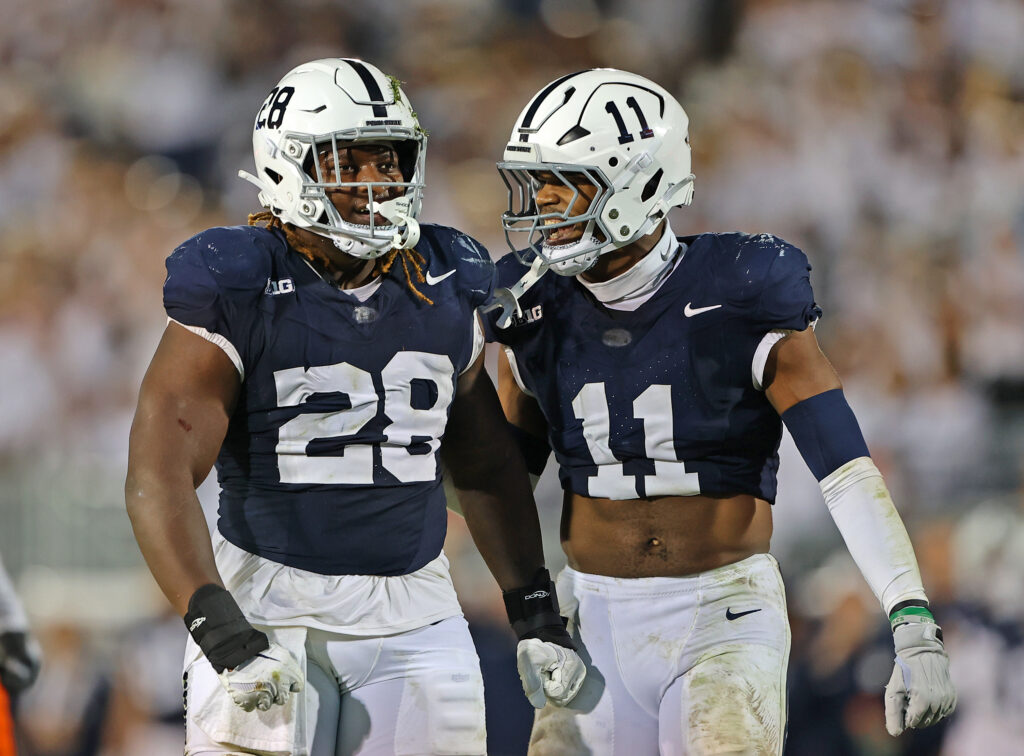
There’s no better team in the country at keeping opposing offenses at bay in the third quarter. Like at USC or against Bowling Green, there have been times the Nittany Lions have needed room for a comeback early in the second half. And the defense, led by new coordinator Tom Allen, has provided just that spark.
That’s not to say Allen’s defense hasn’t struggled at times, because it certainly has, at least more than any unit under previous defensive coordinator Manny Diaz. But it wasn’t until this past weekend that Penn State allowed a third quarter point in 2024, and that’s a major reason the team remains undefeated despite early-game scares.
Singleton’s refound explosiveness
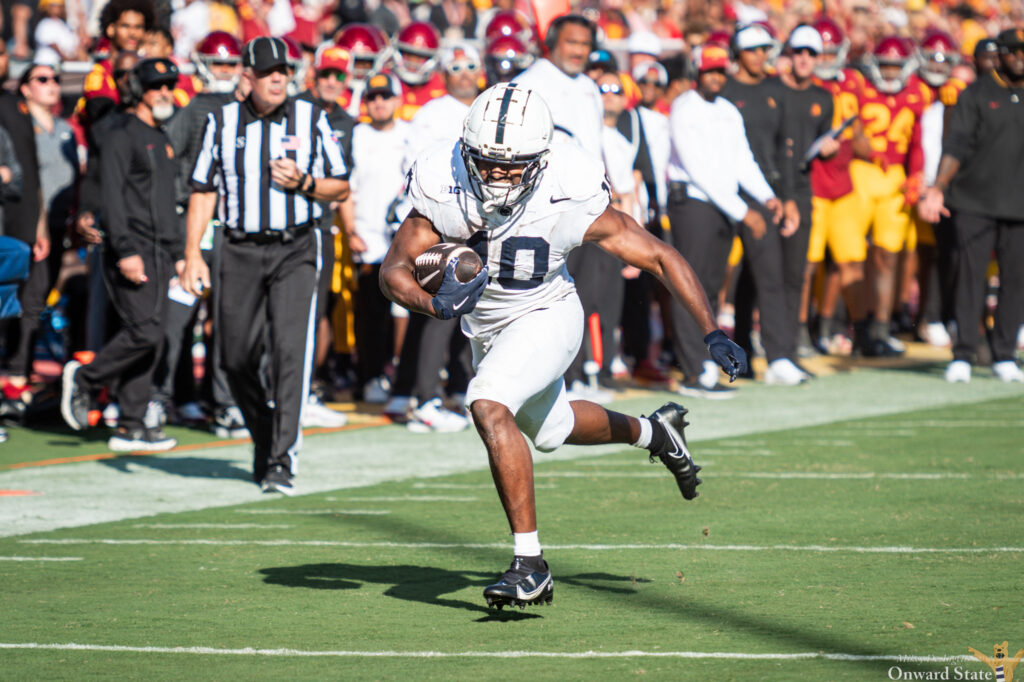
For whatever reason, running back Nick Singleton did not have nearly the same explosiveness in 2023 as he did as a true freshman the year prior. Under Kotelnicki, the dominant Singleton has returned to form. Singleton has rushed for 434 yards and scored six total touchdowns in five games played this year, and currently ranks tied for third in the Big Ten with 6.9 yards per carry.
Singleton’s impact is obvious. Penn State rushed for a season-low 85 yards against UCLA, a game that Singleton missed with an injury. Perhaps not entirely healthy against the Trojans last weekend, Singleton rushed for a season-low 26 yards, which put more pressure on the pass offense to carry the weight.
It’s clear that if the Nittany Lions want to win big, they’ll need their star running back to play like he did through the first four games of the year.
The bad:
Slow starts
Penn State has found a way to close each of its six games out, but slow starts have plagued the team and made things closer than they’ve needed to be. The Nittany Lions have entered halftime with a lead only three times this year, having trailed both USC and Bowling Green and tied with Illinois into the break.
They also ended the first quarter scoreless and tied against West Virginia and UCLA.
Kotelnicki’s system has improved an otherwise struggling offense from last season, but Penn State still ranks tied for No. 90 in the country with an average of four first-quarter points per game. Much like in 2016, the Nittany Lions are establishing themselves as a second-half team. But that will need to change if they want to beat the Buckeyes.
Injuries
As of two weeks ago, Penn State was the second-most injured team in the Big Ten, according to the conference’s availability report. Football is a highly physical game, and injuries happen, but the significant amount has sorely hurt the Nittany Lions through six games.
There’s no injury that stands out more than the one safety Kevin Winston Jr. sustained against Bowling Green on Sept. 7. Winston was arguably the team’s top defensive player and his absence has shaken up an already-thin safety room. Jaylen Reed, who was pinned to play nickel corner, has reverted back to safety, where he and Zakee Wheatley have played a ton.
Along with Winston, tight end Andrew Rappleyea and running back Cam Wallace have also sustained “long-term” injuries. Kaden Saunders, the team’s starting punt returner through the first four games of the year, has missed the past two games with an injury and was previously not healthy enough to appear at his traditional position, wide receiver.
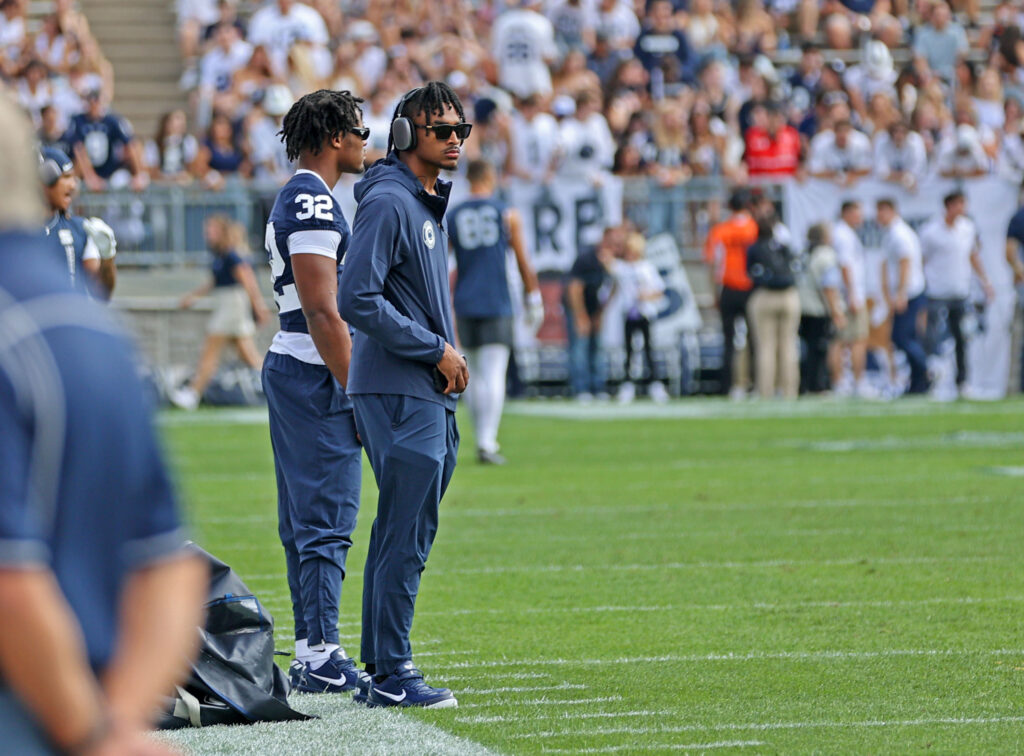
As previously mentioned, Singleton has missed time, as has starting linebacker Dominic DeLuca, whose snaps have been limited since his return against the Bruins on Oct. 5.
The third linebacker
Kobe King has excelled this season, not only in the stat sheet but also as the vocal quarterback of the defense that Franklin so desperately needed him to be. Beside him, Tony Rojas has done his job, but the other linebacker spot has been a revolving door that has emerged as the defense’s greatest question mark entering the second half of the year.
DeLuca’s role as a leader cannot be understated, both on defense and special teams. But through six games, he has struggled, both when healthy and in his return from injury. DeLuca currently holds a defensive grade of 61, per Pro Football Focus — the lowest of any defensive starter.
Tyler Elsdon, who has split snaps with DeLuca throughout the year, has struggled even more. Elsdon has evidently lacked the speed necessary to consistently stop high-powered offenses, and has missed tackles that his defense needs him to make. In the second half of the year, Franklin and Allen might want to consider giving DaKaari Nelson, Ta’Mere Robinson or Anthony Speca more playing time.