
Spotlight PA is an independent, nonpartisan and nonprofit newsroom producing investigative and public-service journalism that holds power to account and drives positive change in Pennsylvania. Sign up for our free newsletters.
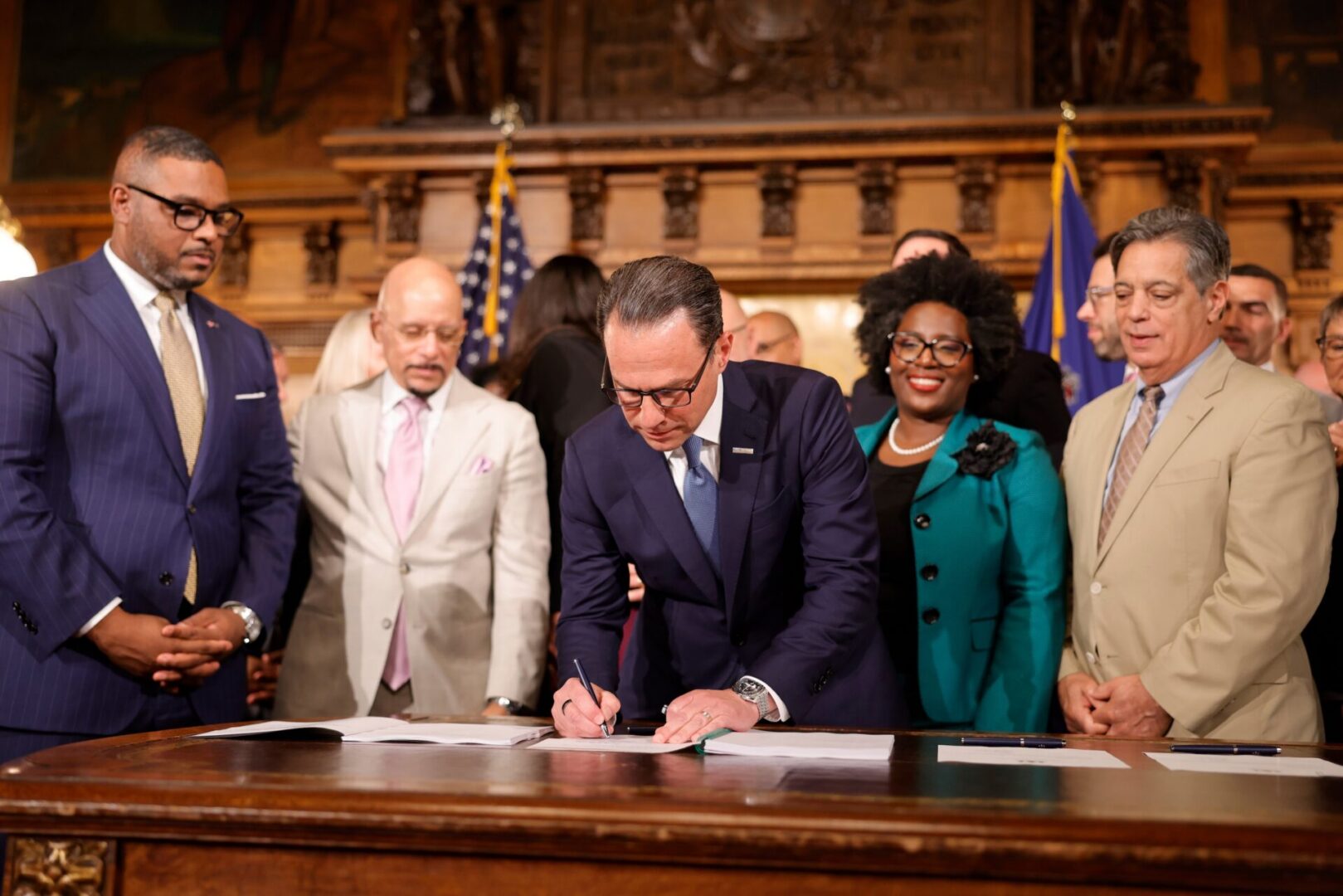
HARRISBURG — When Pennsylvania lawmakers passed a state budget on Sunday, leaders praised it for being a fiscally responsible $50.8 billion product that doesn’t dip into the state’s rainy day fund.
That’s a misleading picture. To reach that number, they had to employ some accounting tricks.
The biggest involves delaying two months’ worth of payments — each costing about $1.3 billion — to the state’s Medicaid managed care organizations. In the Capitol, it’s a process called a “cycle roll.”
Managed care organizations, or MCOs, are responsible for organizing health care for the vast majority of Pennsylvania patients covered by Medicaid.
Known in the state as HealthChoices programs, they cover standard healthcare; home care for older adults and people with disabilities; and behavioral services like drug and alcohol treatment. The state pays MCOs monthly fees on a per-member basis.
There’s no set date when the state will need to catch up on the two months of payments it pushed back. In theory, it could indefinitely keep this adjusted schedule, in which it makes payments for claims that are older than usual.
State House Appropriations Chair Jordan Harris (D., Philadelphia) told Spotlight PA the cycle roll would not impact Medicaid services.
However, Matthew Knittel, who heads the state’s Independent Fiscal Office, argued it could cause “cash flow issues” for the care organizations.
Multiple Medicaid managed care organizations, including Geisinger and UPMC, did not return requests for comment about how the budgeting maneuver would affect them.
Knittel also noted the state’s creative accounting did not solve the overarching problem of Pennsylvania spending more than it earns.
Heading into this year’s budget talks, lawmakers knew they would have to contend with that multibillion-dollar structural deficit, coupled with mounting costs for obligations like healthcare and education. In his original budget pitch, Democratic Gov. Josh Shapiro proposed balancing the books by pulling about $4 billion from the state’s rainy day fund and creating new revenue streams like recreational marijuana.
But Harris said the Republicans who control the state Senate opposed any dip into the rainy day fund. The cycle roll, he said, was an ask from the upper chamber.
“We agreed to this because Senate Republicans wanted to do it,” Harris said. “This is what they wanted to do, and this is what we agreed to in order to get a budget done.”
A spokesperson for Senate Republicans did not immediately respond to a request for comment on Harris’ claim.
The cycle roll creates $2.6 billion in “temporary, one-time savings” over the course of two years, Knittel told Spotlight PA.
“It has no impact at all on the long-term structural deficit,” Knittel said.
Lawmakers also had to pull more than $500 million from off-budget “special” funds, among other transfers among accounts, to make the math work.
Pennsylvania’s net revenues this year could reach $47.75 billion, according to IFO predictions released after Shapiro signed the budget. The agency estimates that would mean the commonwealth will operate in a roughly $5 billion deficit, including one year’s cycle roll.
Asked about the delayed payments at a news conference, state Senate Majority Leader Joe Pittman (R., Indiana) didn’t address any concerns and hinted at a new policy fight next year. He said his caucus spends a lot of time trying to find ways to cut down on Pennsylvania’s human services spending.
“A lot of that money goes through these MCOs, and we talk a lot about governmental bureaucracy,” Pittman said. “Well, there’s also this thing called corporate bureaucracy. I don’t think it’s something we paid enough attention to, and I do think it’s something we’re going to pay a lot more attention to in the budget upcoming.”
Pittman did not elaborate.
Rosie Lapowsky, a spokesperson for Shapiro, criticized state Senate Republicans for not supporting either of the major revenue streams the governor proposed earlier this year: regulating and taxing skill games, and legalizing and taxing recreational marijuana.
“In divided government, every budget requires compromise and while Senate Republicans’ only priority was saving every penny of the rainy day fund, Governor Shapiro stayed at the table to protect the critical health care services millions of Pennsylvanians rely on and secure new investments that will support our students, grow our economy, reduce costs and improve public safety,” Lapowsky said.
Cycle rolls are an accounting trick that used to be common in Pennsylvania during times of financial stress. According to one state House Republican staff member, the practice stretches back at least to Democratic Gov. Ed Rendell’s administration in the wake of the 2008 market crash that caused a recession.
In 2022, pandemic-era stimulus money allowed the commonwealth to make an extra-large payment to MCOs to clear its backlog and realign its payment plan with the fiscal calendar.
Then-Senate Appropriations Chair Pat Browne (R., Lehigh) — now secretary of revenue in the Shapiro administration — celebrated the timeline fix, arguing on the Pennsylvania Senate floor it would bring “more stability” by expediting payment cycles and “putting those payments on a more timely payment plan.”
Critics of the cycle roll this year, mostly conservative Republican lawmakers, argue that lawmakers saying this year’s budget is fiscally responsible misleads constituents.
State Sen. Jarrett Coleman (R., Lehigh) told Spotlight PA that taxpayers, who might not fully understand the wonkery of the Medicaid “charade,” will eventually pay for the “dishonest” decision. He voted against the deal.
“We have to be able to have an honest discussion about our finances,” Coleman said. Delaying the two months of payments is equivalent to telling people “they can save money by not paying their bills. I mean, we’re the commonwealth. We should be paying our bills.”
Coleman speculated that legislative leaders wanted to expedite a deal to avoid the negative attention a late budget can bring — like last year’s four-month impasse — because half of the state Senate, the entire 203-member House and Shapiro are all up for reelection in November.
“That shouldn’t abdicate you from having to make tough decisions just because it’s an election year,” Coleman said. “You don’t just get a bye because it’s an election year.”
Spotlight PA’s Stephen Caruso contributed reporting.
BEFORE YOU GO… If you learned something from this article, pay it forward and contribute to Spotlight PA at spotlightpa.org/donate. This story was funded in part thanks to the support of the Lancaster County Local Journalism Fund. Learn more about how we are supported here.
More Political News
View all Political News
Letters: Standing With Mount Nittany Workers This Labor Day; AI Needs a Constitution
I’m a proud union member who works just down the street from the Mount Nittany hospital workers still fighting for a fair contract. With Labor Day coming up, I wanted […]

Pa. Election Results, Shapiro’s Speeches and State Laws Are All Prediction Market Bets. Could This Lead to Corruption?
Federal officials argue states can’t regulate prediction markets. 44 state attorneys general, including Pennsylvania's, argue otherwise.
Dozens of Former Pa. Lawmakers Are Now Registered to Lobby Their Old Workplace
Critics warn the state’s lax revolving-door law allows ex-lawmakers to profit from relationships formed while in office.


