
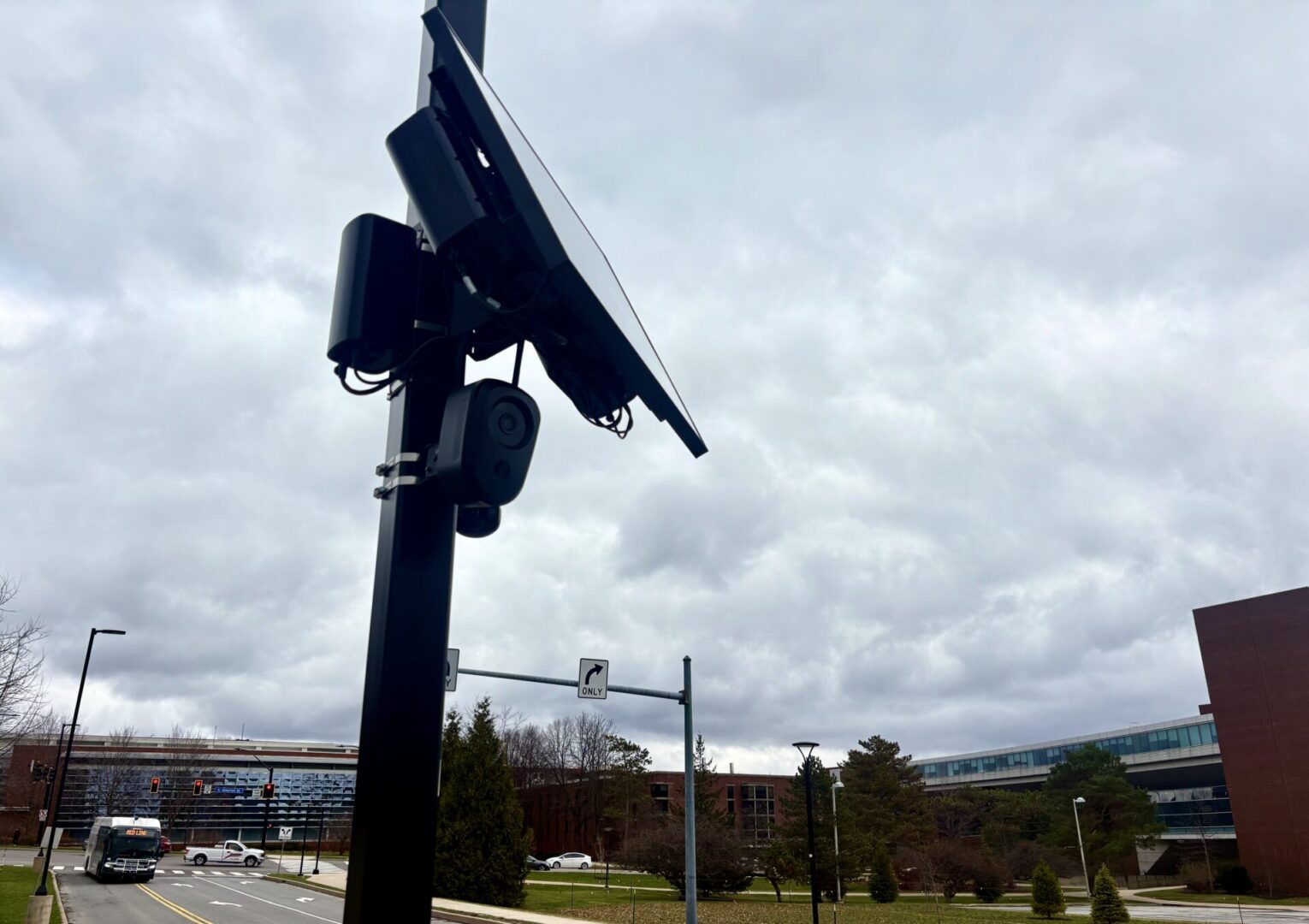
Penn State is piloting a network of automated license plate reader cameras around its University Park campus, part of a limited initiative officials say is designed to support law enforcement.
University Police and Public Safety confirmed the use of stationary cameras from Flock Safety at select perimeter locations under a pilot program authorized by an internal policy that took effect August 2025.
“University Police and Public Safety is conducting a limited, time-bound pilot of stationary automated license plate reader cameras from Flock Safety at select campus perimeter locations, consistent with UPPS Policy 7.12,” public information officer Jacqueline Sheader said.
“The pilot supports defined law‑enforcement purposes, including stolen‑vehicle recovery, missing‑person cases, and investigative leads. It is limited in scope and duration, with no contract or cost during the testing period.”
The policy authorizing license plate reader cameras is not among those made public on the department’s website, which only shares select policies that “the public has expressed interest in reviewing.”
Sara Thorndike, Penn State’s senior vice president for finance and business, also confirmed the initiative during a Faculty Senate meeting in February, describing it as part of a broader safety effort.
“Penn State is using license plate reader technology as part of a systemwide safety pilot,” Thorndike said. “The data collected is vehicle-based, and access to the data is tightly restricted, audited and governed by strict policies with clear safeguards in place to protect privacy and safeguard the data.”
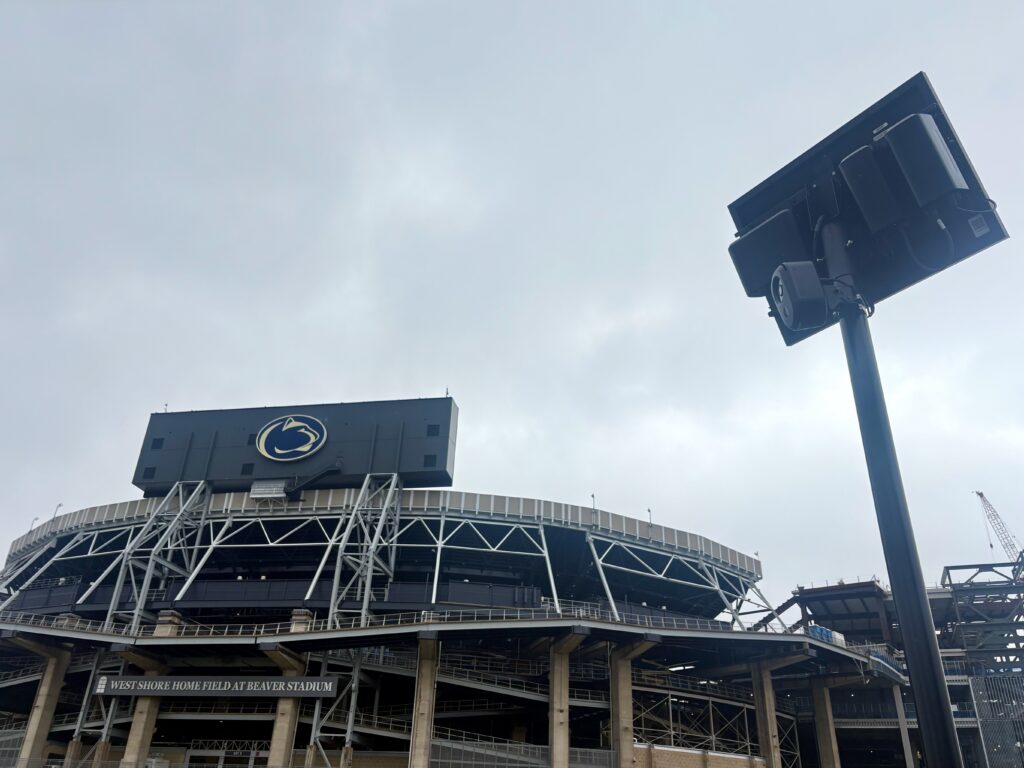
How the cameras work
Automated license plate readers, or ALPRs, are camera systems that scan and record information from passing vehicles. According to the U.S. Department of Homeland Security, the technology captures license plate numbers and converts them into searchable data that can be used by law enforcement.
Anti-surveillance advocacy group DeFlock says the systems often collect additional details, including a vehicle’s make, model, color and distinguishing features such as roof racks or bumper stickers. Each record is tagged with a time, date and location, creating a log of where a vehicle has traveled.
The data is collected and entered into an online database for police to access, regardless of whether a vehicle is linked to a crime, according to DeFlock
Local footprint
In the State College area, 26 license plate reader cameras have been identified and reported by DeFlock, including 24 on or near Penn State’s campus. Cameras are mapped along major roadways and entry points, including:
- University Drive
- Porter Road
- Pollock Road
- Curtin Road
- White Course Drive
- East Park Avenue
- Bigler Road
- Shortlidge Road
- West Big Hollow Road
- Allen Road
- West Park Avenue
- Innovation Park
Despite publicly available mapping data, the university said it does not release specific camera locations or totals.
“Camera locations and counts are not published for security reasons,” Sheader said. “Access is restricted to trained, authorized personnel; system use is logged and audited, and data are retained for up to 30 days unless preserved as evidence.”
She added there is no public access to the data and any sharing must comply with university policy and applicable law.
The other two local ALPRs are located at Valley Vista Drive in the parking lot of Lowe’s. The home improvement store has deployed Flock Safety license plate reader cameras nationally at various locations to deter organized retail crime. Although contract details are not public, the system is reportedly tied into the company’s broader asset protection strategy, allowing it to record and analyze vehicle information.
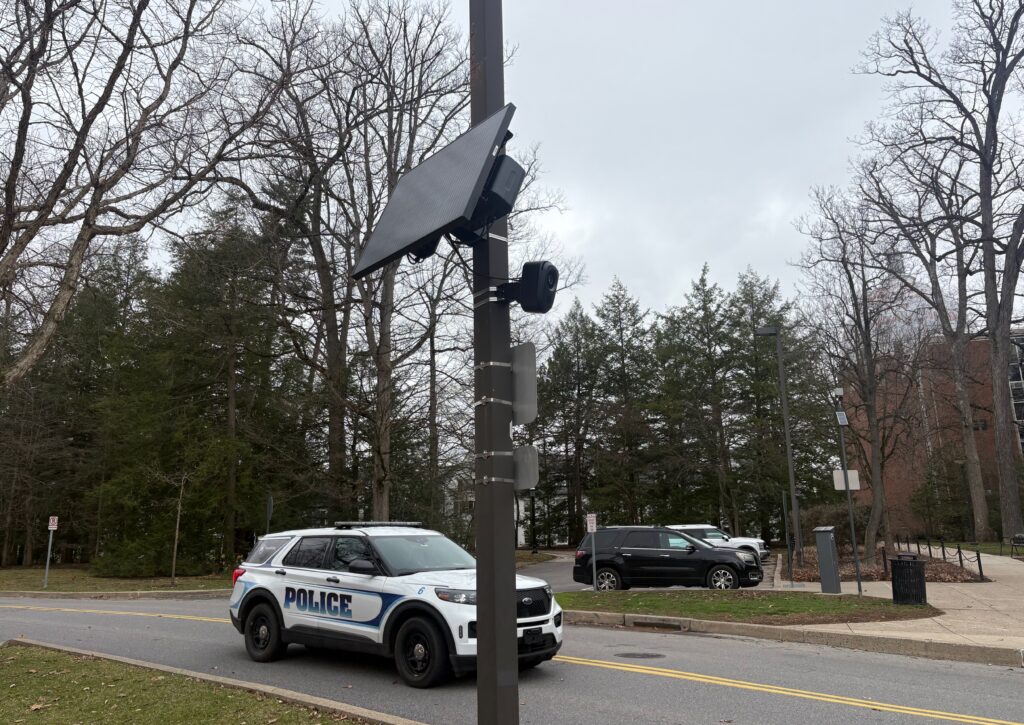
The origins of Flock Safety
Flock Safety was founded in 2017 in Atlanta by Garrett Langley, Matt Feury and Paige Todd after Langley experienced a property crime that went unsolved.
The company developed a lower-cost, solar-powered camera system designed to expand access to license plate reader technology, according to the company’s website. Its model allows law enforcement agencies, businesses and residential communities to lease the cameras rather than purchase them outright.
Flock operates in thousands of communities across the United States, using artificial intelligence to identify license plates and vehicle characteristics. While the company owns the hardware and software, the agencies using the system control the data, which is typically retained for about 30 days unless needed for an investigation.
Cases where Flock cameras aided investigations
Law enforcement agencies across the country have credited ALPR systems with helping generate leads and solve cases, particularly those involving vehicles.
According to Flock, in one case, investigators used its camera data to identify a stolen vehicle connected to a series of catalytic converter thefts. After the vehicle was flagged by the system, officers stopped it and detained suspects, which led to a broader investigation into a multistate theft ring. Authorities later recovered large amounts of stolen property and made multiple arrests tied to the operation.
In another instance, officers used the system to locate a missing elderly woman before a statewide alert was issued. After entering the vehicle’s license plate into the system, police received a hit within minutes and were able to direct officers to her location and safely return her home.
National context and concerns
Penn State’s pilot comes as license plate reader programs face increased scrutiny nationwide. More than 88,000 ALPR cameras have been mapped across the United States, according to DeFlock.
Reporting from NPR found some law enforcement agencies have ended contracts with Flock Safety amid concerns about how collected data could be used, including potential access by federal agencies for immigration enforcement.
Civil liberties organizations such as the American Civil Liberties Union argue the technology enables broad surveillance by tracking vehicles without requiring a warrant.
Critics argue the technology can create detailed records of individuals’ movements without a warrant, while supporters say it provides valuable tools for solving crimes and locating missing persons.
DeFlock reports that at least 53 cities nationwide have rejected or restricted the use of license plate readers, reflecting growing unease about transparency and oversight.
Transparency and next steps
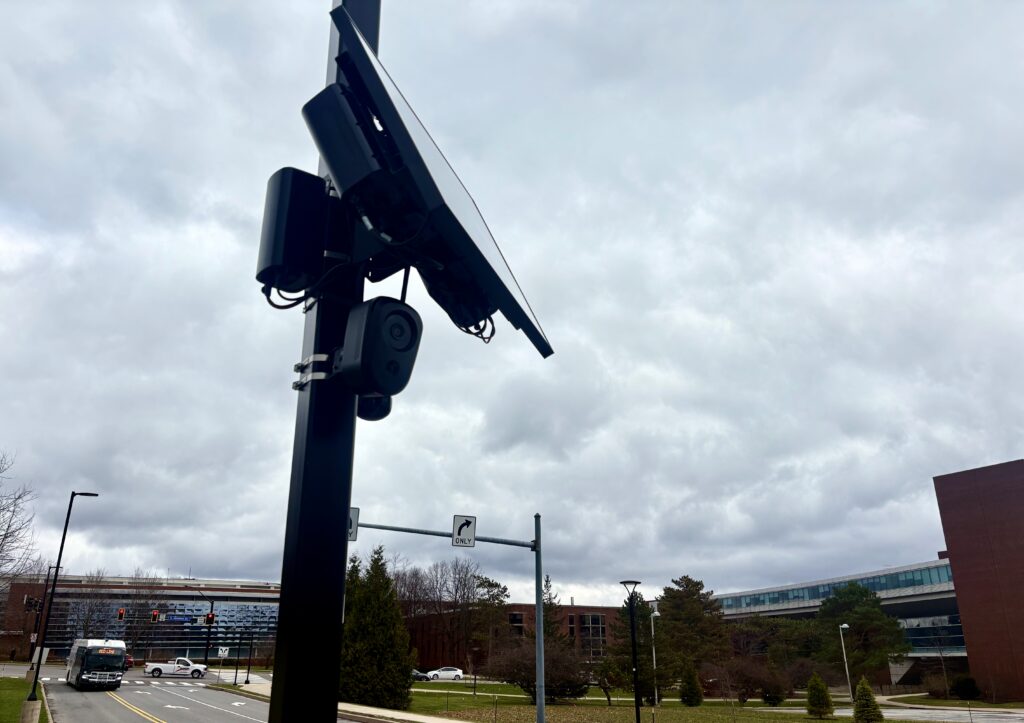
Penn State officials said the pilot includes safeguards such as restricted access, audit logs and limited data retention. The governing policy referenced by the university is not publicly listed on its website.
The university has not disclosed how long the pilot will run or whether the program could be expanded or made permanent.
For now, the cameras remain in place at the edges of campus, capturing data on hundreds of passing vehicles each day as the university evaluates whether the technology will become a long-term part of its public safety strategy.
More Latest Penn State News
View all Latest Penn State News
Penn State Introduces New Public Health Major
Students interested in preventing illness, improving health care access and addressing health problems affecting entire communities now have a new degree option at Penn State. The university’s College of Health […]
Penn State Breaks Ground for Major Expansion of Animal Diagnostic Lab
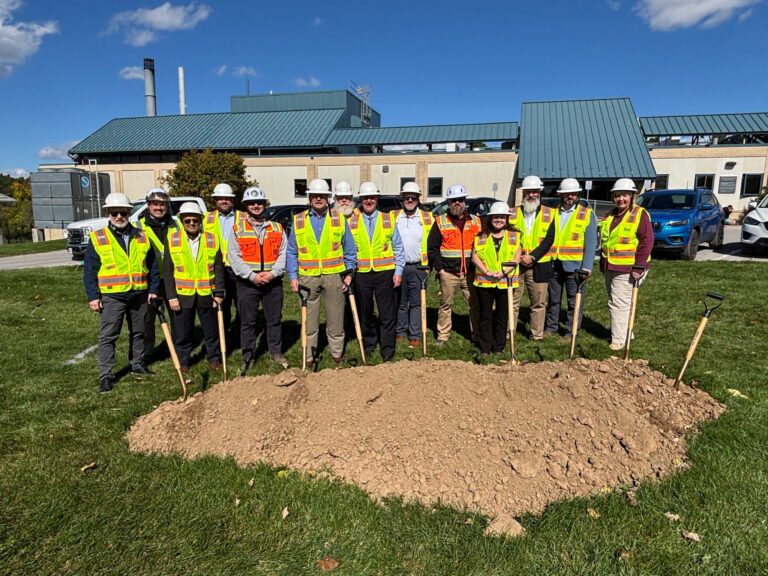
Penn State and Pennsylvania Department of Agriculture on Monday celebrated the groundbreaking for a $65 million expansion to the university’s Animal Diagnostic Laboratory. The 47,000-square-foot, two-story addition to the lab […]

Penn State Student Groups Hosting Events for Oct. 7 Anniversary
Penn State Hillel and Penn State Students for Justice in Palestine are holding separate events this week in observance of the third anniversary of the Oct. 7, 2023, Hamas-led attacks […]


