
This story was produced by the State College regional bureau of Spotlight PA, an independent, nonpartisan newsroom dedicated to investigative and public-service journalism for Pennsylvania. Sign up for Talk of the Town, a newsletter of local stories that dig deep, events and more from north-central PA, at spotlightpa.org/newsletters/talkofthetown.
BELLEFONTE — Counties, municipalities and school districts would get a share of the revenue generated by Pennsylvania’s state-owned land under proposed bipartisan legislation.
The bill would boost the budgets of rural communities that host tax-exempt property, such as state forests and parks, and that have few other options for raising money to fund government services. However, the source of the money could leave the bill open to legal challenges on constitutional grounds.
Local governments already receive payments in lieu of taxes, or PILOTS, to help offset lost revenue from this land, which can’t be developed or otherwise brought onto their tax rolls.
Legislation introduced by state Rep. Martin Causer (R., McKean) would provide 20% of money collected from timber harvesting, oil and gas leases, rents and royalties, energy development, state park user fees and other activities to the counties, municipalities and school districts where those activities occur.
Each local government’s share would be based on their number of acres of state land.
Causer says the idea is based on a federal law that shares timber revenue from national forests with local governments.
“It’s expensive from a state perspective because it takes revenue away from the state, and I understand that. But at the same time, I do think it’s a tax fairness issue,” he told Spotlight PA. “It’s providing revenue back where these resources are coming from to help these struggling municipalities.”
The Department of Conservation and Natural Resources, which manages 125 state parks and 2.2 million acres of forests, declined to comment directly on the bill. It noted that during the fiscal year that ended June 30, revenue from state park user fees, timber sales and the Oil and Gas Lease Fund totaled about $201 million, roughly 31% of DCNR’s budget for the fiscal year that began July 1.
“These funds go directly into managing and investing in the Commonwealth’s public lands. DCNR does not bring in as much revenue as it costs to cover ongoing operational needs, and the agency carries long‑term stewardship responsibilities that require sustained and reliable support,” according to the agency.
Causer’s proposal has been sitting in the state House Finance Committee since its introduction in January. Elizabeth Rementer, a spokesperson for state House Majority Leader Matt Bradford (D., Montgomery), told Spotlight PA in an email that they’re “reviewing the bill.”
Pennsylvania lawmakers aren’t expected to return to Harrisburg until September, and Causer said educating his colleagues on the issue — which is not felt as much by those outside of rural areas — is a top priority.
For some counties, the financial impact of state-owned land is significant.
In rural Potter County, more than 40% of the land is owned by the state, limiting the amount of property available to generate local tax revenue among its roughly 15,900 residents.
Paul Heimel, chair of the Pennsylvania State Land Tax Fairness Coalition, an advocacy group, said the issue is the strain that comes with having such large amounts of tax-exempt property.
Potter County, he told Spotlight PA, has a declining population and a rising number of retirees, so fewer people can share the property tax burden.
“Basically, the squeeze is just tightening in every way, and this would help to address it,” said Heimel, who is also a Potter County commissioner.
The federal government, he added, has already set the precedent of carving out revenue from certain activities on national forest land for local governments.
Clearfield County Commissioners Tim Winters and John Sobel likened the proposal to Act 13, a 2012 law that made sweeping changes to Pennsylvania’s oil and gas industry regulations. It created an impact fee on oil and gas drilling, giving a portion of revenue to the state, counties and local governments.
Causer’s bill has a narrower scope — primarily focusing on state parks and forests — but Clearfield County would still benefit from the proposed legislation.
“I know some counties to the north of us, the state owns a lot of the land in these counties,” Winters said. “And this could make a difference.”
Cameron, Clinton and Potter Counties — which have some of the highest percentages of state lands in Pennsylvania — stand to benefit the most from the bill, which is also supported by the bipartisan County Commissioners Association of Pennsylvania.
The Pennsylvania chapter of the Sierra Club opposes Causer’s proposal.
Jen Quinn, the organization’s legislative and political director, told Spotlight PA in an email that the bill would challenge a state Supreme Court ruling that reaffirmed that the Environmental Rights Amendment creates a public trust and ruled that revenue generated from public natural resources must be used for conservation and preservation.
The legislation could pose a risk to the state’s outdoor recreation economy and jobs within the industry, she said.
“We recognize that municipalities with significant state-owned land face real fiscal challenges because those lands are exempt from local property taxes,” Quinn said. “At the same time, it’s important to remember that the commonwealth is not merely a landlord collecting rent from state property; it is a trustee managing natural resources for present and future generations.”
SUPPORT THIS JOURNALISM and help us reinvigorate local news in north-central Pennsylvania at spotlightpa.org/donate. Spotlight PA is funded by foundations and readers like you who are committed to accountability and public-service journalism that gets results.
More Spotlight PA
View all Spotlight PA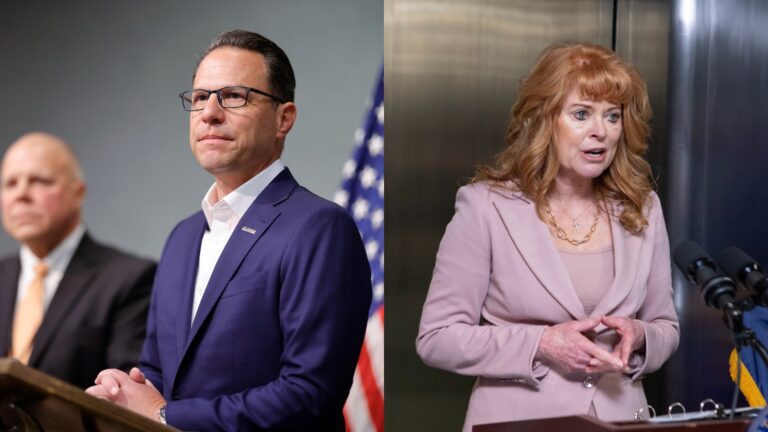
Pa. Election 2026: Your Complete Guide to the Candidates for Governor
Incumbent Democratic Gov. Josh Shapiro will face Republican Stacy Garrity on the Nov. 3 ballot. Learn more about them with this guide.
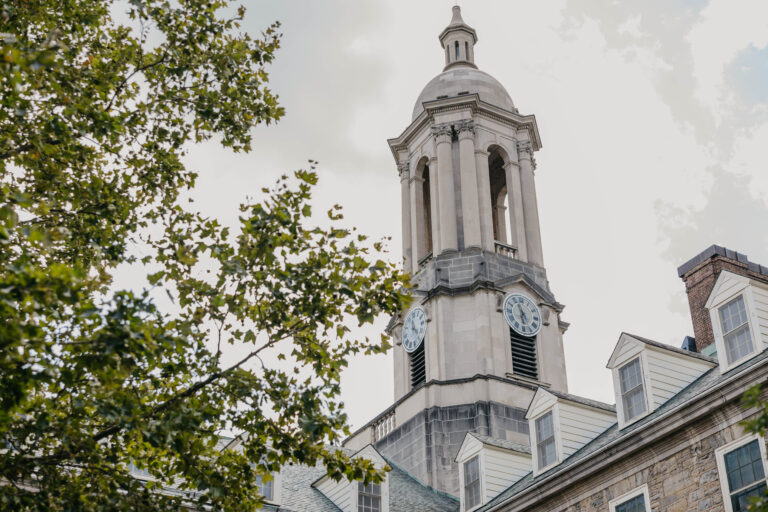
How Quietly Passed Legislation Will Allow Penn State to Move Forward With Potential Campus Sales
The Board of Trustees this week will consider sales of the Shenango and Wilkes-Barre campuses, which are slated to close next year.

Pa. Election 2026: Where Governor Candidates Garrity and Shapiro Stand on LGBTQ Rights
Trans rights and the Fairness Act remain live issues in Pa. And despite federal protections for same-sex marriage, many lawmakers push for state action.


