
Spotlight PA is an independent, nonpartisan and nonprofit newsroom producing investigative and public-service journalism that holds power to account and drives positive change in Pennsylvania. Sign up for our free newsletters.
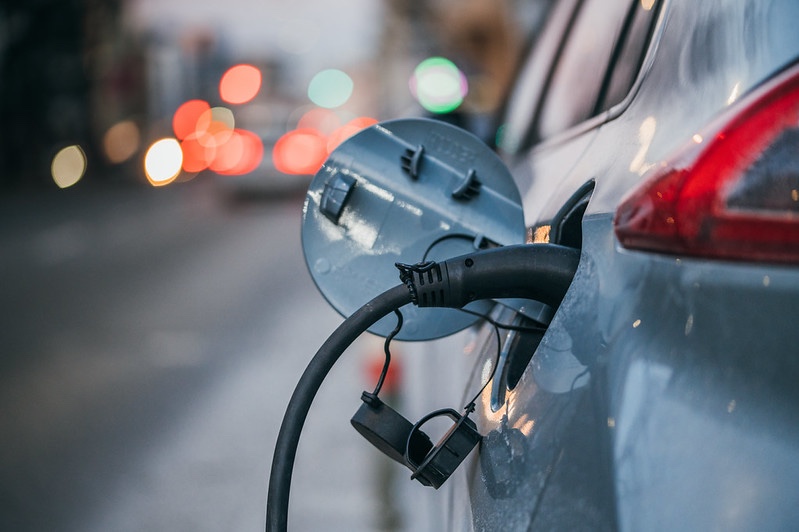
HARRISBURG — As Pennsylvania prepares to receive millions of federal dollars to build electric vehicle charging stations, the small towns that will host the devices hope they can double as tourist magnets.
“People can let their vehicles sit for a bit and walk the stores downtown and grab food,” Steve Herman said of the vision for the devices. “They’ll serve folks who are living here but also draw in visitors.”
Herman is transportation planning program director for SEDA-COD, an economic development organization that covers eight central Pennsylvania counties. He’s spent the past year working with chambers of commerce and community groups to explore how to make the chargers economic assets. If planned properly, he said, the stations can “draw people into our downtowns.”
The funding is the latest wave of a $5 billion federal program created under the Biden administration to build out EV chargers across the country. A previous phase of the program placed chargers along interstates and other major roads, but this round is focused on building chargers in local communities. All told, Pennsylvania is slated to receive $171 million dollars by the program’s end.
In the past year, Herman has surveyed where the best locations for chargers would be, hosting in-person workshops on the program and polling residents. He even created a tool that lets people drop pins on a map to recommend locations for chargers.
He reported his findings to PennDOT, which has been consulting with dozens of other local planning councils across the state in preparation for the funds.
“Compared to Philadelphia or Pittsburgh, [there are] differences in terms of existing network and priorities,” Herman told Spotlight PA, referring to current charger access. “We already have some in university towns and hospitals and destinations like that, even some of the grocery stories. But [there’s] not as widespread availability. The community charging program will broaden that out.“
Pennsylvania has built at least three dozen chargers so far — the most of any state in the U.S. This has consumed roughly one-third of the commonwealth’s allocated funds. Each charging port cost roughly $163,000.
Clean energy and transportation experts attribute the fast deployment to PennDOT, which had previously partnered with the Department of Environmental Protection to research the issue. The agency also worked directly with local gas stations to dole out grants.
Environmental advocates view EVs as a key part of combatting climate change, as the transportation industry is one of the largest sources of greenhouse gas emissions in the U.S. Over half of those emissions come from passenger cars and trucks.
Alissa Burger, regional policy director at clean transportation industry group CALSTART, said the federal funds are “creating a foundation” for states to have basic EV charging infrastructure that will “encourage their citizens to consider switching over to a zero-emission vehicle.”
She added: “You’re not gonna get an EV if you feel nervous about where you’re going to charge it.”
Previously, states were on their own, Burger said. For instance, she pointed to the 2019 PennDOT plan to build out EV infrastructure. That pitch proposed just four charging stations and identified only state sources for funding.
“There was intention. I don’t think there was a lot of funding behind it,” Burger said.
So far, Pennsylvania has already spent or plans to spend roughly $60 million of the $171 million allocated to the state. The remaining $100 million has been obligated — meaning a contract is in place to spend the funds — to the grant program that Herman of SEDA-COD is participating in, per PennDOT.
That initial commitment is important, as unobligated funds can be clawed back by federal officials when the program expires in October. The EV charging effort is among a slate of initiatives funded by the Bipartisan Infrastructure Law that the Trump administration has tried to roll back or freeze.
In the first weeks of his second term, President Donald Trump issued an executive order to freeze funding to this and other programs within the BIL. Trump said the freeze was for the purpose of eliminating “unfair subsidies and other ill-conceived government-imposed market distortions that favor EVs over other technology.”
As a result, the federal Department of Transportation paused funding to states. But after a suit by environmental organizations and states, including Pennsylvania, a federal judge ruled the order unconstitutional and returned the funds.
The Federal Highway Administration also issued new guidelines for the National Electric Vehicle Infrastructure program last August, which environmental advocates said slowed down EV buildout by forcing states to resubmit their plans.
Under the NEVI program, states get funding to grow their electric charger network. Site hosts, such as gas stations and local governments; EV charging companies; and contractors can apply for money to buy, install and operate EV chargers. These funds can be used to pay for up to 80% of the total costs to build, replace or upgrade a charging station.
The first tranche of funding was released in 2021 and designated for a specific use: ensuring that there was an EV charger every fifty miles on major highways in the state, namely the Pennsylvania Turnpike. The money was aimed at building chargers for passenger vehicles.
Pennsylvania was the first state to meet that goal, which allowed PennDOT to tap the funding dedicated to setting up charging networks in less-trafficked routes. That second tranche went toward areas like Northeast Pennsylvania, Erie and the Pittsburgh suburbs.
The latest and final round of funds, for “community-focused EV charging projects,” is what has small towns excited.
PennDOT is still in the process of mapping out where to place chargers, working with local planning organizations like SEDA-COD to finalize locations.
The agency is doing this work in stages, targeting different regions of the state. Officials plan to begin announcing this fall which municipalities will be awarded grants to build charging stations, and say the process of choosing locations should wrap up by next summer.
BEFORE YOU GO… If you learned something from this article, pay it forward and contribute to Spotlight PA at spotlightpa.org/donate. Spotlight PA is funded by foundations and readers like you who are committed to accountability journalism that gets results.
More Spotlight PA
View all Spotlight PA
The 2026 Races That Could Decide Control of the Pennsylvania House and Senate
Democrats believe they have their best shot in recent memory at winning a vaunted trifecta — control of the governorship and both legislative chambers.
Clearfield County Commissioners Vote 2-1 to Extend Moshannon Detention Center Contract
Clearfield County will continue to serve as a middleman between ICE and the GEO Group, though the future of the facility is in question.
Who Should Pay for Low-Income Utility Assistance? In Pa., It All Falls on Residential Customers
In Pennsylvania, residential customers shoulder the cost of utility assistance programs. Businesses and factories don’t have to contribute, unlike in other states.


