

As State College borough manager since 2003, Tom Fountaine is the chief administrative officer of the day-to-day operation of the municipality. Prior to coming to State College, he worked as the borough manager of Hollidaysburg.
Born and raised in Indiana, he is a graduate of Indiana University in Bloomington, with a degree in public affairs and urban studies. He has served as an adjunct professor at Mount Aloysius College in Cresson and has been active in many professional organizations, including the International City/County Management Association, Association for Pennsylvania Municipal Management, and the Pennsylvania Municipal Management Institute.
He and his wife, Tamra, have three grown sons, all Penn State graduates, and two grandchildren.
Town&Gown founder Mimi Barash Coppersmith sat down with Fountaine to discuss the challenges that the State College Borough faces and the new economic-development projects that are underway.
Mimi: Our paths cross quite a bit because of our mutual concern for our community. Taking a broad look at where we are now, what do you think is our greatest challenge moving forward?
Tom: I think there are still a number of challenges in State College that we have to deal with, but probably none more so than stabilizing the local economy, seeing improvement in the downtown economy in particular. We are having some major additions in downtown, but we’ve also had loss of some retail that is important for the community, so we’re still working hard to try to stabilize that. And then the other issue that we continually deal with is stabilizing our neighborhoods, particularly homeownership and families living in neighborhoods that contribute to the community.
Mimi: And one of the most important services that you need to render are to students, yet some of the problems you deal with are deep concerns about the students.
Tom: Students are a big part of the economy here, and we have 47,000 to 48,000 students at the University Park campus, so they’re obviously a core part of the local economy, but they also consume a lot of municipal services. We have a police force that is about a $12 million operation that represents about half of our total budget that results from having such a young demographic.
Mimi: What do you think is our biggest challenge in terms of figuring out the problems of alcohol and drugs?
Tom: It’s a problem in college towns across the country, and we spend an awful lot of time benchmarking with other college communities, and we’ve had a fair amount of success in addressing some of those problems.
Mimi: You’ve even received an award.
Tom: We were recognized by the International Town and Gown Association for the work that we had done around State Patty’s Day in reducing the most egregious effects of that event, which is totally built on high-risk and dangerous drinking.
Mimi: To what extent are the students working with you on solutions?
Tom: Students work very closely with us. We’ve had an outstanding relationship with student government, the IFC, the Off Campus Student Union, the Graduate and Professional Student Association, the international student organizations — all of those have been involved with us in working to address the problems associated with binge drinking. And to some extent I think we’ve had some success through the years in reducing some of those issues, but they are still at a high level and about two-thirds of the crime in State College is alcohol-related.
Mimi: Alcohol and/or drug related.
Tom: Drugs actually are becoming an increasingly challenging issue for us.
Mimi: What are we doing about that?
Tom: We’re doing everything we can to address those issues. We’ve seen an increase in opiates. It’s been a problem nationally, and we’re starting to see it here and we’re learning from colleagues and other places that have been dealing with this for a longer period of time.
Mimi: Switching gears, you’re at the heartbeat of the community in terms of the leadership. You’ve had to provide the town-and-gown issue of downtown competitive businesses at the university. Is that under control?
Tom: That’s a loaded question! We have, and have always had an incredible strong partnership and relationship with Penn State — and with President Barron, it has grown even better. We’ve got some great examples of working together to foster development in downtown State College. This spring, we cut the ribbon and officially opened Happy Valley LaunchBox at the State College Town Center, which would not have happened if not for Penn State, and we’ve been able to put a group of entrepreneurs in a building that the borough owns.
Mimi: I was at that opening. There was a young woman speaking about the device she and her colleagues were working on, Project Vive. It’s a speech-assistance technology that aims to give a voice to individuals who cannot talk. She is quite an impressive individual.
Tom: There is no doubt that Penn State right now is playing a signi cant role in economic development and entrepreneurship. Penn State is a very strong part in the Centre County Economic Development Partnership, working close with the county government municipalities to foster economic development throughout the county, so it’s really a strong partnership that’s going to pay dividends in the not so distant future.
Mimi: Now let’s shift to the Fraser Centre. That’s the biggest building in a long time in State College.
Tom: It is. It’s a huge project. I’ve been here for almost 14 years, and that project was on the drawing board when I started here. It’s scheduled to open this fall, and it’s really an exciting project with major national tenants, a restaurant located in the facility as well as residential.
Mimi: And when will these places open?
Tom: The retail segments are scheduled to open in October. There are two retail tenants, Target and H&M. I think the total is around 50,000 square feet of retail space. The hotel, Hyatt Place, and restaurant are scheduled to open either in December or January.
Mimi: Let’s shift to the Metropolitan, which is another huge project. Do they have any tenants in the commercial part yet?
Tom: I don’t know that they do. At this point, they haven’t shared that information with us, but it’s a large residential building with several floors of commercial retail. It’s under construction now and is currently targeted to open in August 2017, and it appears to be on schedule to make that deadline.
At the other end of downtown, on the east end, the Rise is a project that has also a mixed use of retail and housing, and, in the first iteration of that project, there was discussion on having a mix of student and nonstudent housing in that building. They are in final planning right now. My understanding is they’re scheduled to begin demolition on the site this summer, and then construction will begin shortly after.
Mimi: We’re losing the police chief that all of us adore. How is that search coming?
Tom: We’re making progress. We’re very close. We have three candidates that are in the nal process of interviewing.
Mimi: I wish you luck on that.
Tom: Thank you. Tom King has contributed signi cantly to this community. King is ahead of the curve on most things and has been a leader not only here in State College but really around Pennsylvania. We’re fortunate that were going to be able to retain King as a civilian employee after he retires as chief. He won’t be going away.
Mimi: What is the biggest problem you face every day as a leader of a very complex community?
Tom: It’s a different problem every day, but a lot of it is dealing with the kinds of issues that come about because of the conflicts that are created in a town-and-gown community. There are conflicts between students and our long-term residents that have contributed to problems in our work and trying to manage things so we can improve those relationships. Financially, those are the biggest issues we still face in a community without a lot of ability to expand our tax boundaries, so to continue to provide the services that this community has grown to expect is a challenge.
Mimi: On the one hand, the more economic development downtown the better it is for our fiscal health, as well.
Tom: Absolutely. And one of our main goals is to try to nd job opportunities for young professionals to continue to track and retain young professionals, particularly Penn State students.
Mimi: Downtown State College used to have much more selection of things that people buy, clothing for women in particular; we still have a high-quality men shop. Part of what’s happened, the transformation of downtown to mostly outlets that appeal to the students, has deprived downtown of mature traffic. I’m sure you deal with that issue in some of your discussions.
Tom: It’s been one of the key issues in our downtown strategic planning. We’ve had two downtown plans that have been developed in the last 15 years, and both plans address the needs to diversify. Fraser Centre was a result of that attempt. We are working closely with the Downtown State College Improvement District to maintain a strong retail base.
Mimi: There’s a group of young leaders through CBICC Connect that are talking about ideas for young professionals, and a colleague of mine who happens to be involved on that committee tells me of a revived interest for an Allen Street pedestrian mall. Where does that stand?
Tom: That idea has been around for decades. As you know, the downtown plan that we adopted a few years ago did talk about that, and the plan calls for some modifications on Allen Street to allow temporary closures, if not permanent closures. At this moment, there is not a lot of movement to close Allen Street completely for a pedestrian mall, but the idea is certainly one that could be considered.
Mimi: It’s argued that it would bring more families down. It would be opportunities for events that would attract families downtown.
Tom: I think one of the concerns for the retailers on Allen Street is that it doesn’t allow cars and parking on the street. It would be a detriment to those businesses. There’s still a lot of work we have to do.
Mimi: Where does the borough stand?
Tom: The borough hasn’t taken an official position other than to talk and plan about modifying the infrastructure so that the street could be closed more regularly. If, for example, Thursday night we wanted to close the street to have a movie night, we would have that ability. It might be closed temporarily in the evening to allow for more outside dining opportunities and other opportunities. Hopefully that would bolster the retail, but we still have a ways to go. It has always been a highly controversial topic, and there’s very little middle ground.
Mimi: But we have lots of great examples of things that have evolved in State College that could only happen with the joint cooperation of the university and the community. We’re celebrating the 50th anniversary of the Arts Festival this year. I remember the first one, but without the joint funding in the beginning and to this day it would never happen. What a great event that is to emphasize the quality of this community, so the more we can do together, the more we will have an even greater community.
Tom: I couldn’t agree more. I think we have opportunities to do more and make downtown an attractive place for all people and all the residents.
Mimi: You can always do better. And the best thing that can happen is this helps the downtown merchants, once and for all, to think as one unit. Part of what you’re battling is you are not able to get all levels of your components of downtown.
Tom: That is always a challenge. People have different opinions and different perspectives, and, depending on where you’re located downtown, different levels of traffic. It’s always a challenge to get enough agreement on a project.
Mimi: Two remarkable examples as we speak — the 4th Fest is an amazing activity that is economically helpful and the Arts Festival is a tradition throughout the state and beyond, and both happen because we happen to be a small town with a large university, and the more we can do to enhance that, the more we can do to improve.
Tom: Another important anniversary is Town&Gown celebrating its 50th anniversary. I know the borough and the council were honored to be able to recognize Town&Gown.
Mimi: We appreciate it and we’ve tried to earn it, and we will continue to try to earn it. Thank you!
More Town&Gown Magazine
View all Town&Gown Magazine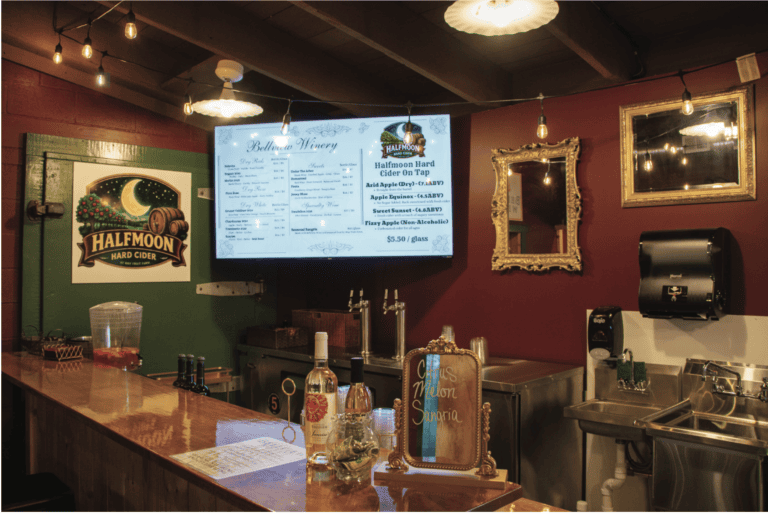
Cider Season in Centre County
With a new option fresh from the Way Fruit Farm orchards, we have a bushel full of hard ciders to sample, taste and enjoy this fall.
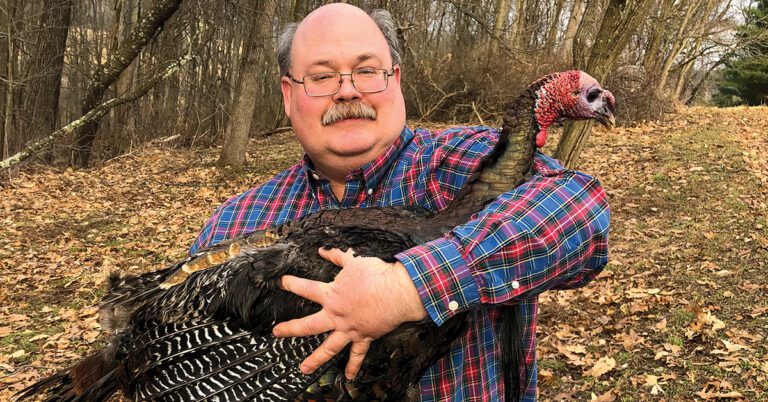
Managing Pennsylvania’s Wild Side
Game Commission Regional Director Mark Ternent discusses wildlife, habitat, hunting and a new headquarters near Bellefonte.
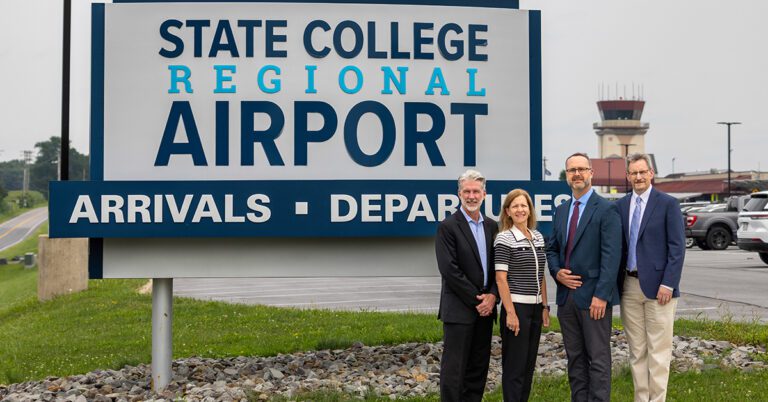
Charlotte Flights Bring a New Route to Growth at State College Regional Airport
Direct flights to Charlotte beginning in October promise easier travel and broader economic opportunities for Centre County.


