

In January, Paul J. Clifford became the new chief executive officer of the Penn State Alumni Association
and associate vice president for alumni relations for the university. Established in 1870, the Penn State Alumni Association serves more than 177,000 members and 645,000 alumni worldwide. Its mission is to connect alumni to the university and to each other, provide valued services to members, and support the university’s mission of teaching, research, and service.
He is the alumni association’s 11th chief executive in its 146-year history. Originally from Conyngham, he earned his bachelor’s degree in history from Bloomsburg University in 1996. He and his wife, Jenne, have three children: Aidan, Avery, and Abbey.
He comes to Penn State from the University of Oregon, where he had served as associate vice president of advancement and executive director of the University of Oregon Alumni Association.
Town&Gown founder Mimi Barash Coppersmith sat down with Clifford at Liberty Craft House in State College to discuss his vision for the Penn State Alumni Association and what he hopes to accomplish in his new role.
Mimi: Paul, what are the big plans you have for the Penn State Alumni Association? The best [alumni association] in the world they say.
Paul: Absolutely! Thank you for inviting me to lunch. I look at the alumni association in the same way. I get to run the best alumni association in the country, as I’ve talked about it being the Starbucks coffee, the Apple computer, the New York Yankees of alumni associations, and it’s in part because of the folks who have come before me and the great work that they’ve done — from Ridge Riley to Ross Lehman to Peter Weiler to Diane Ryan and Roger Williams — they’ve built a gem of an alumni association here. I’m just delighted to continue my career here at Penn State — a university that means so much to me and to my family, and to really try to sustain the greatness and add on to it.
Mimi: So tell me how you’re going to win the World Series.
Paul: Is that because I use baseball metaphors!? I don’t normally think of it as winning the World Series, and you listen to folks in sports, especially champions in sports, and they talk about the gratifying parts of the process, not the actual winning of the championship. And that’s what I’m really interested in now is the process of putting a plan together to kind of keep this alumni association well- positioned to serve the alumni. What the World Series in my world looks like, I’m not exactly sure what that is.
Mimi: You’ve come into an organization that over many years has placed high emphasis on membership, and they lead the country in membership.
Paul: 177,000 members.
Mimi: How do we get to 200,000 in the next few years?
Paul: That’s a great question. But let me first address the premise — is membership our most important metric? My argument to you would be that the Penn State Alumni Association is not a membership organization, that we’re an engagement organization. We should be measured by things other than the number of members we have supporting us.
Mimi: But we brag about it all the time!
Paul: We do, we do. What I think we should be bragging about is how those members directly support faculty excellence through
the faculty awards that we have or through alumni excellence in recognition of the great things alumni are doing with their degrees, like the awards ceremony that we attended, or how we support the student experience or how we impact higher education in Pennsylvania through our grassroots network. I think those are the stories that should be told.
Mimi: If you could ash-forward 25 years, what would your legacy be as the leader of the alumni association?
Paul: I would like to think that my legacy could be that he transformed a good organization into a truly great organization that had a tangible impact on Penn State, and that people will be able to point to those things I just mentioned and say, “It was unbelievable what they were able to do with their members’ support!”
Mimi: Then let’s talk about a really tough one. We have a situation on the board of trustees where some of the nine elected alumni trustees, I think I could honestly say, have a way of making the board dysfunctional more often than it should be. What do you think we could do to build better trust and teamwork, especially when some good ideas come forward?
Paul: I think it’s a long process of rebuilding trust on both sides. I think that our alumni trustees have had their trust and faith in the university wavered and thus inspired them to run for trustees. I think some of the things that have happened over the past four years have had the other trustees on the board maybe lose trust and have their confidence wavered in some of their colleagues on the board. So I think anytime you’re looking to build trust, it’s got to start with small victories here and there. The way I would approach it is let’s find what we have in common. Let’s put all of our differences aside and let’s focus on what we have in common and how can we pursue that together. Let’s have some victories around the things that we all agree with and then let’s start to expand that into these other areas once that trust is built. I think until we come together as one Penn State family, that healing is not going to be possible and trust isn’t going to be possible. Right now, I think some look at it as two different families, kind of like the Hat elds and the McCoys, and we need to realize that we’re all one family.
Mimi: What’s step one?
Paul: I guess step one is identifying some victories that we can win together. Let’s pick things that we have in common, that we’re passionate about. Maybe it’s the student experience. Maybe it’s excellence in a number of areas and a strategic plan that we can all be excited about, and let’s come together and have some early victories on that. I think you then expand from there. But I do reject the premise that anyone is less of a Penn Stater because of how they feel or believe about this institution. I’ve come in with the approach that it’s tough for me to take a side on a Penn State issue because if I’m really truly representing the alumni, there’s 12 sides to every issue. So if I choose one side, I’m alienating another piece of that alumni base. But that doesn’t make me think that they’re any less of a Penn Stater. So proper and respectful discourse is the way to move forward.
Mimi: “Respectful” is an important word.
Paul: It is.
Mimi: Some of it has gotten pretty ugly.
Paul: Yes it has.
Mimi: It’s one university with many issues, but what has pulled us apart is what happened to one of the strongest people that ever worked at this university and committed a lifetime of joy to a lot of us.
Paul: I grew up a great admirer of Coach [Joe] Paterno, living in northeast Pennsylvania and growing up in a Penn State household — my dad’s Class of ’72 engineering and a 35-year season-ticket holder. So Coach Paterno and Penn State football have been part of my growing up. To see all of that and how all of this has played out has been heartbreaking. I didn’t even realize Coach Paterno was this celebrity until I left Pennsylvania. I just thought he was “our guy,” but he’s world famous.
Mimi: We’ve tried to make the governance of the trustees better, and the votes aren’t all in yet. And in the process, they were trying to make the alumni association have better governance. How can you govern a place that has how many members of alumni council?
Paul: We’ll have 109 members on alumni council. If we just look at this like running a nonprofit, it’s potentially highly inefficient with 109 voices on the council. From alumni interest and from being on a representative board, it’s unbelievable. I mean, we have the most representative board in the country, and when it comes down to making decisions, I think the role of the executive board is even more important now because it needs to take these 109 voices and really boil it down into what’s important to most alumni and how do we position the alumni association.
Mimi: Is it working?
Paul: I’m new in this role so it’s hard for me to pass judgment on whether it’s working or not. I think it can work. I’m committed to making it work, and I’m also committed to leading the change that evolves and remains current and effective for the alumni that we serve.
Mimi: Change is good.
Paul: Change is. I totally agree. But at a place like Penn State where tradition and heritage is paramount, we have to pursue change in a way that’s respectful of the heritage of the institution. I came from the University of Oregon, where if you wanted to change something, you just did it in part because nobody cared. It was a fast-moving environment, and it was where innovation, change, and being on the cutting edge were part of the fabric of the culture there. And they almost scoffed at tradition and heritage there. If you were making rapid change, that was seen as being part of the Oregon family.
Mimi: But rapid change isn’t easy in a place like this.
Paul: No, it’s not, nor should we be rapid about a 161-year-old institution that has stood the test of time. We don’t necessarily want to look to fix something that’s not broken, but just to improve on something that’s already great.
Mimi: Switching to a totally different subject. For years, the alumni association has sponsored travel. And I have to guess that there haven’t been a whole of people banging down your door to travel. Have you looked at ways to change that and make it a bit more exciting?
Paul: I think as our population changes of alumni that we’re serving, we need to change our thought process around travel. First and foremost, the travel that we offer needs to be different than other travel that you can buy off the street. There needs to be a unique Penn State component and an educational component to it. But that doesn’t mean that we can’t do shorter trips, less expensive trips to engage younger alumni — the kind of trips that we put together around families, younger families traveling with us. That’s where you’re going to see some change in our travel program coming up.
Mimi: That’s good to hear.
Paul: How do we do family trips to the national parks, for example? There are certainly educational components in there. There’s
certainly a way we can infuse Penn State. One of the ideas I have is that we have one of the world-renowned experts on fly-fishing on our campus. Why don’t we have him lead a fly-fishing trip to Montana and spend seven days fly-fishing with the best fly fisherman in the world? It’s those kinds of opportunities that we need to be taking a look at. How can we build trips around the expertise that we have here?
Mimi: Good idea. You seem very happy with this job. It comes through loud and clear.
Paul: I’m so energized by the opportunity, and it’s the first time I’ve ever worked for people that I know and people that I care about. I’m running my father’s alumni association. My family and friends and just my whole life has been Penn Staters. There are two staff members at the alumni association that went to my high school. So I’m now doing this for people that I care about.
Mimi: That’s a good note on which to end. Thanks so much for giving me the time to do this.
Paul: I appreciate the opportunity. It’s an honor.
More Town&Gown Magazine
View all Town&Gown Magazine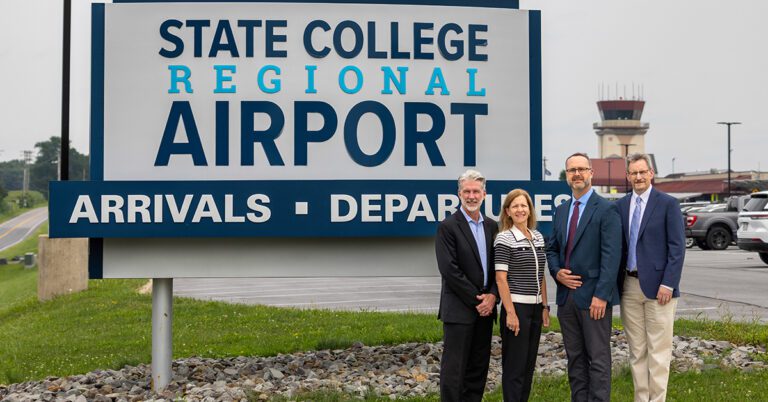
Charlotte Flights Bring a New Route to Growth at State College Regional Airport
Direct flights to Charlotte beginning in October promise easier travel and broader economic opportunities for Centre County.
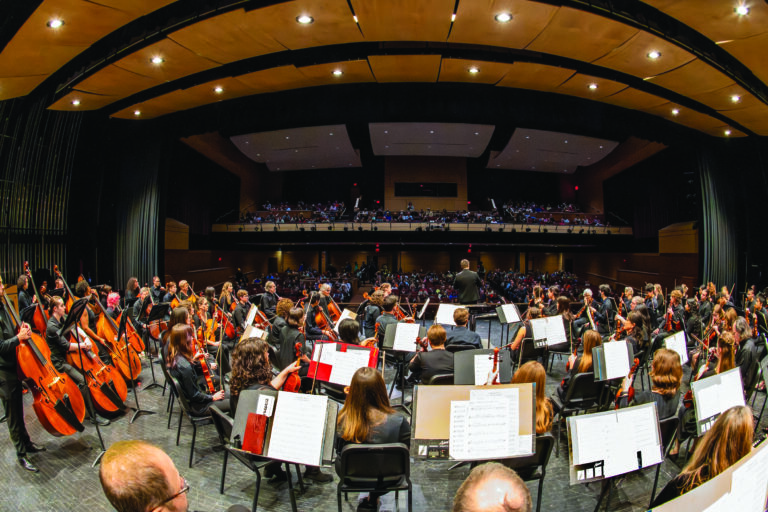
Hitting the Right Note: Nittany Valley Symphony Celebrates Diamond Anniversary
The Nittany Valley Symphony began as a small but mighty group organized by Ann Keller. Sixty years later, the symphony includes 60 to 80 members — some paid, others volunteer — who come together for the love of music.

Fillmore Farm Café & Gardens Offers an Experience That Feels Both Familiar and New
After purchasing the property and opening their doors in March 2026, owners Steve and Amy Haffner have shifted the restaurant’s identity from a “special occasion” spot to a place where locals might feel comfortable stopping in multiple times a week.


