
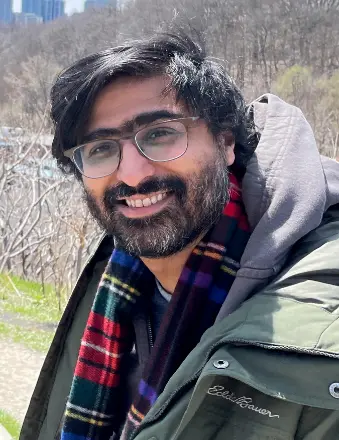
“The man’s age has no importance,” the French Marxist theorist Louis Althusser wrote in his 1986 essay “Portrait of a Materialist Philosopher.” “He could be very old or very young. The important thing is that he doesn’t know where he is and wants to go somewhere.” Asad Haider, born on June 2nd, 1987 in State College, PA, was a materialist philosopher from an early age, first by becoming a voracious reader and a stimulating conversationalist, and later by making his mark on his chosen field of study, political theory. He knew that not knowing was the first step in finding out. The philosopher “always catches a moving train, like in American Westerns,” Althusser said, “without knowing where it comes from (origin) nor where it goes (end).” Asad died unexpectedly on December 4th, after a lifelong pursuit of truth.
Having rejected conventional wisdom in all its forms, Asad did not perform particularly well in high school. But his intellectual path had already started in his childhood, when his mother read to him and his brother, Shuja, who became his first interlocutor. In an unforeseen turn of events, Asad was accepted at Cornell University, where he began graduate-level course work in theory as a freshman. He graduated summa cum laude in 2009, submitting a thesis he described as “an underground history of popular culture.” He entered the History of Consciousness program at the University of California, Santa Cruz, in 2011, and received his doctorate in 2018. His dissertation, on 20th-century French and Italian revolutionary movements, was a statement of purpose, laying out and putting into practice the method he would follow throughout his career. Revolutions and revolutionary movements of the 20th and 21st centuries—up to and including Occupy Wall Street and the George Floyd uprising—were, for him, the crucibles in which thought took place. But in the present, he saw a rise of what Spinoza called the “sad passions,” generated by disenfranchisement and disillusionment and now magnified by social media, and he argued that theorists had to grapple with current events.
That’s just what he did in 2011, when, along with the historian Salar Mohandesi, he founded the online journal Viewpoint. Its emergence coincided with the energy and sense of possibility represented by the Occupy movement, and it quickly became essential reading not only for academics but also for activists and organizers. Along with original analyses of present-day politics, Viewpoint published translations, reprints of lost or neglected texts from revolutionary or movement history, and introductions to thinkers who were still relatively new to Anglophone audiences. The journal’s independence from academia brought a new community of working-class theorists into being, leading to lifelong friendships among its contributors. Asad’s own pioneering work at Viewpoint and elsewhere was characterized by its unpredictable detours, through historical and etymological discoveries that led to revealing insights. His contributions have had a lasting impact on the reception of the work of both Louis Althusser and the Jamaican-born British sociologist Stuart Hall.
It was Hall, a founding figure of the discipline of cultural studies in midcentury Britain, who most inspired Asad’s 2018 book, Mistaken Identity, which also drew on the work of figures as disparate as W.E.B. Du Bois and Philip Roth. Viewpoint always gave prominent space to the Black radical tradition, including neglected voices from early 20th-century movements, and Mistaken Identity articulated Asad’s judicious approach to understanding—and combatting—racial injustice. With its graceful prose, the strength of its convictions, and its sometimes mischievous detours into memoir and cultural criticism, Mistaken Identity, like all of Asad’s published work, stood apart from the morass of scholarly literature. He reveled in hiding Easter eggs in his writing, hoping to reward the careful reader with little treasures: references, callbacks, and unexpected connections.
Mistaken Identity was reviewed and debated not only in the academic press, but in the likes of The Guardian and The New Statesman, and has been translated into Spanish, Italian, Portuguese, and Korean. It was lauded by luminaries like the philosopher Judith Butler and the novelist Zadie Smith, who called it an “inspiration to a new generation of activists.” More important than that, to Asad, was the way the book put him in dialogue with movements all over the world. In Brazil, for example, where social patterns around race take a different form than in the United States, readers nonetheless considered it a crucial intervention. Most meaningfully of all, Asad’s father Jawaid Haider, who was battling cancer while the book was being written, had a chance to read it before he died late in the year of its publication.
After receiving his doctorate, Asad held a Mellon postdoctoral fellowship in philosophy at Penn State, and was then a visiting assistant professor of philosophy at the New School for Social Research in New York. In 2021, Asad was appointed assistant professor of politics at York University in Toronto, and was granted tenure, along with a promotion to associate professor, in 2024. He published widely in peer-reviewed academic journals like Radical Philosophy as well as magazines aimed at a general audience, like The Baffler, n+1, Slate, and Salon. He made popular appearances on podcasts like The Dig, The Majority Report, Behind the News, Time to Say Goodbye, and The Katie Halper Show, and was invited to speak in countries including Germany, Brazil, China, and Russia.
But like his father, who was a professor of architecture at Penn State for decades, Asad considered teaching his highest calling. He cultivated an egalitarian classroom, where ideas were arrived at through dialogue, and believed he had a duty of care to the young minds in his charge. In one of the many tributes to him that circulated on social media after news of his death became public, a former student remarked that Asad seemed uncertain, at the start of his academic career, of how to teach undergraduates, so he treated them as though they were graduate students—engaging them at the highest level, without condescension, just the way he preferred to be treated as a young student twenty years earlier. The student wrote that Asad “would sit and twist a beard hair as he would gaze at the ceiling” before getting up to draw elaborate diagrams.
In this way, Asad was disarmingly consistent, knowing no other way of being than his own. He was known to those who loved him not only for his quick wit but his generosity with his own, always genuine laughter, and his willingness to discuss any topic. When he got interested in something, he set out to master it through research; as another social media tribute put it, “nothing he did was half-assed.” In his youth, Asad was a capable close-up magician, and while studying abroad in Paris as an undergraduate, he quickly became a seasoned French cook. In his adult life he was an amateur powerlifter and a mixer of obscure tiki drinks, along with being an at first tentative but later wholehearted metalhead. After the death of Brian Wilson in June, he developed a sudden interest in the late music of the Beach Boys, when the subject matter shifted from cars and girls to Wilson’s interior life.
“All our biographies are unfinished,” Asad wrote in a 2021 essay on Stuart Hall, “and will remain so long after we are gone.” Because of the ripple effect he created—through his brilliant writing, through his impassioned teaching, and through his loyalty to his friends and family—Asad’s biography is still being written.
Asad will be laid to rest beside his first and most important mentor, his father Jawaid Haider. He is survived by his mother, Talat Azhar, and his brother, Shuja Haider.
The burial will take place on December 20th at Spring Creek Cemetery, on 228 Country Club Road in State College, PA 16801, at 11:30 am. It will be followed by a reception in the Senate Suite at the Penn Stater Hotel and Conference Center, on 215 Innovation Blvd, State College, PA 16803, at 12:30 pm.