
When he died, people who hated the Rev. Martin Luther King Jr. well outnumbered those who adored him, as Jeff Johnson told a Penn State audience this month.
The hate surfaced ‘because (King) was willing to make people uncomfortable,’ Johnson said in a Jan. 18 talk at Schwab Auditorium.
A nationally known investigative journalist and activist, Johnson adopted King’s example, wasting no time in raising points uncomfortable for Penn Staters.
The scandalous matters now facing the university, he said, have begun to eclipse other serious issues that have long confronted the institution — including issues of racial, social and economic equity.
‘ … (N)ow everything is about ‘Save the image of Penn State,” Johnson said in his remarks, part of the university’s annual King Commemoration events.
Who, he wondered, will deal now ‘with the reality that groups on this campus still don’t talk to each other,’ despite the development of multi-cultural programs?
‘Who’s prepared to make the people feel uncomfortable, substantively?’ Johnson asked, soon adding: ‘Are you prepared to create relevant vision?’
The questions hit hard.
Devastating sexual-abuse and cover-up allegations have justifiably — rightfully and necessarily — shaken Penn State to its very foundations. They’ve driven important calls for new governance, more transparency, an overhaul in institutional culture.
Post-scandal change, it appears, inevitably will come to Penn State, and in measures well beyond what’s already materialized in the last few months.
In our ‘new normal’ — an overused phrase, I admit, but it fits — perhaps it may be easy to regard pre-November Penn State as a halcyon era, a relatively happy and innocent time before reality crumpled illusions. Happy Valley’s Camelot disintegrated in November, it’s been said.
But was Camelot really Camelot?
Borrowing inspiration from Johnson, let’s have a quick refresher:
- Tuition at Penn State has more than tripled since the early 1990s, pushing the university beyond the reach of many middle- and working-class Pennsylvanians to whom the institution was historically geared.
- Penn State counts the highest student-loan default rate among Big Ten institutions.
- The average student-loan debt for Penn State undergraduates is more than $6,000 greater than the Big Ten-wide average.
Of course, those numbers, taken by themselves, don’t begin to touch on other entrenched struggles at Penn State: for bona fide racial equity and integration; for social and cultural awareness; for an intellectually curious, questioning student body; for modest class sizes; for much more.
Nor do they touch on another longtime, key fight — this one for the university’s support and status as a public entity — or on ongoing budget tensions that threaten core Penn State functions.
If it existed here, Camelot was never perfect. Camelot had major issues.
Johnson is right: In the glare of a now-perpetual big-media spotlight, in light of the horrifying new charges in our midst, we’re at risk of nudging aside or overlooking what ailed us before November.
But those ailments haven’t lessened.
Even in an era of diminished reporting resources, it’s up to the news media — especially the local news media — to keep attention fixed on ailments both new and old, to keep the aggressive flow of relevant information moving on all fronts.
And it’s up to members of the public to care, to multi-task as active and concerned Pennsylvanians, to call the media to task if we aren’t fulfilling our watchdog role.
Tough times have become tougher times. They demand our collective public vigilance — across the board, from the university’s just-emerged crisis to its long-established troubles.
As Johnson asked Jan. 18: ‘If you’re going to stand up, are you willing’ to be intellectually prepared? And ‘how many of us are even wiling to risk (our own) time’ for a cause?
In these times, we must be.
More Columns
View all Columns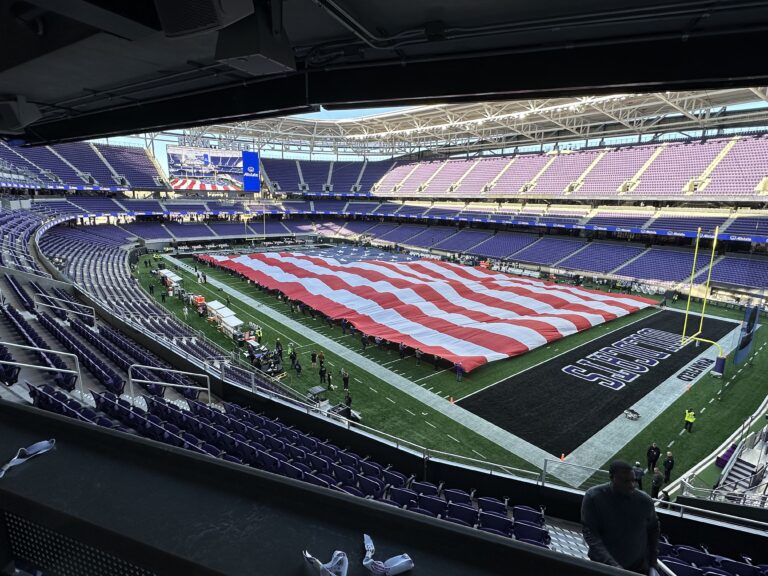
Everything I Experienced Covering a Game at the New Ryan Field
This past Friday, I had the honor of covering Penn State in the first game played in Northwestern’s new Ryan Field, and it’s an experience I won’t soon forget. The […]
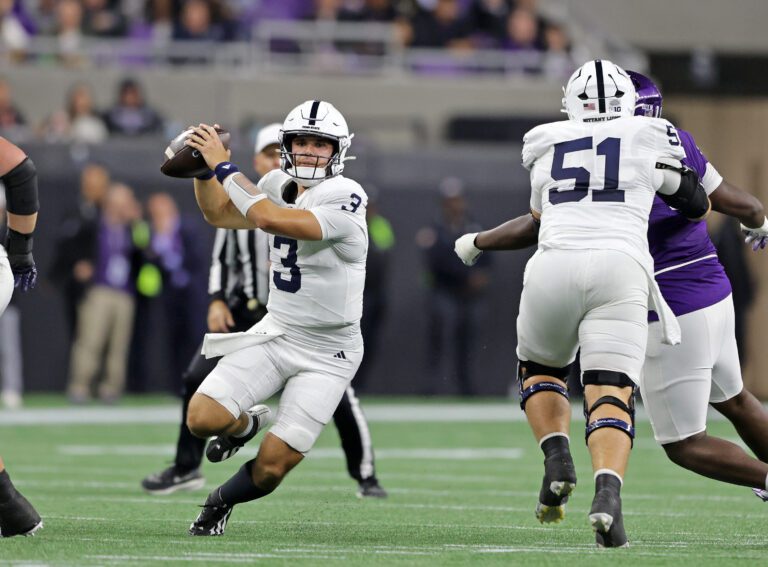
Here’s How Penn State QB Rocco Becht Thinks He Can Do Better
EVANSTON, Ill. — Rocco Becht is a smart guy. He’s a wise old head in college football terms. This is his fifth season playing and mostly starting Power 4 football. […]
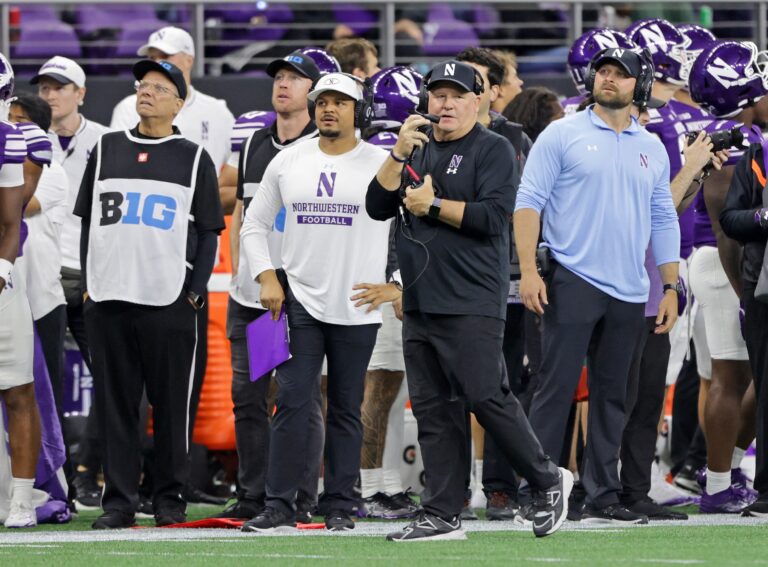
Worse Than Bad. Chip Kelly, Jerry Neuheisel and Northwestern Pile On Penn State. Again
EVANSTON, Ill. — Important dates in Big Ten Conference offensive coordinator hiring history, good to know especially now, in the aftermath of Penn State’s total collapse over the past six […]


