

With extreme heat burdening much of the U.S. power grid, Penn State may be instructed this week to reduce its electricity use, university facilities spokesman Paul Ruskin said Thursday.
‘If called upon to reduce our electricity, Penn State is ready and able to turn things off and save our electrons so that they can be redistributed to other cities in need,’ Ruskin said. ‘ … Penn State is doing our part to prevent brownouts and blackouts in other parts of the U.S. Everything is interconnected.’
The usage-reduction order, if it becomes necessary, would come from PJM Interconnection, a regional power-transmission group. The university is part of PJM’s power-reduction program, meaning that Penn State must cut its University Park electricity use by as much as 20 megawatts when it’s asked to do so.
Ruskin said Penn State will receive two-hour advance notice from PJM if such a order materializes. (Typical peak summertime usage at the University Park campus is 50 megawatts.)
Joining the power-reduction program was voluntary for Penn State, which signed up a couple years ago. When the university re-upped its involvement earlier this year, University Park had to pass a campus-wide load-reduction test.
The campus did so — with flying colors — on June 22. For passing the test, Penn State received $885,000 and was able to sustain its status as a program participant.
As a participant, the university is legally bound — under contract — to ease its electricity consumption during national or regional power emergencies.
‘I’ve been telling people to think of it as a blood donation,’ Ruskin said. ‘When a hurricane or other emergency hits, Penn Staters step up to help out. This is the same thing.’
He said it’s a strong possibility that University Park will be mandated to cut power use this week. And if that happens, he said, the university will likely ‘let temperatures drift higher’ by several degrees in many campus buildings.
‘People may feel a little uncomfortable, but our comfort is not as important as keeping the electric grid healthy,’ Ruskin said. ‘If the regional grid were to collapse, it might take days to get the electricity back. …
‘If we begin to adjust the air-conditioning levels, the classrooms become a little warmer,’ he added. ‘The faculty are more than welcome to do some outdoor teaching.’
In case of a power-reduction order, Penn State University Park also will ask employees to take common-sense steps to cut usage. Those would include turning off any unnecessary lights and easing up on the use of coffee makers, among other items.
Ruskin emphasized that the university will remain open and fully operational if a power-reduction order is issued.
Meanwhile, West Penn Power, the primary electricity provider in the State College area, is ‘holding up pretty well,’ company spokesman Doug Colafella said.
He likened PJM Interconnection, the transmission group, to an air-traffic controller, whereas West Penn generates the electricity.
‘At this point, there appears to be plenty of juice to serve our customers. But obviously, we’re monitoring our system closely as it heats up — particularly today and tomorrow,’ Colafella said. ‘We’re putting some additional oversight on our systems to monitor their performance and address any issues that may come up.’
The weather driving the increased power demand is among the hottest heat waves felt in the State College area, at least in the past two decades.
Temperatures Thursday are forecast to reach 98 degrees, though it will feel like 104 outside on Thursday afternoon, according to AccuWeather.com. The National Weather Service has issued a heat advisory that will remain in place until 8 p.m. Thursday.
Friday won’t bring any relief, either. Its high temperature is expected to be 98 degrees, but the air outside that day will feel like 110, AccuWeather.com reported.
State College last topped 95 degrees in 1988.
Among the other heat-related impacts in the region:
- The Centre Region’s public pools, on Westerly Parkway and in Park Forest, have seen their usage double this summer over prior years, regional aquatics director Todd Roth said. He attributed the growth to a warmer-than-normal season and to revamped pool facilities.
‘The new facilities are able to handle the crowds much more than the old pools were,’ Roth said.
Even with the crowds, he said, pool visitors do not usually face any lines to get in. The facilities have added additional staff to help handle the demand.
- Calls for air-conditioning-related service have skyrocketed in the State College area this week. At Goodco Mechanical Inc., the call volume is up at least 100 percent, owner Scott Good said.
‘We’re replacing a fair amount of equipment’ this week, Good said. ‘With the economy, people have been deferring and delaying replacing a lot of equipment.’
He suggested that people with in-home air-conditioning systems check to make sure their air-handling filters are clean. Also, Good said, if people find frozen coils in their air-conditioning unit, they should not continue to run it.
‘Call a service company,’ he advised. ‘If you continue to run it, it’s just going to make it worse.’
Another tip: ‘It’s really helpful for people to do regular maintenance in spring and fall — to avoid catastrophe on a 98-degree day,’ Good said. ‘ … I tell people it’s like changing your oil and rotating your tires. You wouldn’t let that go for 20,000 miles. You probably should not let your air conditioning sit for that long, either.’
- In State College borough, the municipality is watching to make sure the heat doesn’t put traffic signals’ electronics on the fritz. That can happen in extreme temperatures, so crews have checked to make sure all traffic-electronics-cooling systems are running properly, borough Operations Manager Eric Brooks said.
He said the borough also added extra staff to refuse-collection crews and adjusted their hours. The moves are intended to let workers finish their work before the day’s most oppressive heat strikes.
‘We pre-planned some not-so-strenuous jobs for today and tomorrow for the crews,’ Brooks said. He said the borough has encouraged workers to drink plenty of water, watch for signs of head exhaustion and take breaks as necessary.
Back up on the University Park campus, Penn State crews are watering plants only in the early mornings or late in the day — not any time close to noon.
Water sprayed around midday evaporates too quickly in heat this extreme, Ruskin said.
Earlier coverage
More Community & Entertainment
View all Community & Entertainment
January Is a Call to Action to Respond to Stalking
This column by Centre Safe Executive Director Jennifer Pencek originally appeared in The Centre County Gazette. When we talk about acts of interpersonal violence, oftentimes people will focus on sexual […]

Busy Weekend of Fall Festivals and More on Tap Around Centre County
The weekend of Sept. 29-Oct. 1 is packed with activities around Centre County, including fall festivals, Oktoberfests, fairs, concerts and more. Check out some of the weekend highlights below. For […]
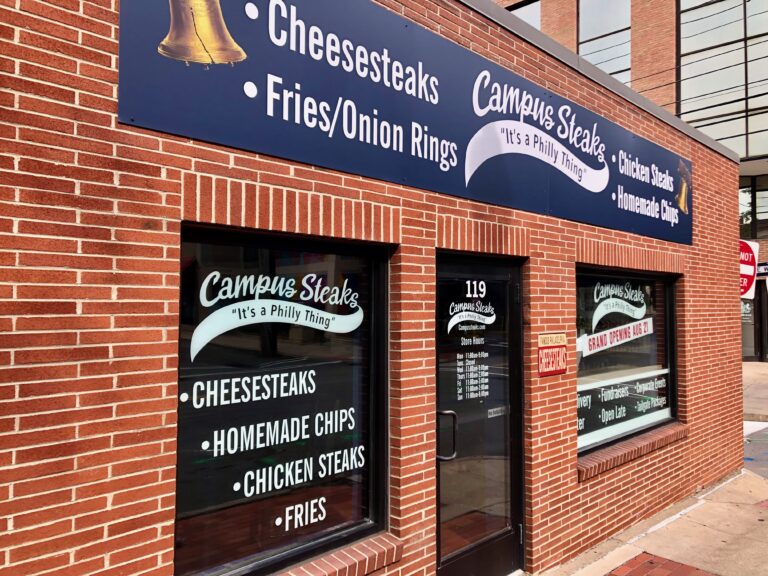
Downtown State College Cheesesteak Shop Sets Opening Date
A new cheesesteak shop that promises a taste of Philly in downtown State College has set an opening date. Campus Steaks plans to hold a grand opening on Aug. 28 […]


