
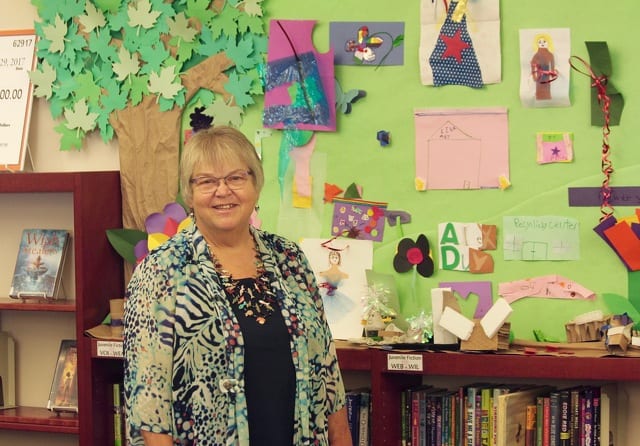
It took a circuitous — and somewhat fortuitous — route, but 34 years ago, Anita Ditz found her perfect job as head of children’s services at Schlow Centre Region Library.
‘Kids and books are my two favorite things in life,’ she says.
On Sept. 8, Ditz will retire from her position, leaving a lasting impact that has helped build the library’s role as a vital community resource and destination.
Ditz seems happiest to be known to families around the community simply as ‘Anita from Schlow.’ Those who know her professionally and personally, though, will gladly trumpet her passion for her work and her efforts to make Schlow a better place for all.
In 2013, the Pennsylvania Library Association bestowed her with its highest honor, the Distinguished Service Award. Her successor as department head, current children’s services librarian Paula Bannon, calls her a ‘wonderful teacher.’
‘I hope that when I’ve been doing this for 34 years I will still be as passionate about library service for children as she is now,’ Bannon says. ‘Anita is always willing to try new things and is very enthusiastic about partnering with community organizations. The library is a better place because of her work.’
Schlow director Cathi Alloway calls Ditz ‘a community treasure.’
‘… [S]he has an outgoing personality that has won the hearts of children, parents and educators,’ Alloway says. ‘She has a passion for children and reading, and her enthusiasm is always evident, whether she is helping patrons at the service desk or presenting a pitch for funds to the many community groups that support our work with children.
‘Her legacy is the development of a department that is a popular destination for children and families, with high standards for customer service based on sound literacy and educational practices.’
Over the years Ditz established Schlow as one of Pennsylvania’s first ‘Family Place’ libraries, developed new programs and took the library into the community. But when she first started thinking about a career, back in her small, western Pennsylvania hometown of Marble, she wasn’t thinking about becoming a librarian.
Finding Her Calling
Having never seen the ocean at the time, and to this day unable to swim, she thought she wanted to be a marine biologist. So she enrolled at Clarion University as a biology major.
‘I always loved literature, so my biology degree was composed of whatever classes were leftover when I took the English classes I wanted,’ she recalls. ‘You can tell how useful that degree was.’
After earning that degree, she worked for a time at Three Mile Island nuclear plant near Harrisburg as a clerk in the records office. She left there about a year before the nuclear meltdown in 1979.
‘Obviously I’m someone you should keep around,’ she jokes.
Realizing she wanted to work with kids, she thought about physical therapy and returned to college. But it was an expensive program and as her finances dwindled she reconsidered. She later connected with a job that offered free tuition for a time and started taking classes again at Clarion, this time realizing her passion, and later got scholarships to finish her master’s degree in library science.
While she was there she met longtime Schlow staff member Ann Lindsay, who was getting her master’s. A year after Lindsay returned to Schlow, she called Ditz.
‘She said ‘Get your resume together, Ditz, there’s an opening for the children’s library,” Ditz says.
A Family Place
Among Ditz’s most notable achievements at Schlow, the library became a ‘Family Place,’ a concept that started in New York and over the years has developed as a network of libraries committed to being destinations for families and early learning.
‘Anita made the Children’s Department at Schlow Library a destination place for families,’ Bannon says. ‘So many families come back to visit us after they’ve moved away. They always say that Schlow is the best library they’ve ever visited and I think a lot of that is due to Anita’s passion for amazing library service to children and their families.’
Ditz says the idea is to make the library a welcoming place, one with comfortable furniture, resources that parents can use and hands on activities and learning toys for children. It helps address pre-school social development and in developing learning skills from a young age. And in a university town like State College that has, as Ditz says, ‘half of us coming from someplace else,’ it’s also a place to meet people of different cultures and backgrounds.
‘I like the idea because it makes the library a vibrant, active place to be — an exciting, stimulating place,’ she says. ‘Part of the Family Place concept is very much an involvement in the community.’
That community involvement includes working with other local organizations to address needs that might not be already adequately met.
A prime example is the nationally recognized Parent-Child Workshop program that Ditz established for families of toddlers with special needs. That has since evolved into the Toddler Learning Center, which works with Strawberry Fields service providers to offer programs for parents and children at different developmental stages and with different needs.
‘The whole program began for us with a little girl who had spina bifida,’ Ditz says. ‘Her mother had come and asked is there anything we can do because she doesn’t have anybody her age she can play with. Strawberry Fields was the provider of services. It started from there and it’s been one of our signature programs.’
It comes back to the Family Place concept and the library being a community resource. Schlow started out by planning story times and inviting parents to meet with people from community resources addressing different issues. For the Toddler Learning Center, any child working with a Strawberry Fields service provider is guaranteed a slot in the five-week program, which involves up to 12 families at a time.
While children use developmentally appropriate toys and do activities for things such as motor skills in a creative play setting, a child development specialist observes and consults with parents about the type of learning that is happening and how to further it.
‘We have children who are developmentally on schedule and children who have delays all working together, so it’s reinforcement for families and it’s a social activity for children who in some cases haven’t had that,’ Ditz says.
Programs for school-age children have expanded under Ditz and her staff as well.
The successful Summer Reading program involves hundreds of kids each year. It started out with Ditz lugging tote bags to each of the elementary schools each year to talk about summer reading and now sees staff members visiting schools and garnering broad community support. Local businesses have come through to help offer prizes for the program.
Ditz says some people have told her children should read because it’s good for them, not because they’ll get a prize. But for the kids who most need to be reached, reading can often feel like work.
‘Would you go to work if you didn’t get a paycheck? For some of the kids that’s what it is,’ she says. ‘The kids we want to reach and make an impact on are the kids that need to read over the summer to stay on target.’
And Schlow has made summer reading more than counting up the number of books read, making it more of a summer learning program by introducing kids to different activities and topics they might be interested in beyond the time at the library, from yoga to painting to nature.
Each November, meanwhile, State College third- and fourth-graders make a field trip to the library, where they learn about what’s offered, get a tour, explore and get a library card.
‘It’s been a very successful program for making kids aware,’ Ditz says. ‘For some kids that’s the first time they’ve been in a library. I think the library should just be part of your life. You can’t be a lifelong learner if you don’t get ready to learn when you’re small.’
The library has expanded its reach with pre-schools, too. Ditz started by taking story times to some pre-schools, an effort Bannon has taken on by visiting each local pre-school at least once a semester and providing materials for kids to take home. Schlow has extended its outreach to homeschool families as well.
For younger children, story times at the library have grown significantly over the years, and they’ve developed to involve parents so that they can model reading behaviors from what they see in the library. Now, follow-up materials and reading lists are all provided to families electronically.
Changing Times
Though Ditz doesn’t see printed books going away — and, in fact, she says they seem more popular now than five years ago — technological developments have been among the biggest changes she has witnessed. People are seeking content and a variety of formats, and for libraries those formats aren’t often cheap — e-books cost far more for a library to purchase than an individual consumer, for example. That leaves libraries with decisions to make.
‘Changing technology has impacted on the use of the library, and it’s also impacted the question of what’s the future going to bring? I wish I had a crystal ball because changes happen so quickly,’ Ditz says. ‘Information is information. It doesn’t matter what format it’s found in. We are the custodians of information in a way. So making sure we are making the best decisions now and for the future is pretty important.’
And that leads to another change Ditz has seen — funding. As government funding continues to shrink, libraries are more and more reliant on donations just to maintain services, an understandably frustrating position for librarians and staff who want to offer more services to the community.
‘We’re always working smarter to try to do more with what we have,’ Ditz says. ‘Libraries are the thing that’s available to everyone at no cost. We provide services to infants through seniors and it just seems libraries should be an institution that are highly valued and you do everything you can to keep them as fresh as they can be.’
The Schlow Library Foundation was established to help put the institution in a better position as government funding dwindles.
Friends and co-workers have established the Anita Ditz Fund for Schlow Library’s Children’s Department, which will be used to support collections and programs. For more information and to donate, visit the fund’s page on the Centre Foundation website.
Staying Involved and Enjoying Her Time
Ditz leaves Schlow having made a significant impact, but she’s quick credit the community and her colleagues for building the library into the community resource it is today.
‘I’m very proud of this institution and I’m very proud of the people I work with,’ she says. ‘I’ve been involved with libraries across the state in the library community and we have an incredible group of people.’
After she retires in September, Ditz has a long list of things she wants to explore and possibly become involved with — from Palmer Museum of Art to Discovery Space to the Arboretum at Penn State. She knows that she will find some way to be involved in working with kids, ‘because I’ve been that way every day of my life.’
Traveling is at the top of her list.
A retirement and thank you party will be held at 1 p.m. on Sept. 23 in the children’s department at Schlow and all are welcome to attend. The next day, friends are taking her on a road trip. She has asked them to keep the destination a secret from her.
‘A friend phrased it very well, that I’m giving myself the gift of time,’ she says.
More Community & Entertainment
View all Community & Entertainment
January Is a Call to Action to Respond to Stalking
This column by Centre Safe Executive Director Jennifer Pencek originally appeared in The Centre County Gazette. When we talk about acts of interpersonal violence, oftentimes people will focus on sexual […]

Busy Weekend of Fall Festivals and More on Tap Around Centre County
The weekend of Sept. 29-Oct. 1 is packed with activities around Centre County, including fall festivals, Oktoberfests, fairs, concerts and more. Check out some of the weekend highlights below. For […]
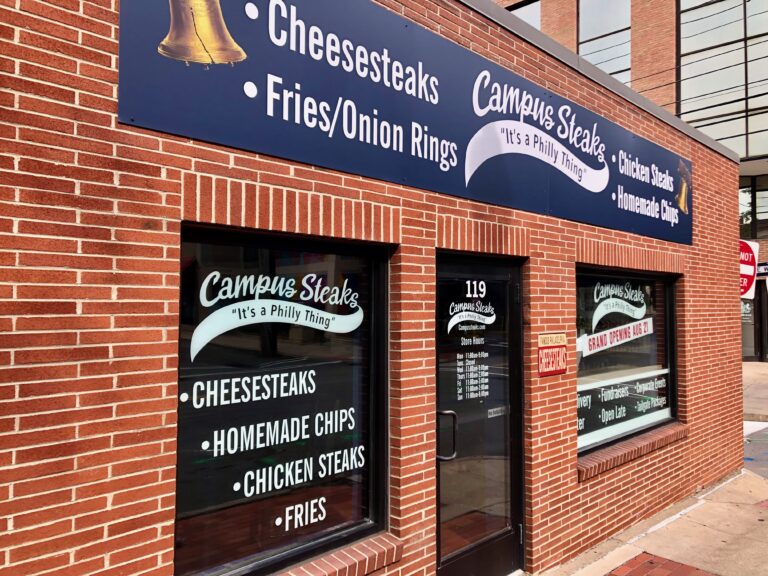
Downtown State College Cheesesteak Shop Sets Opening Date
A new cheesesteak shop that promises a taste of Philly in downtown State College has set an opening date. Campus Steaks plans to hold a grand opening on Aug. 28 […]


