

International Education Week is Nov. 14-18. The U.S. Department of State and Department of Education team up each year to celebrate the benefits of international education and exchange worldwide. As part of the celebration, Penn State Directorate of Education Abroad holds an annual essay contest that provides study abroad alumni the opportunity to share their experiences. For the fourth consecutive year, Town&Gown is partnering with the program to publish the winning entries.
The contest is open to all current Penn State students who have participated or are currently participating in a Penn State study abroad program. During the 2015-16 academic year, Penn State sent more than 2,500 students abroad to 50 countries. The growing number of students who study abroad “reflect Penn State’s commitment to forging global citizens and global leaders.”
Here are the top two entries from the 2016 writing contest.
The Carriers of a Brighter Future • by Erin Haney
The presunrise gloom added a layer of despair to the scene. The morning air was crisp, and all I could think was how badly I wanted the sun to rise up over the Aegean. I was nervous, watching as the ferry slowly, and almost sluggishly, moved into the port of Athens and was tied off. I watched with anticipation as they lowered the gangplank. I didn’t know what to expect, or how this was going to go. The previous day my professor had explained to me that the organization, Carry the Future, was attempting to help as many refugee families coming into Greece as possible. Our goal was to relieve just a fraction of its burdens. So I had been handed some baby carriers, told to follow a volunteer, and help her with the mothers. But I didn’t expect as many people as came crashing off the boat in waves.
There were so many people and there were so many children. So many little kids being dragged by the hand, looking bewildered and uncertain; some still half-asleep so that only the placement of one foot in front of the other carried them forward. I can only imagine the confusion: the whistles of the police, the hollering of men selling taxi and bus tickets, volunteers offering food, clothing, toys. But I had only a few seconds to take in the mass of weary people coming toward me before we took off.
We were darting around bags, men, children, grandmothers, and other aid workers; searching and keeping watch for mothers and fathers carrying infants. Quickly we would approach, greet in Arabic and offer the carriers. One mother pushed her tiny son into my arms as she was fit with the baby carrier, and his little hands grabbed at me and latched on, his eyes were so big looking into mine, and I felt like time had stopped for a minute before he was pried from me and given back to his mother.
Most times we were met with relief, a nod of thanks. Other times they were wary, pleading they had no money. It was all so rushed — the parents feared their buses to the border would leave without them, but we kept them steady, we slowed them, and we made sure the carriers fit properly, made sure their children were safe. And from the arms of these parents I would take their children. Babies that were 7 months old, younger, 3 year olds, all infants. They were Syrians, Afghans, Iraqi — refugees from hatred and violence that was plaguing their homes. And for one small minute I was given the responsibility to hold these incredibly brave and strong little children. For one minute, I rocked and soothed, cradled in my arms, blocked their cheeks from the wind, and kissed their little foreheads. And when I finally handed them back to their mothers and placed them safe and snug into their little carriers, I felt like I was placing them into a little safer and a little securer world.
Again and again we did this, calling out to Mamas and Babas. I held these precious little pieces of the future before handing them back to their families to face a most uncertain path. So many were cold. They had no gloves, no hats, they needed socks and extra blankets for their babies — and we didn’t have enough. There were just so many people. But we did what we could, and we gave what we had. We received so many tired smiles of relief, whispered Thank yous, grabbing of hands, so many kisses of gratitude. One grandmother pulled me into a tight embrace and peppered my face with kisses, her smile so big, my heart felt like it matched in size. So much gratitude was pouring our way, and for something we did that was so small. I wish I could’ve done more. I felt guilty for all the gratitude when I really could do so little. I knew after this I would return to my world of privilege, and they would be entering this world of unforeseeable futures — and I felt the entire weight of the injustice of it all. In the dark, before the sun rose, it made everything seem much more hurried, more hectic, more hopeless. But these women and these families, they were all so thankful, so grateful for this one small gift we could offer.
The world doesn’t know these families. They say these refugees are unsafe, foreigners, our media goes so far as to call them terrorists.
I saw no terrorists that day. I saw weary men and weary women leading their frightened children by the hand. I saw so many weary faces, but in each of their faces, beneath the confusion and unsureness of this new country, I saw hope. And each child I held, I felt like I was holding a piece of that hope — hope for the future, for better lives, and a hope for a kinder world.
I will be the first to admit, it was difficult being there. I still can’t force the image of one boy out of my mind. We found his mother crouched on the curb surrounded by her two little girls and cradling her infant son in a nest of blankets. We offered her a baby carrier, but she made motions that she was pregnant. Her bus was being called, and she had to move to lead her little ones on their way to Macedonia, and as she tried to stand we realized how exhausted and weak she was. She was sick, and her cough was so alarmingly harsh. I took her child from her arms, and with her I led her two daughters to the buses.
The walk was long, but not as long as it felt. In my arms I carried a 2-year-old boy, he was asleep, though fitfully, and like his mother he had a terrible cough. My heart broke into a million pieces for his family, for this brave mother who had to remain strong. I felt so much for this little baby boy who was sleeping through his first moments in Greece, but when he awoke, he would find himself in a whole new life. Where they were to go? Who could say. Hopefully, today the borders of Macedonia would be open, but after that? Who knew where their journey across the earth would take them. Who would welcome them? Would it be with open arms? For the sake of this little boy, I could only hope so.
The mother pulled herself up the stairs of the bus and held out her arms to me for her boy, and so I kissed his little cheeks, wiped the tears from my own, and handed him back over to his uncertain path.
As the last refugees boarded their buses that morning, the sun began to rise over the Aegean and Greece. It has been said that there is something about the light here, a powerful beauty that cannot be accurately explained in words. Maybe for the first time since I had arrived on my program in Athens I truly understood that. The sun that morning, the light that it shed, was like no sunrise I had ever experienced. It seemed to promise a better future, better lives, like a beacon of hope for these wanderers. As the port was bathed in sunlight, I could only hope that this light would lead them to safety. These families were being welcomed into Europe by the warmth of the Greek sunrise, and like the light that poured over the horizon, it seemed a promise of better things.
That cold morning at the Piraeus, I held countless infants. I cradled them in my arms, I helped their mothers carry them into their new lives. For me, that was a privilege. To be there at this turning point in these families’ lives, to be there to welcome them in this next step, to help ease their burdens just a little on their long journey. So many burdens, they all carried with them so many burdens. Their trash bags full of belongings, their bright orange aid backpacks, their blankets, their children, their past, their stories. For just a minute, I held them in my arms and made the load a little more bearable on these mothers and on these fathers. There were so many people that day, and the whole situation just seemed so desperate. But as I turned my face toward the sun, I just hoped those children were being carried forward into a brighter and safer future.
Erin Haney is a senior in the Schreyer Honors College from Blue Bell. She is majoring in classics and Ancient Mediterranean studies. She spent her entire junior year studying abroad — Rome in the fall and Athens in the spring.
• • •
What I learned about America — in Italy • By Shelby McGinty
“Look! They have some linens in the window maybe they have one!”
My roommate Sabrina shouted while pointing at a small wooden shop across the street. I gazed warily at the beautiful handmade linens that lined the walls of the store before the owner welcomed me in.
“Buongiorno” she said as she came down the stairs. Shocked and a little nervous I hastily replied “bonjour!” to which I immediately bowed my head in shame.
She stared at me with the same disappointment that followed me and my roommates wherever we went, and said “American huh?” I explained to her that this was in fact my first week here in Florence, and I still had trouble just saying Hello. She understood, but I knew what she was thinking. They see kids like us every summer coming into their world, making them speak our language, not even bothering to learn the word “hello.” As I stood there in utter humiliation for aiding to the already terrible American reputation, she simply asked me what I came in for.
“I arrived here a few days ago not realizing that our apartment would not be stocked with some of the necessities that I am used to.”
The owner smirked at me a little, and responded in perfect English, “So you’re looking for a towel.”
A little taken aback, I nodded my head, knowing that clearly many other students forgot to bring towels with them, as well. As she ruffled through shelves looking for her cheapest option, she began to vent about American students.
“Sometimes students forget they are traveling to a new place with a completely different culture than their own. They expect everyone to always conform to American ways.”
Although this was a little hurtful, she did indeed have a point. For the past week I was showering in the smallest space, with the lightest water pressure I have ever experienced. To top it off, I was air-drying because I didn’t think to bring a towel with me from home. I remember thinking how can people live like this?
As she pulled a small white towel from the back shelf, she explained that this was going to be my best bet for a towel in the city.
“We don’t have a Wal-Mart here where you can pick up anything you might ever need. Italians want quality products that are made by professionals in that field. That’s the difference between you and me.”
With that I left the linen store with a 28-euro towel and a little perspective.
As I strolled home, I thought about what she said. Here I was in Florence, one of the oldest and most beautiful cities in the world angrily wondering why it is so hard to find a dang towel. I had spent the last two hours aimlessly wandering the streets looking for any kind of store that might sell towels or similar products. By this time, my roommates had left me to go home, and I was all alone trying to find my way back. Completely lost, as usual, I headed to the one landmark I always knew I could find, the Duomo. As I sat on the steps in pure astonishment I thought back to just a week ago. On our first day here we decided to walk around the city to get a feel for the lay of the land. We crossed the Ponte Vecchio because we lived on the other side of the river from downtown Florence. As we roamed the streets we can hear conversations from Italian and tourists alike, all who mention something called the Duomo.
The four of us all began to think maybe this is an important word we should know. As we walk through the narrow streets we turn the corner to see a huge cathedral right in front of us. Unaware of the historic landmark that we live five minutes from, all of our jaws dropped as we admire the beautiful architecture. My roommate Kim looked at all of us and said, “Guys, I think we just found the Duomo.”
But of course we weren’t quite sure, so we decided to ask someone on the street if this was in fact the Duomo. The man chuckled a little agreeing that this was the historic church and adding, “It’s like your Empire State Building. Everyone knows what it is, you can’t miss it.”
Of course, over the next six weeks we would we have history of the Duomo shoved down our throats in art class. But now, even looking back on this, it’s amazing to me how something so important to Florence was never even mentioned to me at home. As I sit here, thinking about all the things I got to learn and experience in Florence, it scares me how much of an imperialistic culture we have become. I walk into a little shop in central Italy expecting to have to point to what I need and to assimilate into the culture quite quickly. But to be quite honest, I didn’t learn any Italian. Everything was in English, everything was catered to the modern American tourist, and coming to a new country wasn’t as difficult as I had imagined.
Don’t get me wrong, it made living there a lot easier for me, but I wanted to leave the country to learn with a new understanding of the world and who lives in it. Instead, I left with a different sense of self. I didn’t leave Italy learning as much about them as I did about my culture and myself. So as I left Italy and got on my plane to go home, I looked at the flight attended who scanned my ticket and said, “Goodbye.”
Shelby McGinty is a junior from Gaithersburg, Maryland. She is majoring in supply chain and minoring in international business.
More Community & Entertainment
View all Community & Entertainment
January Is a Call to Action to Respond to Stalking
This column by Centre Safe Executive Director Jennifer Pencek originally appeared in The Centre County Gazette. When we talk about acts of interpersonal violence, oftentimes people will focus on sexual […]

Busy Weekend of Fall Festivals and More on Tap Around Centre County
The weekend of Sept. 29-Oct. 1 is packed with activities around Centre County, including fall festivals, Oktoberfests, fairs, concerts and more. Check out some of the weekend highlights below. For […]
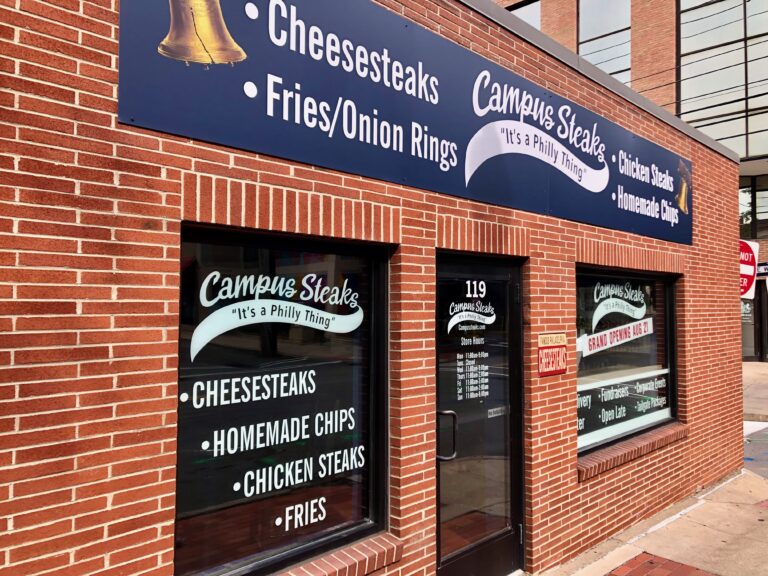
Downtown State College Cheesesteak Shop Sets Opening Date
A new cheesesteak shop that promises a taste of Philly in downtown State College has set an opening date. Campus Steaks plans to hold a grand opening on Aug. 28 […]


