
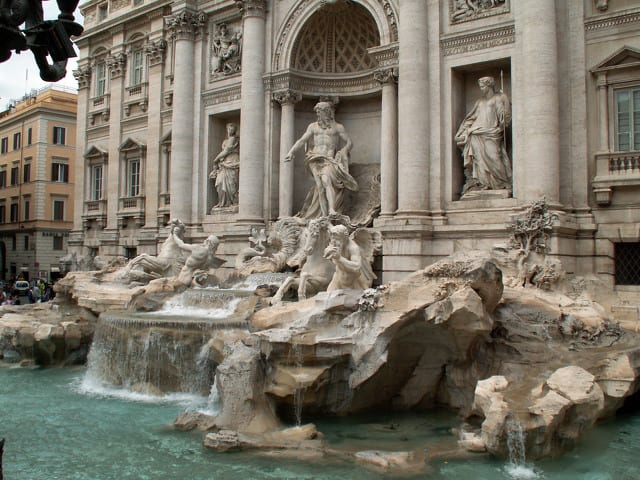
Buongiorno! This past month I was lucky enough to join a group of friends for a trip to Italy. My husband, Steve, and I have never been to Europe so it was a trip of a lifetime. We visited Rome, the Vatican, Siena, Florence, Pisa and a villa in the Tuscan countryside. The Italian people were welcoming and I never felt uncomfortable, even with my limited Italian vocabulary. The historic sites and architecture were amazing; my favorite was the famous Trevi Fountain in Rome. The Colosseum and the Vatican require payment for entry and seemed too ‘touristy.’
My travel made me want to learn more about the economy and government of Italy. Thus, it seemed like a good topic for an article given their precarious position in the Eurozone.
The European Union (EU) is the second largest economy in the world. The Eurozone, which includes Italy, is a subset comprised of 19 of the 28 EU countries. The 19 members of the Eurozone use the Euro as their legal tender and it is the second most traded currency after the U.S. Dollar. It is a young currency, launched as banknotes in January of 2002. Before that, it was only used to exchange between countries in the Union starting in 1999. As I write this article, one American Dollar is equal to .86 Euros.
The Italian economy is divided into an industrial north and less-developed south. Italy stands behind Germany and France as the third largest economy in the Eurozone. The population of Italy is just over 60 million with an unemployment rate of 11.3 percent as of 2017. The GDP of Italy is the 12th largest in the world and the nation is the world’s eighth largest exporter, so issues with the Italian economy can cause turmoil for the rest of the world. The nation’s exports are precision machinery, clothing and footwear (Armani, Dolce & Gabbana, Prada anyone?) and motor vehicles.
Italy’s GDP has not recovered since the 2008 financial crisis, unlike most European countries. This is owed largely to its high tax burden, large welfare programs and high levels of debt. Italian citizens pay among the highest income and social security taxes of 48 percent of income and Italy imposes a value-added tax (VAT) of 22 percent on most goods and services. People under-report work to avoid taxes and create a growing shadow economy. The Italian government has 2.1 trillion Euros in debt or 131.1 percent of GDP. To put this in perspective, our national debt is 105.4 percent of U.S. GDP as of 2017 but we have $21 trillion in U.S. Dollars in debt.
The real issue came when Italy went into political turmoil and fears arose over the possibility of Italy leaving the Eurozone and its common currency. The nation finally swore in a new government recently after an election in March. The continued fear is that Italy’s debt may increase due to promised tax cuts, calls to lower the retirement age and minimum basic income levels paid by the state. Moody’s has threatened to cut Italy’s credit rating, which is only two notches above ‘junk’ status. A lower credit rating means higher debt costs and implies less chance of repayment. To entice people to buy lower rated bonds, countries must pay a higher yield to attract investors. This leads to higher costs and exacerbates their existing debt problem. Italy accounts for 15 percent of the Eurozone GDP and 23 percent of their debt.
The fear of Italy leaving the EU is the reality that the Union may not be viable and may not survive. It is a complicated business to combine different countries’ economies, lifestyles and programs under one currency.
While Italy has its issues politically and economically, the historical monuments, friendly people and beautiful Tuscan countryside cannot be equaled. The food was incredible, fresh and delicious. I would go back in a second and – if legend holds – my coin thrown in Trevi Fountain assures my return!
*Nothing contained in this article should be interpreted as a promise or guarantee of earnings or investment results nor a recommendation for the purchase or sale of any security or sector. Past performance is no guarantee of future results.


