

The signature hole at a golf course is the one hole that the course has decided is most aesthetically pleasing and most photogenic. It may or may not be representative of the entire golf course, but because it is so pretty or dramatic, it is the hole featured when talked about around the club and amongst the general playing public.
The 17th at St. Andrews Links is possibly the most famous hole in golf. The Road Hole’s challenges include a blind drive around the Old Course Hotel and a sloping green guarded by the famous Road Hole bunker.
Then, there’s the 17th hole at the Tournament Players Club at Sawgrass, almost any hole at Pebble Beach that hugs the coastline or Amen Corner at Augusta National. It all depends on what one sees in the beauty of the layout of the hole and the dynamics that creates that one hole that a golfer must see and play.
No matter where the golf course is located, be it in California, Florida, Ireland, Scotland, England or even central Pennsylvania, it always comes back to what golfers feel are their signature holes.
Here’s what the PGA golf professionals at the seven Centre County area golf facilities feel are their clubs’ signature holes:
■ Centre Hills Country Club, State College — Hole No. 7, 182 yards, par 3
“I would say No. 7 is the signature hole at Centre Hills,” said golf pro Jeb Boyle, who is in his 31st year at the club.
“The hole is a par 3 with five bunkers that plays to 182 yards from the blue tees. It has a very small green with a fence that is out of bounds on the left side running very close to the green. The hole seems to play a half club longer than the yardage indicates because the hole is slightly uphill and plays into the prevailing wind.
“Making a 3 on this hole is a bonus and even a 4 isn’t bad. There are many horror stories around the club of good rounds ruined by those making a significant number on this hole.”
■ Mountain View Country Club, Boalsburg — Hole No. 7, 431 yards, par 4
Jack Brennan, the fifth-year professional at Mountain View, selected No. 7 as the top handicap hole on the course and the most demanding of all the par 4s.
“This hole requires all of the golfer’s skills to make par on this hole,” said Brennan. “The key for the tee shot is to keep your ball on the left-center of the fairway. This will give the golfer a clear look to the green from the corner of the dogleg. With the remainder of the hole being uphill, the green slopes severely from the back to the front right.”
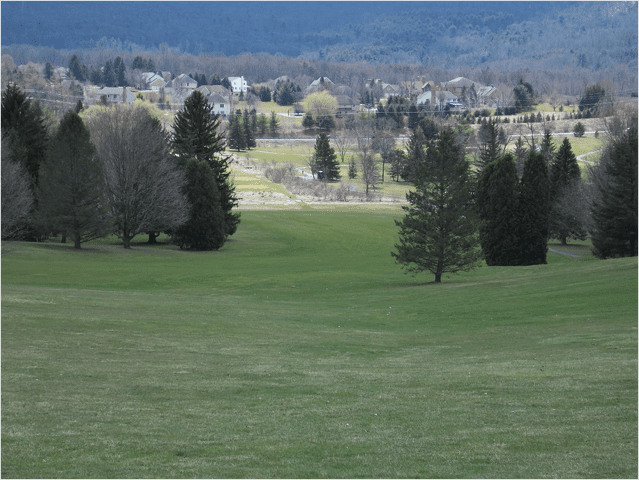
No. 7 at Mountain View Country Club. Photo by John Dixon
■ Nittany Country Club, Mingoville — Hole No. 4, 221 yards, par 3
Picturesque No. 4, at par 3 and 221 yards downhill off an elevated tee, sits high atop the hill overlooking the golf course.
“One needs a 3-to-5 fairway wood or a long iron by a real skillful player to have a chance at making par on this hole,” said Scott Frey, who is in his eighth year as pro at Nittany.
“No. 4 is an altogether difficult hole when the wind is blowing. It has the longest green on the course, but it still plays the toughest on the course. On top of that you have a magnificent view from top to bottom looking toward the club house.”
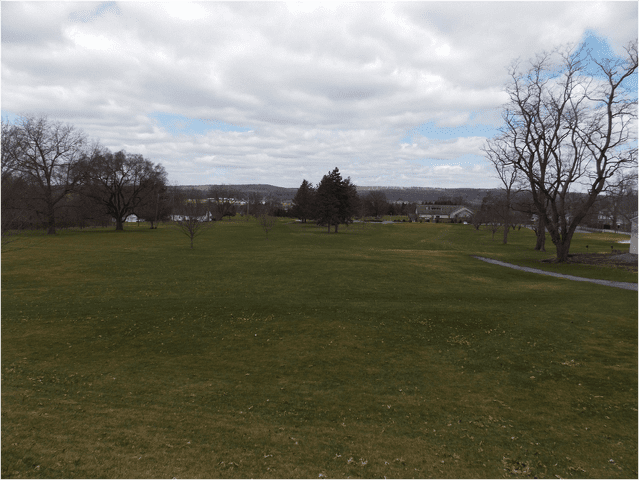
No. 4 at Nittany Country Club
■ Penn State Golf Courses, State College, Blue Course — Hole No. 14, 190 yards, par 3
“This par-3 is all carry,” said Joe Hughes, now in his 18th year as PSU’s golf pro.
“A pond fronting the green must be carried from the tee. Two well-placed bunkers behind the green will collect any long shots, leaving the golfer with a sand shot at a green sloping toward the water hazard. The green slopes severely from back to front, so it will hold a tee shot. However, unless you are below the hole, chances are the putt will have a severe break.”
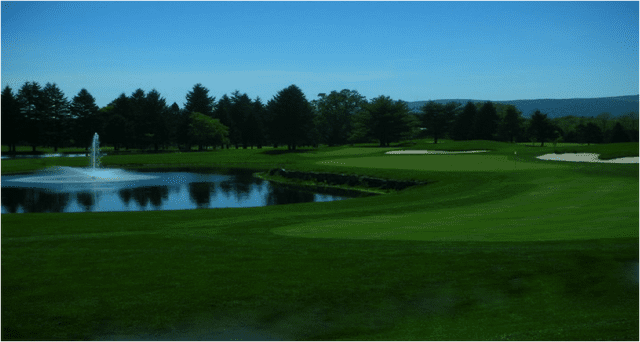
No. 14 at Penn State Blue Course. Photo by John Dixon
■ Penn State Golf Courses, State College, White Course — Hole No. 14, 210 yards, par 3
“This par-3 is one of the original designed holes by golf course architect and World Golf Hall of Fame inductee, Class of 2013, Willie Park Jr.,” said Hughes.
“There are well positioned bunkers to the left of the green and a steep slope for any errant shot to the right of the green, make this a postage size landing area. This difficult, downhill golf shot will test any skill golfer.”
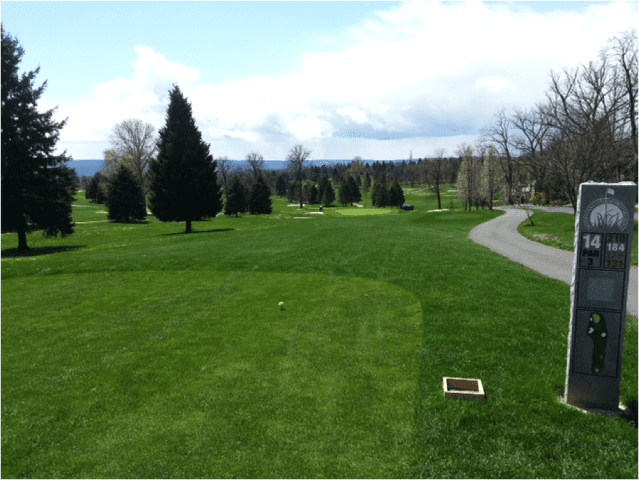
No. 14 at Penn State White Course. Photo by John Dixon
■ Philipsburg Elks Country Club, Philipsburg — Hole No. 3, 356 yards, par 4
With 22 seasons under his belt, pro Paul Fischer picked Hole No. 3 as his club’s signature hole.
“The tee shot should be played about 200 to 225 yards, keeping it short of the hazard that run across the hole. The fairway is lined with many trees making it important to find the fairway. The approach shot is straight up the hill to a small green, which is surrounded by several mounds, two bunkers and a large tree. After reaching the green, the fun is just beginning, as the green has a slope from back to front so being below the hole is a must. Get out of position on any point on this hole and bogey is a great score.”
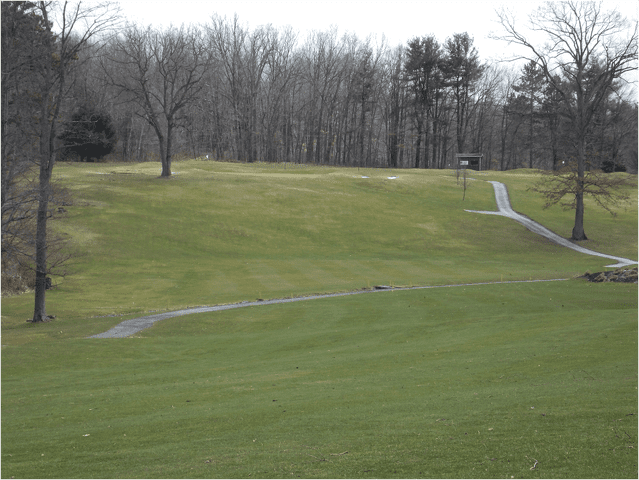
No. 3 at Philipsburg Elks Country Club. Photo by John Dixon
■ Skytop Mountain Golf Club, Port Matilda — Hole No. 16, 190 yards, par 3
According to third-year professional Jeremy Crawford, “Most golfers come to Skytop Mountain to play a round of golf. A lot of people come just to enjoy the view, and Skytop’s No. 16 is breathtaking.
“A par-3, measuring 190 yards from the back tee, drops more than 160 feet to the green, which is surrounded by mature oak, maple and evergreens. Standing on the tee boxes, one can view three mountain ranges in the distance beyond the green.
“Teeming with wildlife, the No. 16 has been the site of Club Member Sundown Socials and a number of non-players visit each golf season to take photographs and enjoy the natural beauty of the area.”
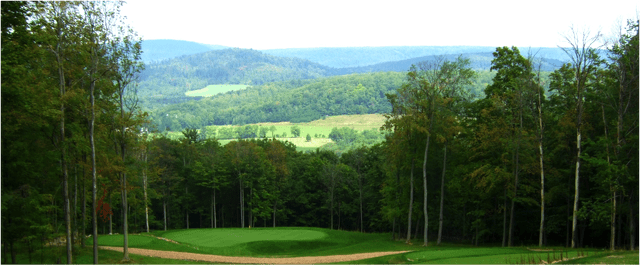
No. 16 at Skytop Mountain. Photo by John Dixon
■ Toftrees Golf Resort, State College — Hole No. 9, 392 yards, par 4
According to fifth-year director of golf Charles Sheppard, the lake that highlights the ninth hole is a star attraction for both golfers and wildlife.
“The hole is accented with fountains; this water hazard forces the golfer to carry nearly 240 yards of watery grave from the longest set of tees. Once over the water, the hole can be a birdie for many players, yet the anxiety it creates on the tee shot results in dozens of lost balls every day.
“This lake not only serves as a giant ball wash, but is home to an array of wildlife and has become a favorite for the State College Bird Club. During a club member birding event last fall, over 25 species were spotted in just a couple hours. The lake has been home to numerous heron, egrets, several types of hawks and even a bald eagle. Each spring, migrating tundra swans consume the lake for one morning. In 2010, over 200 of the enormous birds were counted.
“The lake serves as the favorite background for the first photograph of many newlyweds. The scenic views of Toftrees provide the perfect atmosphere for outdoor weddings, and the pristine croquet lawn that overlooks the golf course hosts dozens of ceremonies each summer.”
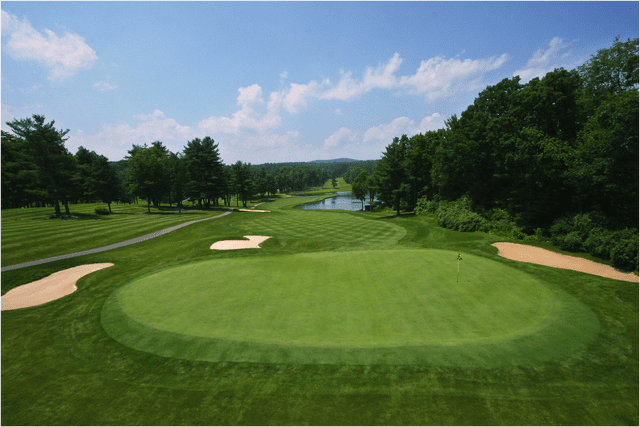
No. 9 at Toftrees. Photo by John Dixon
More Community & Entertainment
View all Community & Entertainment
January Is a Call to Action to Respond to Stalking
This column by Centre Safe Executive Director Jennifer Pencek originally appeared in The Centre County Gazette. When we talk about acts of interpersonal violence, oftentimes people will focus on sexual […]

Busy Weekend of Fall Festivals and More on Tap Around Centre County
The weekend of Sept. 29-Oct. 1 is packed with activities around Centre County, including fall festivals, Oktoberfests, fairs, concerts and more. Check out some of the weekend highlights below. For […]
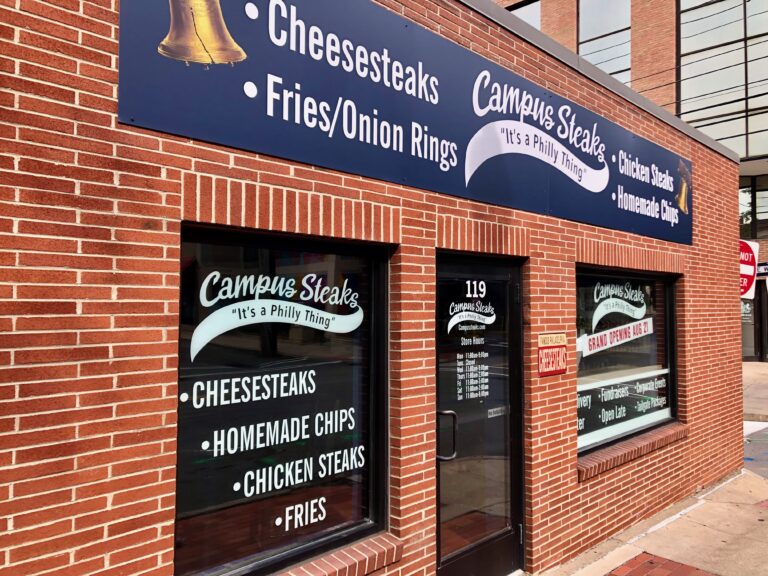
Downtown State College Cheesesteak Shop Sets Opening Date
A new cheesesteak shop that promises a taste of Philly in downtown State College has set an opening date. Campus Steaks plans to hold a grand opening on Aug. 28 […]


