

This preoccupation with security may shape policy and decision-making in areas ranging from terrorism to investing, and perhaps cloud other options, says Jens Grossklags, assistant professor of information sciences and technology at Penn State.
“What may get lost in the decision-making process is that one can enhance security without the negative impact on privacy,” she says. “It’s more of a balance, not a tradeoff, to establish good practices and sensible rules on security without negatively impacting privacy.”
In two separate experiments, researchers examined how people with high-status job assignments evaluated security and privacy and how impulsive or patient they were in making decisions. The researchers found that participants who were randomly placed in charge of a project tended to become more concerned with security issues.
In a follow-up experiment, people appointed as supervisors also showed a more patient, long-term approach to decision-making, adds Grossklags, who worked with Nigel J. Barradale, assistant professor of finance, Copenhagen Business School.
The findings may explain why people who are in leadership roles tend to be more decisive about guarding security, often at the expense of privacy, according to the researchers. In the real world, high-status decision-makers would include politicians and leaders of companies and groups.
“Social status shapes how privacy and security issues are settled in the real world,” said Grossklags. “Hopefully, by calling attention to these tendencies, decision makers can rebalance their priorities on security and privacy.”
The researchers, who presented their findings today (July 16) at the Privacy Enhancing Technologies Symposium in Amsterdam, Netherlands, used two groups of volunteers in the studies. In the first experiment, they randomly assigned 146 participants roles as either a supervisor or a worker to determine how those assignments changed the way leaders approached security or privacy during a task.
People who were appointed supervisors showed a significant increase in their concern for security. The researchers also found that participants who were assigned a worker-level status expressed higher concern for privacy, but not significantly higher.
Another experiment, made up of 120 participants, examined whether patience was correlated with high-status assignments. The researchers asked the participants how long they would delay accepting a prize from a bank if the size of that prize would increase over time.
For example, the participants were asked how much money they would need to receive immediately to make them indifferent to receiving $80 in two months. As in the previous experiment, the researchers divided the group into high-status supervisors and low-status workers.
The low-status workers were more impulsive — they were willing to sacrifice 35 percent more to receive the prize money now rather than later. The supervisors, on the other hand, were more willing to wait, a sign that they would be more patient in making decisions with long-term consequences such as privacy and security.
The Experimental Social Science Laboratory at the University of California at Berkeley supported this work.
More Centre County Gazette
View all Centre County Gazette
Citizens’ Police Academy Gives Residents Firsthand Look at Policing
The free program, led by local law enforcement agencies throughout Centre County, gives participants the opportunity to learn about police work through classroom instruction, demonstrations and behind-the-scenes experiences.
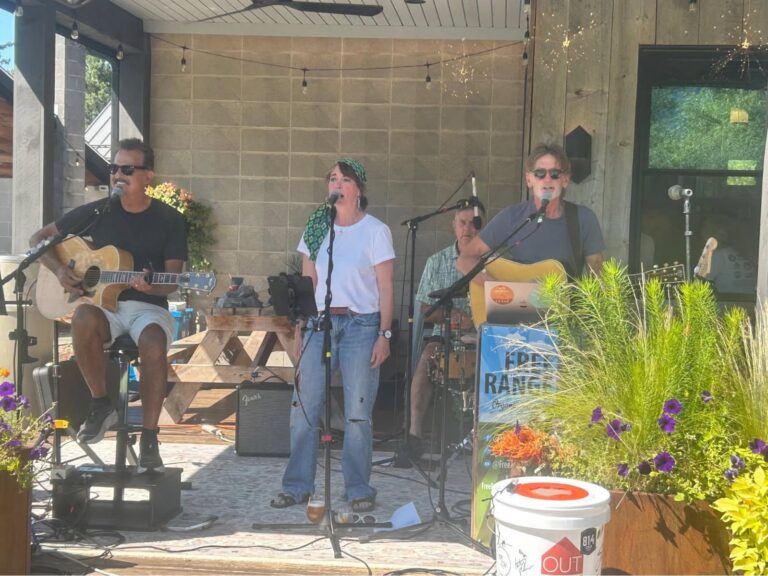
ShelterFest Returns to Support Out of the Cold’s Mission
Out of the Cold is inviting the community to ShelterFest 2026, a four-day celebration of live music, local food and community support that helps ensure some of Centre County's most vulnerable residents have a safe place to sleep.

Centre County Jail Population Falls to Lowest Level Since 2005
The inmate population at the Centre County Correctional Facility has fallen to its lowest level since the current jail opened in 2005, a trend officials attribute to expanded diversion programs, re-entry efforts and changes in probation laws.


