

I am now on Twitter, and thanks to all six of you who noticed. Followers, I guess you’re called, which makes it all sound too much like a cult for my taste.
I’m still waiting for the installation of my TweetDeck, however. I hope it comes with a gas grill and umbrella-shaded picnic table.
I don’t have Skype yet, although the guy who used this computer before me did; but I am on Facebook, as my followers – or rather, regular readers – may recall. I also have e-mail, Gmail, Google Talk, Yammer and Esther.
Esther, since my recent move (as chronicled by my colleague Adam Smeltz – can you guess which pseudonymous character I was in his column?), is my downstairs neighbor. She has a scanner, a cordless telephone and the cleanest sidewalk in town. It’s clean because Esther spends much of her day sweeping it – sweeping and watching and, most importantly, listening.
Off all the aforementioned communication tools and social media, I find Esther to be the most accurate – and the most social, if you don’t mind profanity used as punctuation. She’s colorful, but almost always accurate. She would have made a heck of a reporter, although her chronic adjectival abuse undoubtedly would have driven her editors to distraction.
But Esther listens. And even at 82, her attention span is considerably longer than that of the average Facebook fan and Twit-wit. I may be biting the hand that feeds me here (although Esther did share some roast beef and noodles the other evening), but for them, if it’s not fresh – up for 15 minutes or fewer – it’s history. And who, today, is interested in history?
It may be that, once posted, a column, message or photo is posted forever. Ask Anthony Weiner. But barring prurient interest or political ‘opposition research,’ few of today’s inquiring minds are likely to scroll beyond the first few messages to pore through the archives. It may be online for all time, but after a half hour, it’s just so many brackets and backslashes set adrift in an ever-expanding cyberspace, never to be accessed, liked, digged, stumbled upon or retweeted again.
Unless you’re Anthony Weiner.
But even scandals have short shelf lives. Members of the media and their followers swarm to the hot story of the moment; they broadcast and blog it to death or until boredom finally sets in; then they move on to the next cow pie.
That’s how it is in newstertainment – or it is enternewsment? There is no longer a distinction. News? It’s just another commodity – one of the diverse elements in an investment portfolio.
As Tribune Co. Chairman Sam Zell said (captured in a scene in the documentary ‘Page One: Inside The New York Times’): ‘I’m not a newspaper guy; I’m a businessman.’
And as newspapers became viewed and operated as nothing more than businesses, many of us who were newspaper people are now something else. Social-media guys, for example.
Who is a real reporter anymore? Is it the trained, objective, inquisitive, skeptical – perhaps even cynical – observer, or is it the activist, for whom ‘facts’ mean nothing unless they give credence to the cause, whatever that cause might be? Is the real commentator the one who provides perspective or the comedian who plays everything for laughs?
Ask former U.S. Rep. Anthony Weiner, whose farewell news conference was hijacked by the juvenile and obscene outbursts of professional heckler Benjy Bronk, a writer for shock-jock Howard Stern.
Can anything really shock us anymore?
Picturing me, quintessentially anti-social, as a social-media guy might give you a little jolt. And this column about how we express ourselves may slightly amuse an ex-girlfriend or two – one might even react as though she stuck her finger in an electrical outlet. (She’s the one who, in a fit of frustration – throwing in a false compliment for ironic emphasis – practically wailed at me: ‘How can someone who writes so well … not communicate?!!’)
That was then. I’m a Web journalist now, and, in a role reversal I’m not sure he’s comfortable with or excited about, Adam Smeltz is my mentor. We worked together in the newspaper business way back when, and while he is still a young man, Adam does have an appreciation and respect for the journalistic tradition and profession. It’s the next generation of news hunters, gatherers and dispensers I’m worried about.
Now I’m sounding even older than I feel. But as I read Russell Frank’s most recent column – and as I edited it not nearly as well as he wrote it – I was, indeed, shocked, although perhaps I shouldn’t have been: No one in his news writing class could explain the significance of Watergate.
To review: The burglary of the Democratic National Committee offices at the Watergate complex 39 years ago this week, the subsequent cover-up by the Nixon White House, and the dogged investigation young newshounds Bob Woodward and Carl Bernstein that revealed the blatant abuse of power and led to the president’s resignation constitute one of the greatest stories in – and about – journalism in its prime.
As Russell wrote: ‘(W)e celebrate Watergate as the moment when the American system – separation of powers and a watchdog press – functioned the way it is supposed to.’
To many of us, Woodward and Bernstein – if not their cinematic counterparts, Robert Redford and Dustin Hoffman – are heroes. But who are the heroes of tomorrow’s journalists? Matt Drudge? Andrew Breitbart, the right-wing provocateur who, if you will pardon the expression, exposed Anthony Weiner and his online decadence? Rupert Murdoch? Keith Olbermann? Benjy Bronk?
(As another one of my journalistic heroes, NPR’s Scott Simon, actually Tweeted during the farce: ‘Wish people at his press conference would just let Rep. Weiner speak without interruption. Anyone is due that courtesy.’)
Who reads? Who studies? Who provides historical perspective?
Who cares?
When everyone is a narcissist … When everyone seems to be shouting: ‘Me! Me! Me! Listen to me!’ … When we who once thrived on scoops and exposés now live and die with hits, page views and the number of Twitter follwers and Facebook friends we amass – ‘Do I know you?’ … What is the future of journalism?
I guess that’s what we’re trying to figure out. As we do, if we do, we’ll post it and Tweet about. So follow along.
Or if you’re in a hurry, you could ask Esther. She’ll tell you. Believe me, she’ll tell you.
More Columns
View all Columns
Inside/Outside State College: Excellent Restaurants Outside of Downtown
In this column, I’ve expressed chagrin about the lack of higher-end restaurants in a downtown as dynamic as State College. While that’s true, there is good news outside of downtown.
Local Historia: Bellefonte’s Legacy of Innovation
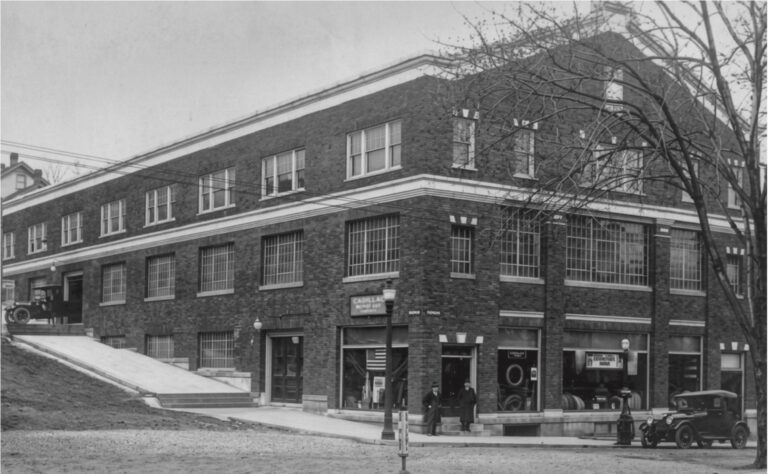
Pioneering architect Anna Wagner Keichline's Cadillac Building combined showroom space, repair facilities and offices under one roof, reflecting both the practical demands of the automobile age and the spirit of innovation that characterized Bellefonte in the early 20th century.

Battista: The Retiree’s Adventures Continue…
Buckle up, baby, ‘cause we’re back on the road again! Nine states in 27 days of driving and flying, and dealing with torrential rains and tornado warnings in Pennsylvania, and […]


