
For the last 18 months one of the least desirable jobs in journalism has belonged to Geoff Rushton, the editor of this website. Seven days a week he creates the article on this site that reports the number of COVID cases that Centre County and Pennsylvania added the previous day. He updates the graphic with an image from the Pennsylvania Department of Health and then enters all the newly released numbers. Numbers which tend to be sobering in their reality.
This constant focus on the scourge of COVID has dominated the media and our lives for well over a year and heightened our sense of responsibility for our own and others’ health. I couldn’t tell you which of the multitude of recommended vaccines myself, my wife or our kids have had in our lives (and there have been plenty) but I could certainly tell you our COVID vaccination status. And at this point almost everyone I know regularly thinks about keeping a physical distance from others, avoiding crowds and close contact, cleaning their hands frequently with alcohol-based hand rubs or soap and water, covering their mouths and noses with bent elbows when they cough or sneeze, self-isolating if they have symptoms and wearing a mask when physical distancing is not possible.
All the thoughtful energy each of us dedicates daily to these actions is a direct result of the near-constant reminders we see anytime we turn on the TV or radio, go on the internet and read a paper or magazine. What we hope is that because of our actions we won’t get COVID and become one of the numbers Geoff reports. Because those numbers are not only sobering but scary.
But with all this focus on COVID and our individual successes at not getting it – or hopefully getting over it if we did get it – I was rudely awakened a little over four weeks that there is at least one other thing just as scary out there.
For years I have jogged for exercise, usually on a regular basis. But with the onset of COVID and the move of my long-time running buddy, I started to slack off. And gained a few pounds in the process. As with many people I have played a yo-yo game with my weight over the years. According to the Body Mass Index (BMI) tables published by the National Heart, Lung, and Blood Institute (NHLBI), at my height 205 pounds is considered overweight. I haven’t seen that number – or lower – on a scale since my second or third year of college and have long since made peace with being overweight. But only once or twice have I flirted with 246 pounds, which is where the NHLBI says overweight turns into obese. It’s within those two numbers that I have yo-yoed back-and-forth over the decades.
Well, the lack of travel and exercise kept me sedentary and I shunned the scale for many months. When I did finally step on one I found I had zoomed right past obese!
As many of us do with parts of our lives, I rationalized this unhappy occurrence and promised myself I would start running more and take care of this minor weight inconvenience. Which I did start. Except I couldn’t seem to run continuously for the same distances I had in the past and began just doing run-walk segments. Run for a minute, then walk for a minute. And to make things more interesting, my arm muscles started to experience a little soreness whenever I would start running, and I could feel my breath in my lungs. For a while those feelings would go away after a mile or two, but after a few months they were there continuously through several miles.
I think you can see where this is going, can’t you?
Which is another odd thing about this experience I’m describing. When you are going through it it’s easy to rationalize performance reduction, sore muscles and breathing sensations as the price you pay for having slacked off for months. It’s just your body getting back in shape.
And I rationalized it, even though I, like many of us, am a reasonably well-informed health consumer and know the CDC’s symptoms of a heart attack:
- Chest pain or discomfort
- Feeling weak, light-headed, or faint.
- Pain or discomfort in the jaw, neck, or back.
- Pain or discomfort in one or both arms or shoulders.
- Shortness of breath.
When, on a Monday morning walk, I finally mentioned something to my wife, she immediately called our doctor and made an appointment for that Thursday, the first available appointment they had (they did say that if the symptoms got worse we should go to the emergency room at the hospital). After a disappointing run the next morning she called again and they were able to fit me in the next day (this time saying we could also go to the ER right then because the symptoms were concerning).
So on Wednesday morning I dutifully went to our doctor’s office, told my story, and was given an EKG, the result of which was that I was instructed to immediately go to the emergency room. The doctor’s office would call ahead to announce my pending arrival.
Within a very short time of arrival at the emergency room I had a blood line inserted in my arm and another EKG. Then more tests and a chest X-ray. At some point I was informed I would be having a heart catheterization — which took place later the next day.
So for a period of over 24 hours I was in a state of reasonable calm – if I’m going to have a heart attack what better place to be than in the hospital, right? – but also a state of heightened concern because while the tests are eliminating some possibilities, until they do the heart catheterization they don’t know exactly what the problem is, or definitely what the problem isn’t as the case might be.
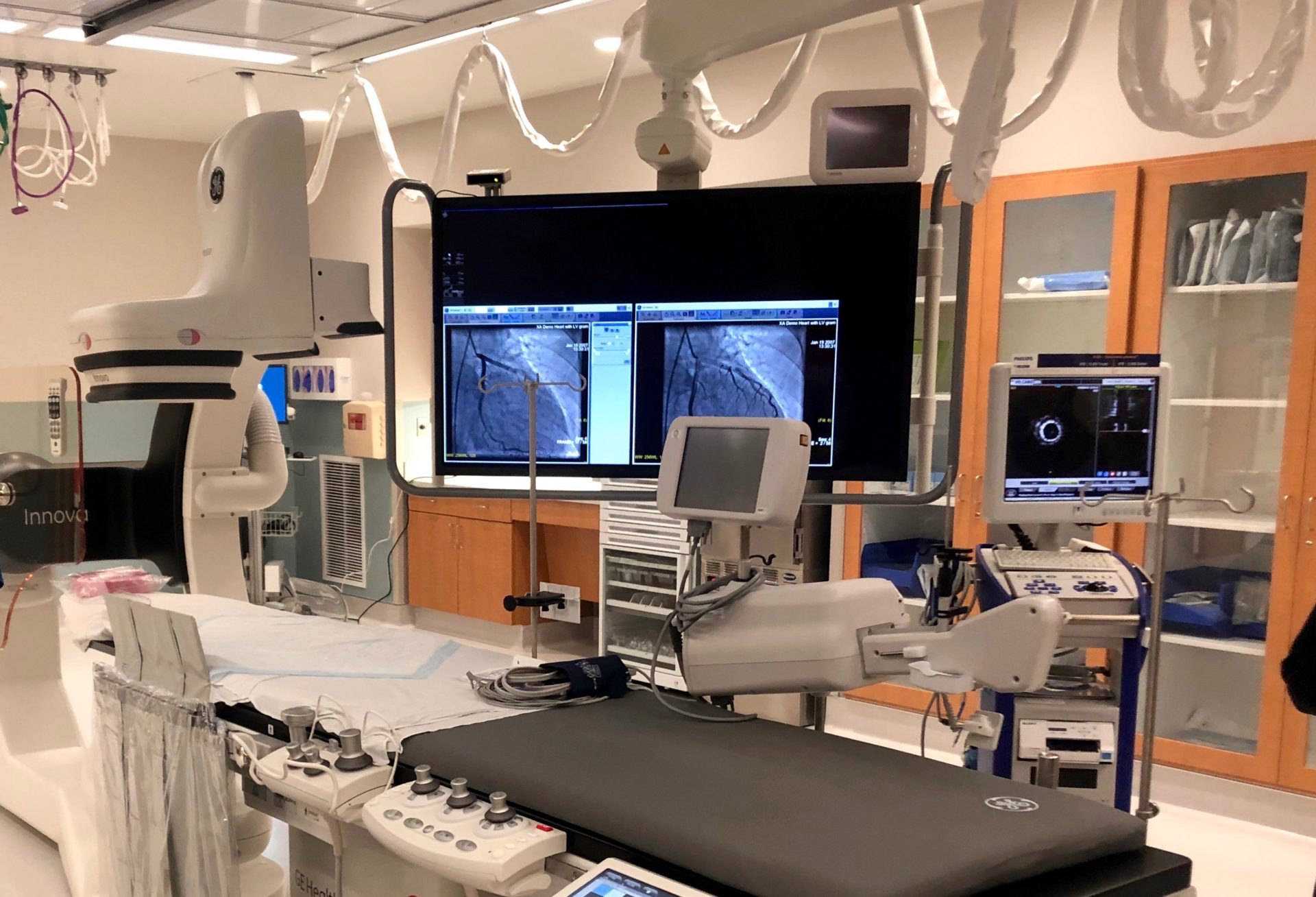
Fast forward to the next afternoon and the heart catheterization – a marvel of medical technology – which found an 80% blockage in my left anterior descending artery. The doctors inserted a stent and I joined the tens of millions of people who have one. It’s estimated that two million people get coronary artery stents every year. By the next morning I was pronounced in good shape and ready to get back to normal life.
Well, normal except for the card I now carry at all times that describes the make, model, date, placement, etc. of the stent and is to be shown to any medical personnel who may be treating me. And the supply of nitroglycerin tablets I also carry at all times (but will hopefully never need). Oh, and the knowledge that a heart attack caused by a blockage in the left anterior descending artery is commonly referred to in the medical community as a “widowmaker.” So there’s that.
But otherwise, yes, normal.
Except I was one of the lucky ones. I knew heart disease was prevalent in our country, and as I said, I certainly knew the signs of a heart attack, but when I went looking for statistics I was saddened to find the CDC says about 659,000 people in the United States die from heart disease each year. For comparison, as I write this the CDC calculates since March 2020 that 722,212 people have died from COVID. A terrible number to be sure, but during that same time over a million have died from heart disease. That’s one person dying from heart disease every 36 seconds in the United States.
Now, as grateful as I am for all the attention paid to COVID, wouldn’t it be nice to see a similar effort by the media and the public targeted to heart disease? To save not only the lives and resulting grief for millions, but the estimated $363 billion heart disease costs the United States each year. Because similar to COVID, outside of certain hereditary factors, there are many things we can do to mitigate our chance of dying from heart disease. As the CDC says, “You can choose healthy habits to help prevent heart disease.”
Things such as:
- Choose healthy meals and snacks. Eat plenty of fresh fruits and vegetables and fewer processed foods.
- Maintain a healthy weight. People who are overweight or obese have higher risk. Carrying extra weight can put extra stress on the heart and blood vessels.
- Get regular exercise. Physical activity can help you maintain a healthy weight and lower your blood pressure, blood cholesterol, and blood sugar levels. For adults, the Surgeon General recommends 2 hours and 30 minutes of moderate-intensity exercise, like brisk walking or bicycling, every week
- Don’t smoke. Cigarette smoking greatly increases your risk. If you don’t smoke, don’t start. If you do smoke, quitting will lower your risk.
In the four weeks since the stent was put into my artery I have been exercising more (did 7 miles on Sunday), have been eating healthier (more veggies and fish), and have gone back under the obese line with my weight. I never smoked cigarettes, so that’s one checkbox I’ve always had correctly marked.
Every year in this country there are hundreds of thousands of people who are not as lucky as me. And although I don’t want to see Geoff having to update a morbid webpage every day chronicling the number of deaths and hospitalizations due to heart disease, perhaps some of the tactics the media and government have employed to battle COVID could be used against the No. 1 cause of death in this country. Because those numbers, and the pain they cause, can be reduced.
More Opinion
View all Opinion
Letters: Mount Nittany Medical Staff Committed to Community Care; Casino’s Underwhelming Revenue
The Medical Executive Committee is saddened to hear that SEIU Healthcare Pennsylvania has reportedly voted to issue a strike notice in response to Mount Nittany Medical Center’s latest proposal. As […]
The Following Column Was Written by Russell Frank… Honest
During a strategy session about our fall classes – yes, the 2026-27 academic year is nearly upon us – one of my colleagues confessed to using AI to generate the […]

Hook: Reflections on an Intriguing and Expensive World Cup
According to media reports, the FIFA World Cup final is the most-watched sporting event in the world, and although as I write this the viewership numbers have not been released […]


