
Dan Nestlerode
-

What’s the Market Going to Do? Who Knows?
—
by
If you don’t know what this market is going to do, how do you invest your money and the money of your clients? The answer is: very carefully.
-

Tips on How to Start Getting Ahead Financially
—
by
Columnist Dan Nestlerode gives some simple advice on how to start accumulating money for the next phase of your life.
-

Measuring our Financial Well-Being
—
by
The GDP, the way it is calculated, is not an accurate indicator of our nation’s, or the average individual’s, prosperity.
-

Personal Finance: Investments Suffer on ‘Cruise Control’
—
by
Investors expect advisors who pay close attention to their holdings. But there’s often a disconnect between what they want and what they get, says Dan Nestlerode.
-

What’s Next for the Economy and Investment Markets
—
by
Dan Nestlerode’s prediction: ‘We’re on a collision course with much harsher economic realities’ than what we’ve seen so far.
-
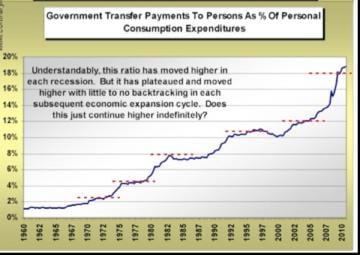
Personal Finance: What in the Wide World of Sports Is Going on?
—
by
The stock market is ‘humming along like a rerun of ‘Happy Days,” Dan Nestlerode writes. But he isn’t predicting a happy ending.
-
Municipal Bonds: A Case for Backing Off
—
by
The municipal bond market has taken a recent beating. This still-unfolding financial drama may have an unhappy ending, Dan Nestlerode writes.
-
The End of the World as We Know It—and Other Financial Predictions
—
by
Our business columnist’s advice for welcoming in the New Year? ‘Make some resolutions, drink something alcoholic and ponder the musings of the gurus. Just don’t take any of it too seriously.’
-
Personal Finance: What the Government’s Spending Spree Means for Investors
—
by
The Federal Reserve will buy an additional $600 billion of Treasuries. The purchases are meant to boost economic growth, but business columnist Dan Nestlerode says investors need to be prepared for a different outcome.
-

Beware of Fed’s Actions: Investing ‘Looks Like a Minefield’
—
by
Business columnist Dan Nestlerode advises investors to pay close attention to the Federal Reserve. ‘I am more concerned with the return of your capital than the return on your capital,’ he writes.