
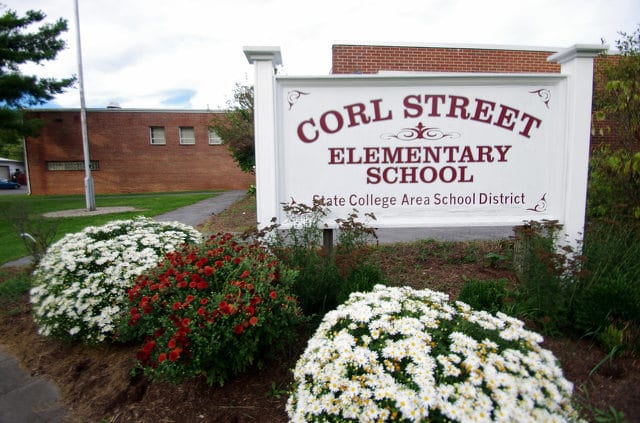
The best part of Terrill Salter’s day is walking or biking with her two daughters, ages 3 and 5, to and from Corl Street Elementary School, about a half mile from her home. She said its during those moments her children have her undivided attention and she said she gets to hear every detail about their days.
Rebecca Lundin lives two blocks from the school. Her 5-year-old son started kindergarten there this year, and in three more years, another Lundin boy will enter the State College Area School District system. She hopes the brothers will both be able to attend Corl Street Elementary School at the same time.
Both women may have to change their routines and ways of thinking as the district has recently completed a demographic analysis of the enrollment areas and decided options are necessary to decide what to do with Corl Street, Houserville and Radio Park elementary schools. Some scenarios see the Corl Street school being renovated, where others show it could be closed entirely.
Salter and Lundin both want to see their neighborhood school remain open; however, both women understand the future needs of the district, and applaud how SCASD brass are handling the situation.
‘I’ve been fascinated by watching the board’s progress on this decision. They are gathering information from a variety of sources, asking thoughtful questions and are clearly trying to make the decision that will be best for the students now and in five and 10 years,’ Salter said.
‘The demographic study the board commissioned shows that the district will grow over the next five years, with a significant amount of that growth in the Corl Street area. The district is considering renovating the school and making it slightly bigger. They are also considering closing Corl Street and busing all the students to other schools, which would become slightly or significantly larger.’
Lundin said he is happy to see the district collecting community feedback.
‘The district is carefully and thoughtfully considering options,’ said Lundin. ‘As they have requested feedback from community members, there has been an outpouring of support for Corl Street.’
Both Salter and Lundin are part of a very active community group known as ‘Save Corl Street,’ a group trying to keep Corl Street Elementary School in the neighborhood.
‘We have created and distributed street signs, we maintain a presence at school board meetings and we have a website and Facebook group we use to keep the community involved,’ said Salter. ‘Personally, I talk to almost everyone I encounter about this issue. I had a long conversation with my hygienist at the dentist’s office about it last week.’
Lundin said the group is working to actively understand the school board’s concerns and work to find solutions that do not involve the closure of Corl Street.
‘For example, the board is concerned about increased charter school enrollment and requested insight into reasons that people choose charter schools,’ Lundin said. ‘From talking to charter school parents, one of the most attractive aspects of charter schools is the intimacy and small school feel. Renovating Corl Street would ensure that the ‘regular’ public schools maintain that benefit … a balanced approach where schools are modestly sized addresses both cost efficiency and the broader needs of the community.’
Should the recommendation to close Corl Street Elementary School pass, Salter and Lundin said it would have a definite and immediate impact on the lifestyles of their families; however, both said the issue would reach much further.
‘I hope that the district continues to solicit feedback, but more importantly, I hope they recognize that this decision is about much more than just one school,’ said Lundin. ‘Closing Corl would affect our entire district. It would necessitate significant enlargement of other schools in the near term and it would lay the foundation for additional enlargements down the road.
‘At the same time, it would hollow out our town center, lessening its appeal for non-student residents and pushing future development and growth to the edges of the district,’ she continued. ‘Whatever you think about school size or facilities, that is not good city planning policy and would not be good for the Centre Region as a whole.’
‘If the school is closed, I would lose the connection with my neighbors and community that I get from walking 2 miles back and forth every day to make my kids to and from school,’ said Salter. ‘On that walk, I meet people whose kids have long since graduated from elementary school and stop to chat with parents whose kids are still too young for kindergarten. As a newcomer to the town who is still working to find my place in the community, these interactions are very valuable to me.’
Salter said the board should renovate the school into a 2.5- or three-unit school, meaning the school has three classrooms per grade.
‘This would allow room for the district to grow and would keep all the schools in State College between three and four units,’ she said. This allows all the students in State College and surrounding townships to continue to attend schools that are small enough for them to be noticed and known by their teachers and classmates, and allows State College parents to have schools that are close enough and small enough for them to easily be involved in their childrens’ schooling.’
Salter said the closure of Corl Street could affect who chooses to move to town and where young families choose to live.
‘By choosing to renovate Corl, the school board would be promoting walkable urban development and fighting sprawl,’ she said. ‘Futhermore, several of the school board’s proposed scenarios would result in almost 700 students at Radio Park, making that school the largest in the district. Other scenarios have both Radio Park and Easterly Parkway increasing to more than 550.
“Although almost no studies exist comparing schools of 700 to schools of 400, teachers I have spoken to tell me that smaller schools feel more like communities than larger schools.’
As a firm decision on what the district will do, the Save Corl Street group believes it has already made an impact on the subject, and knows there’s more work to do.
‘I believe we have raised a number of important questions that the board is taking into consideration during this more recent round of proposals,’ said Lundin. ‘Most importantly, I hope we’ve communicated that this is a conversation about more than just educational outcomes. It affects neighborhoods and our town as a whole.’
More Community & Entertainment
View all Community & Entertainment
January Is a Call to Action to Respond to Stalking
This column by Centre Safe Executive Director Jennifer Pencek originally appeared in The Centre County Gazette. When we talk about acts of interpersonal violence, oftentimes people will focus on sexual […]

Busy Weekend of Fall Festivals and More on Tap Around Centre County
The weekend of Sept. 29-Oct. 1 is packed with activities around Centre County, including fall festivals, Oktoberfests, fairs, concerts and more. Check out some of the weekend highlights below. For […]
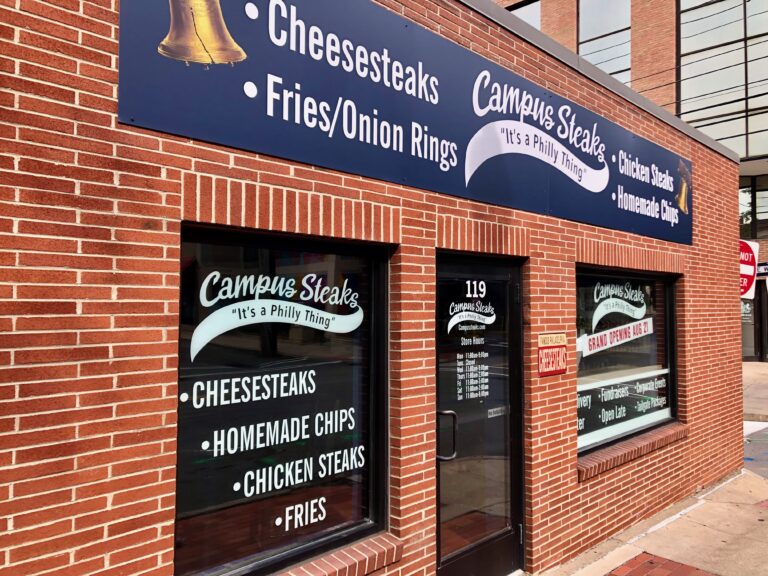
Downtown State College Cheesesteak Shop Sets Opening Date
A new cheesesteak shop that promises a taste of Philly in downtown State College has set an opening date. Campus Steaks plans to hold a grand opening on Aug. 28 […]


